
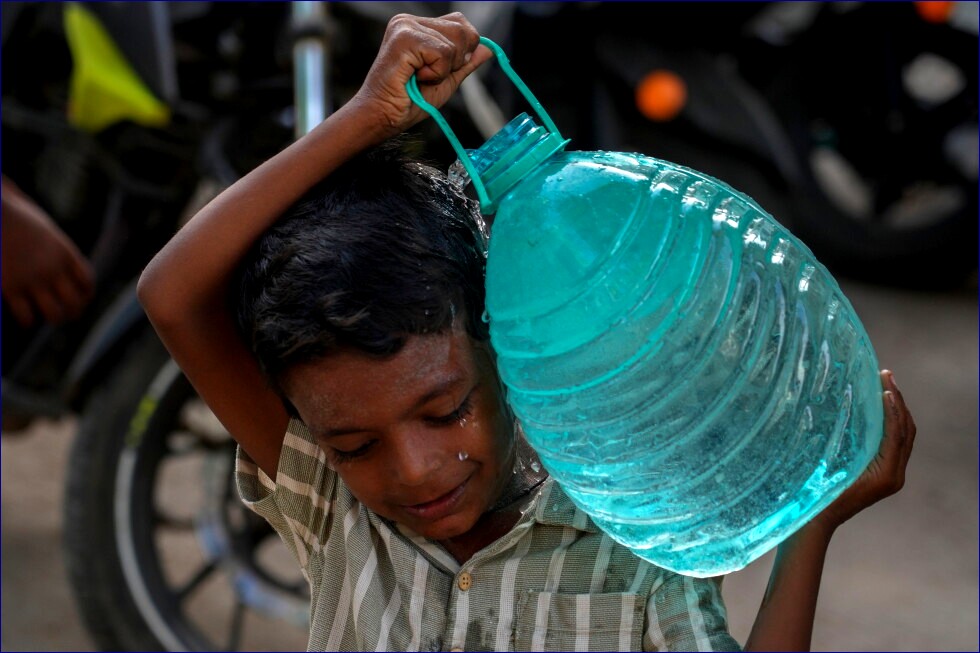
BENGALURU, India — The delayed onset of the monsoon season in India, accompanied by lower-than-normal rainfall, is causing significant challenges for farmers and other sectors. This situation is particularly critical in Mumbai, the country’s largest business hub, where construction projects face water restrictions.
The monsoon typically starts in June, but recent years have seen unpredictable patterns. Climate specialists attribute this shift to factors such as El Niño, a climate pattern associated with warmer ocean temperatures in the Pacific, combined with the broader effects of climate change. As a result, rainfall has become less consistent and more erratic.
Mumbai recently received its first monsoon rains, about two weeks later than usual, but these rains alone are insufficient to replenish the city’s reservoirs. The local government has initiated water restrictions to prioritize essential needs. Public water distribution sites have seen long lines, with residents waiting hours to access even small amounts of water.
“I have to wait for two hours just to get 10 liters of water,” shared Aishah Khan, a 33-year-old domestic worker in Mumbai. “I have to juggle work and my children while ensuring there’s enough water at home.”
In rural northern India, many farmers are holding off on planting as they await rain. They are worried that inadequate rainfall this year will put them deeper in debt. “We can’t plant until it rains. We’re already losing money, and this year feels worse than before,” said Suresh Kumar, a millet farmer from Uttar Pradesh.
Farmers in states like Madhya Pradesh, who depend on timely rainfall to grow soybean and wheat, echo similar concerns. “It’s concerning, but we have no choice but to wait,” said farmer Kedar Sirohi.
June and July are crucial for sowing in India, with millions relying on the monsoon to water their crops. Challenges such as lack of fertilizers, worsened by global conflicts, only compound these worries.
Effects of Climate Change on Monsoons
Traditionally, the monsoon brought welcome relief from the summer heat, but climate change is altering this expected pattern, resulting in extreme weather events. India usually experiences two monsoon seasons, one from June to September and another from October to December. However, with rising greenhouse gas emissions, rainfall patterns are shifting dramatically.
Meteorologist Akshay Deoras notes that the Indian monsoon is becoming increasingly unpredictable, with intense downpours more frequently followed by prolonged dry spells. “The variability of the Indian monsoon is becoming more apparent due to global warming,” he explained.
India’s weather agency reported that current rainfall levels are 42% below average due to El Niño and other conditions hampering the monsoon’s progress. Regions like Mumbai are approaching critical water shortages, with just 40 days of water left. Unfortunately, even forthcoming rains may not suffice to significantly improve conditions.
Need for Better Water Management
Experts emphasize that strengthening strategies to manage climate-related disruptions is vital. This is especially crucial in a country recognized as highly vulnerable to climate change. India is home to over 90 million farmers, most of whom cultivate small plots of land and rely heavily on groundwater for irrigation.
According to reports, India extracts more groundwater than both the United States and China combined, leading to serious depletion of water tables. Tiwari, a climate and health expert, suggests that investing in water conservation and restoring local water bodies should be prioritized at both local and national levels.
Farmers who have access to groundwater may salvage their crops during dry spells, but those reliant solely on monsoon rains may not be as fortunate. “If poor rainfall continues, it drains our groundwater reserves with each passing year,” warned hydrogeologist Vivek Grewal.
To minimize the impacts of poor rains, comprehensive planning and better governance around water management are crucial. Approaches like enhancing water storage and protecting natural water reserves could make a significant difference in a country grappling with these changing climatic conditions.
