
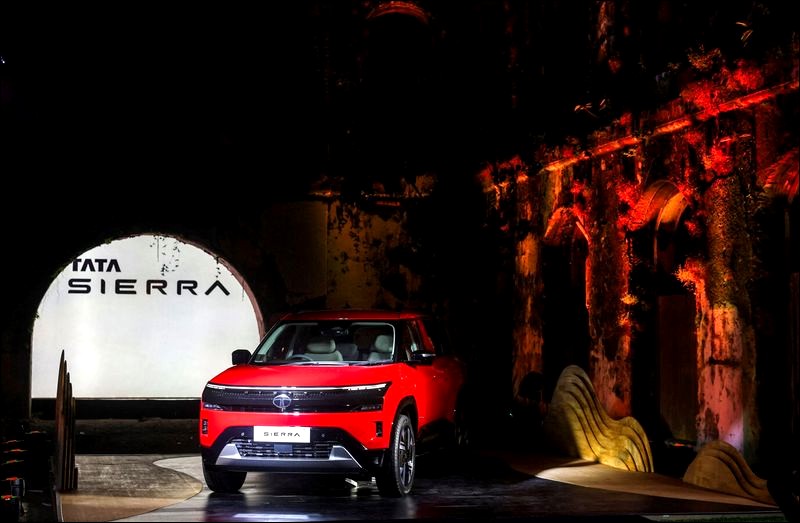
Tata Motors Targets Growth in Revenue and Sales by 2031
Tata Motors Passenger Vehicles announced on Tuesday its ambitious plan to nearly double its revenue and sales volumes by the fiscal year 2031. The company aims to secure a 20% share in India, the world’s third-largest car market, by focusing on electric and gas-powered vehicles.
According to an investor presentation, Tata Motors expects its revenue to rise to over 6 trillion rupees (approximately $63.3 billion) by fiscal year 2031, up from 3.36 trillion rupees projected for fiscal year 2026. The automaker also plans to boost sales volumes to more than 1.2 million units, compared to the current 640,000.
However, Tata Motors has faced challenges, including rising commodity costs linked to global events. This has led the company to prioritize cost-cutting measures and focus on producing more profitable high-end vehicles.
Currently, electric models comprise 14% of Tata’s total sales, but the company faces increasing competition from rivals like Mahindra & Mahindra and JSW MG Motor. These competitors are narrowing the gap in the electric vehicle market, which poses a risk for Tata’s market share.
On the road to fiscal 2031, Tata Motors noted a significant recovery in the automotive sector during the second half of fiscal 2026, thanks to India’s tax reforms. The company has plans to invest between 330 billion and 350 billion rupees in its passenger and electric vehicle sectors from FY26 to FY30.
Despite these plans, Tata Motors saw its shares drop by as much as 10% last week after Jaguar Land Rover, a subsidiary that accounts for about 80% of Tata’s revenue, revealed a restructuring plan that did not meet investor expectations.
The company highlighted that a notable portion of its FY31 sales target will rely on electric and gas-powered vehicles, as it continues to innovate and expand its offerings. In a strategic move, Tata Motors aims to increase its production capacity to 1.3 million units in the next two to three years, up from its current capacity of 900,000 units, while targeting a 10% EBIT margin.
