
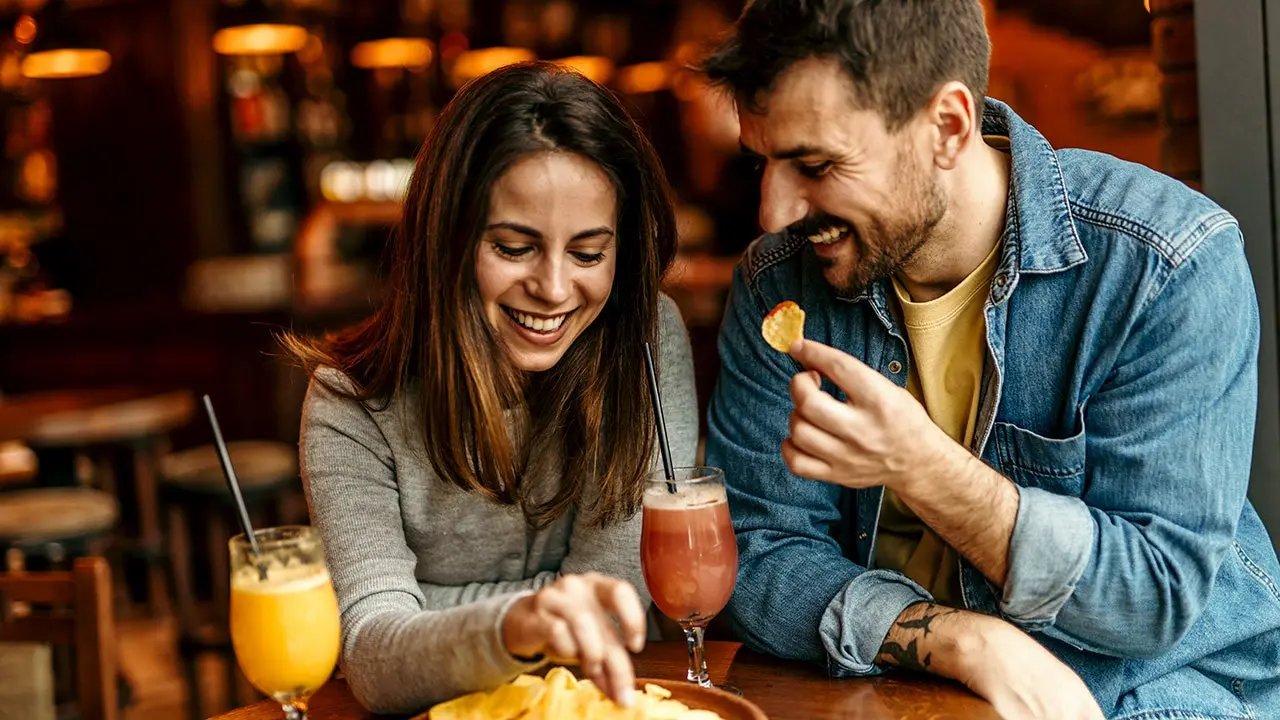
Researchers have found that when people enjoy a few drinks, their hormone levels can drive cravings for salty snacks, often leading to overeating. This connection could shed light on why we sometimes reach for a bag of chips after having a few cocktails.
A recent review from the University of Sydney published in Obesity Reviews highlights that previous studies on drinking and eating habits have produced mixed results. While alcohol adds extra calories, its overall impact on a person’s total calorie intake varies widely based on their food choices.
Alcohol consumption may boost levels of FGF21, a hormone that increases the desire for savory foods while diminishing the craving for sweets. When people are in environments with whole, less-processed foods, they generally opt for filling, protein-rich meals. In contrast, when indulging in ultra-processed snacks and fatty meats, people often consume what researchers call “protein decoys,” which fail to satisfy hunger and lead to piling on the calories.
The team analyzed data from over 9,000 Australians and discovered a clear pattern: those who drank alcohol tended to indulge more in savory snacks while cutting back on sweets compared to non-drinkers. On days when people reported drinking, their savory snack intake increased significantly.
Findings showed that individuals consuming a low-protein, high-fat ultra-processed diet along with alcohol could consume up to 40% more calories than suggested guidelines before even factoring in their drinks. Researchers suggested that this behavior might connect to the rising obesity rates, as alcohol could stimulate appetite and lead to overeating of unsatisfying food.
Results from this review may explain why alcohol’s role in caloric intake is often inconsistent, depending largely on the types of food consumed alongside it.
While the researchers weren’t able to directly measure the levels of FGF21 in their study, they relied on prior research to form their conclusions. They noted their approach might lack direct evidence about this hormone’s specific impact on eating behaviors.
The limitations of their findings were acknowledged since most of the information was gathered from a survey.
To address obesity among regular drinkers, the researchers emphasized the need to limit consumption of highly processed, savory snack foods.
Dietitian Morgan Beemiller from Ohio commented on the study’s revelations, explaining how alcohol impacts various systems related to hunger and cravings. It changes how our bodies regulate appetite and influences how we perceive taste.
To avoid overindulging on processed snacks while drinking, Beemiller recommends having a hearty meal before starting to drink. Propitious meal choices such as chicken with rice and salad or salmon with potatoes and broccoli can help manage hunger.
Planning your late-night snacks before drinking can also make a difference. If healthy options are prepared in advance, you’re less likely to reach for unhealthy choices later.
Keeping minimally processed snacks like nuts, cheese, fruits, and vegetables on hand is essential. Staying hydrated is equally important, as alternating between alcoholic beverages and water can help control consumption and ease hangover symptoms.
For those choosing to indulge in alcohol, moderation is key. Health risks tend to increase with the amount consumed. Opting for lower-sugar drinks and avoiding high-calorie mixers can also be beneficial.
Beemiller encourages approaching alcohol consumption as a way to enjoy yourself rather than as a means to cope with stress.
