
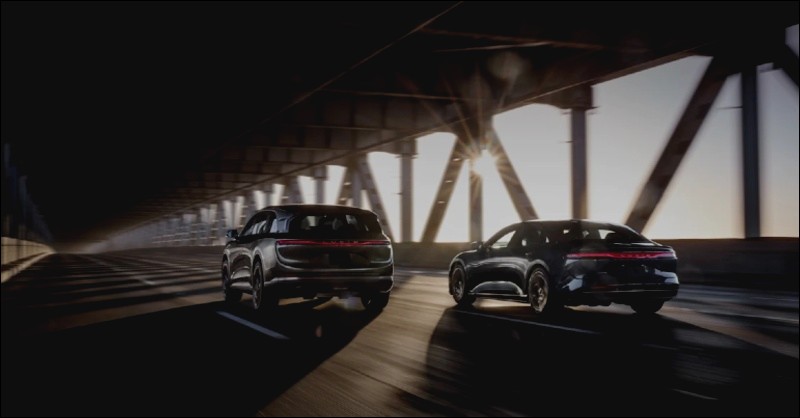
Lucid Group Faces Stock Dip Amid New Developments
Lucid Group’s stock fell to $8.32 on Monday, hitting its lowest level ever due to concerns over recalls, slow sales in the first quarter, and investor dissatisfaction. However, by Tuesday, the company made headlines by appointing a new CEO, announcing a significant $1.05 billion funding boost, and unveiling an expanded partnership for robotaxis, which could drive future growth. One company executive described it as “a big day” on social media.
This recent funding comes from three main sources: a $300 million public stock offering that wrapped up on April 15, a new $200 million investment from Uber Technologies (lifting Uber’s total investment to $500 million), and $550 million in convertible preferred stock from Ayar Third Investment Company, which has ties to Saudi Arabia’s Public Investment Fund—Lucid’s largest backer.
Analysts suggest that this influx of cash should keep Lucid financially stable until late 2027, allowing time to increase production.
Lucid began in 2007 under the name Atieva, founded by former Tesla executive Bernard Tse along with Sam Weng and Sheaupyng Lin. Initially, the company focused on creating high-performance battery packs and electric powertrains for other automakers and was the exclusive battery supplier for Formula E.
Their cars are known for their impressive energy efficiency, with the Air Pure RWD rated at 146 MPGe and the Air Grand Touring boasting a range of up to 512 miles on a single charge. In 2016, the company rebranded as Lucid Motors after Peter Rawlinson, who previously worked as chief engineer for the Tesla Model S, joined as CTO. He later took over as CEO but stepped down in February 2025, continuing his role as CTO.
Lucid is known for its luxury electric vehicles and competes with brands like Tesla, Rivian, BMW, and Mercedes-Benz. The Lucid Air sedan takes on the Tesla Model S, which has a range of 410 miles, and the BMW i7, which can go 314 miles on a charge.
The exciting Midsize platform, priced under $50,000, is designed to rival the Tesla Model Y and Rivian R2. Lucid claims their vehicles are so efficient they can achieve comparable ranges to competitors using smaller, more affordable batteries, potentially reducing costs.
In a significant move, Uber has pledged to purchase at least 35,000 Lucid vehicles, including 25,000 Midsize Plus models, over the next six years for its future robotaxi service, which is set to start commercial operations in late 2026. This partnership offers Lucid large, predictable orders that its luxury retail division has struggled to secure.
Lucid aims to produce between 25,000 and 27,000 vehicles in 2026. However, the company reported nearly $1 billion in losses during the first quarter and anticipates spending $3.8 billion in cash in 2025. While the new funding offers Lucid some breathing room, the company’s success hinges on the performance of the Midsize platform and the partnership with Uber.
