
Growing Need for Out-of-State Mental Health Care for Michigan Youth
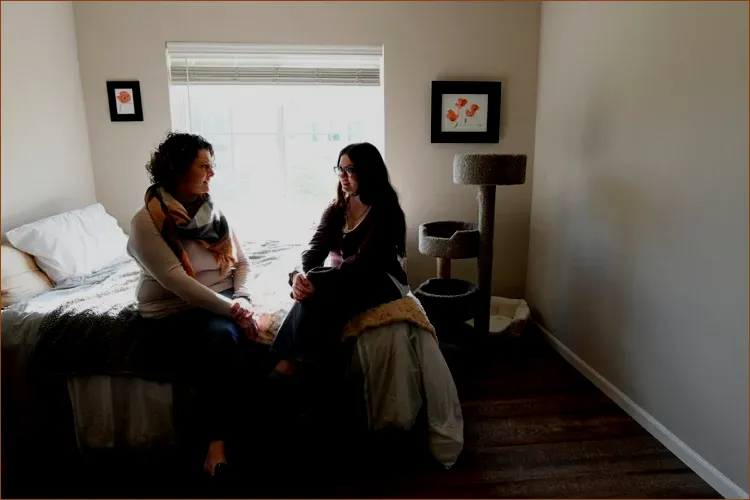
HOLT — When Eleanor Middlin was just 15, her family made the tough decision to send her to a boarding school in Missouri, an 11-hour drive from their home in mid-Michigan. Looking back, Eleanor, now 20, describes it as one of the hardest times in her life, yet she credits it with saving her life.
“I’m alive because of it, and I will never forget it,” she shared. Her journey reflects a troubling trend emerging in Michigan, where more and more young people in serious mental health crises are being sent far from home for treatment.
Since the COVID-19 pandemic, there has been a notable increase in the number of children and teens being placed in facilities that can be hundreds or even thousands of miles away. Many families find themselves navigating this difficult path simply because local resources are limited.
The Middlin family is part of an increasing number of Michigan families who choose to pay for out-of-state care, a choice that often remains under the radar in state health data. However, state reports reveal that many children placed in facilities due to court orders are also being sent out of state. This trend has surged as several facilities in Michigan have closed in recent years.
As of September, 152 youths in Michigan’s direct-placement program were residing in out-of-state facilities, some as distant as Hawaii and Arizona. This number reflects a significant rise from previous years, doubling from just 74 children in 2023.
Laura Marshall, a mother from Cedar Springs, expressed her concerns about this trend. Her son was placed in a long-term facility in Wyoming through court order. “It felt like we were throwing him to the wolves,” she said. The long distances make visiting difficult, and many facilities have strict rules about contact, leaving parents feeling helpless and anxious about their children’s recovery.
There are also growing concerns about the safety and quality of care in these facilities, as stories of abuse and mistreatment circulate among parents. “You’re shipping your kid across the country without really knowing what’s happening to them,” Marshall lamented.
State officials believe that the surge in out-of-state placements mainly affects youth under court supervision, rather than those directly overseen by the state. However, there is no requirement for counties to report placement data, making it difficult to get a complete picture.
Erin Stover, a spokesperson for the Michigan Department of Health and Human Services, emphasized that the primary focus should always be the safety and well-being of the child. However, lawmakers are sounding the alarm about the larger system, questioning how the state oversees its multitude of juvenile facilities.
“If a child gets seriously injured in an out-of-state facility, who is responsible?” asked State Rep. John Roth. The uncertainty surrounding liability adds another layer of complexity to an already challenging situation.
Eleanor Middlin’s struggles began early, with a hospitalization for self-harm at just 12 years old. Despite seeing therapists and trying medication, her mental health worsened during the pandemic. Feeling isolated and overwhelmed by social media, she turned to substances like Xanax and opioids, all while keeping much of it a secret from her mother, Jennifer.
“We did everything we could, but it felt shameful,” Jennifer admitted. Despite short-term treatments, Eleanor needed more comprehensive care than what was available locally. Ultimately, her family opted for out-of-state care, costing them around $90,000, which put a significant financial strain on them.
The state also faces rising costs, having spent over $13 million last fiscal year on out-of-state placements, a stark increase from $9.7 million the year before. Mental health advocates highlight the pressing need for better treatment options within Michigan, as many families find themselves struggling to navigate a fragmented and often unhelpful system.
As discussions about potential changes unfold, some lawmakers worry that little progress will be made in the immediate future. With elections approaching, many believe that significant reforms to the youth treatment system may be delayed.
In the face of these challenges, families like the Middlins continue to fight for the care their children desperately need, hoping for change and better resources within the state.
This story highlights the ongoing struggle for effective mental health treatment for youth in Michigan and the growing reliance on out-of-state facilities.
