
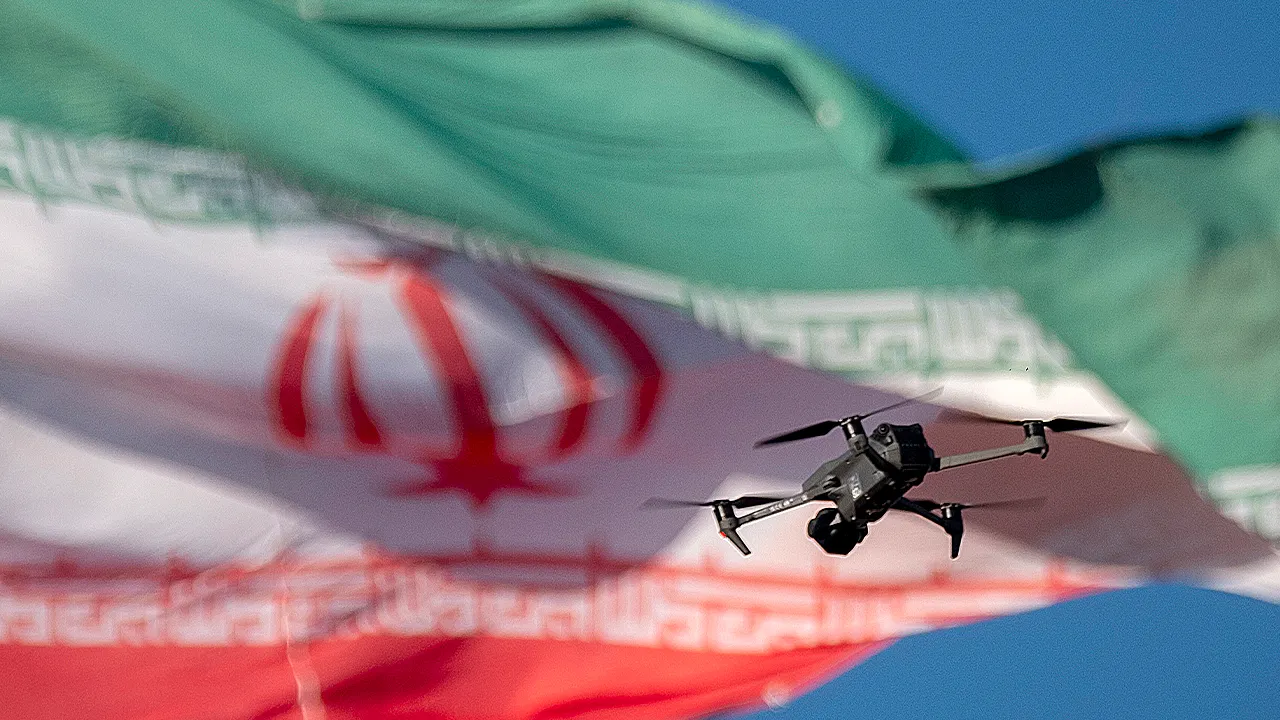
Iran Expanding Drone Warfare Capabilities
Iran is developing a decentralized drone warfare system, utilizing affordable technology from China, according to defense expert Cameron Chell from Draganfly. The program, which focuses on first-person-view (FPV) drones, poses a potential threat not just to the Middle East but also to the United States.
Chell describes these drones as a significant advancement for Iran, stating, “FPVs are very challenging to defend against and can be deployed independently, making them a game changer.” He emphasizes that various groups within Iran, including its military and militias, can create or acquire their own FPVs for offensive purposes.
Chell warns that Iran may ramp up production significantly, potentially exceeding 100,000 drones monthly. He believes Iranian groups might even have the know-how to build such equipment inside the United States.
The rising use of FPVs has been highlighted by recent drone attacks in Iraq, where Iranian-backed militias have targeted U.S. military assets. A drone strike at Baghdad International Airport was reported to have hit a U.S. helicopter and a radar unit.
Chell adds that Iran is enhancing its manufacturing capabilities using components smuggled from China. He noted, “It’s crucial to understand how challenging it is to stop this flow of parts,” stressing the decentralized nature of the drone production.
He also drew parallels between Iran’s strategy and what has been seen in Ukraine, where grassroots drone manufacturing has surged. “An underground industry for drone production is likely taking root in Iran,” he stated. These operations could take place in homes or basements, where makeshift assembly lines may be set up.
Concerns about Iranian individuals potentially infiltrating the U.S. have also been noted. Since the Biden administration, around 1,500 Iranians have been intercepted at the U.S. border, raising alarms about possible sleeper cells.
Chell’s insights point to a growing asymmetric threat, suggesting that drone attacks could expand beyond the Middle East and potentially reach U.S. soil. He predicts that within the next eight months, Iran will possess advanced drone systems capable of overcoming certain defenses.
“Addressing these little drone factories will be very complicated,” he added, emphasizing the difficulties in disrupting supply lines and operations rooted in civilian areas. If Iran can strengthen its supply chains, it could significantly lengthen the conflict with the U.S.
As the situation evolves, the implications for both regional stability and U.S. security are becoming increasingly complex.
