
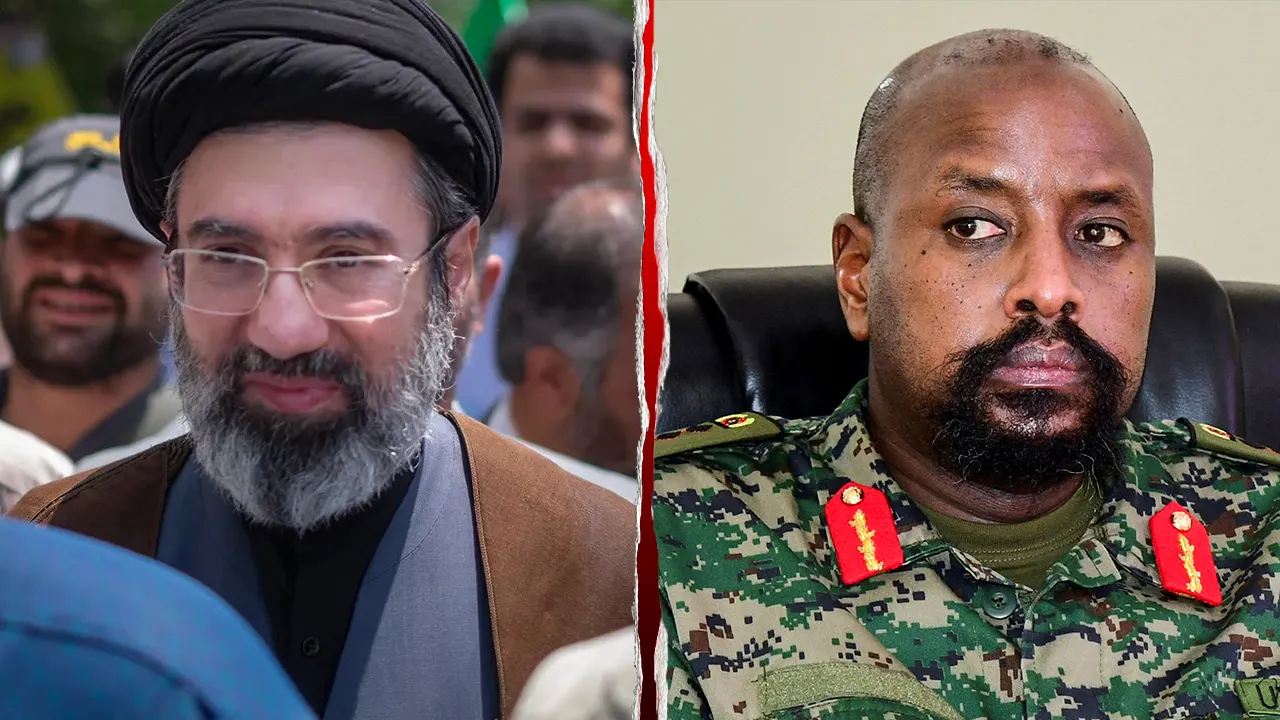
Uganda’s Military Chief Expresses Support for Israel Amid Rising Tensions
This week, Uganda’s military chief, Gen. Muhoozi Kainerugaba, hinted at the possibility of deploying the country’s military to support Israel in the ongoing conflict with Iran. Kainerugaba, who is the son of President Yoweri Museveni and seen as his potential successor, made this statement through several social media posts that quickly gained traction.
“We stand with Israel because we are Christians,” Kainerugaba wrote. He continues to assert that Uganda, often overlooked, is ready to face any threats against Israel. “Uganda is the David that was forgotten by the world. We will defeat the giant, Goliath,” he claimed.
Starting his series of posts with a call for peace in the Middle East, he conveyed that any plans to harm Israel would compel Uganda to enter the conflict on its side. Uganda has a military force of 45,000 active personnel and about 35,000 in reserve, with military equipment that includes approximately 240 tanks and over 1,000 armored vehicles.
In addition to its own military capabilities, Uganda is actively involved in regional conflicts. Ugandan troops are part of an African Union mission fighting al-Shabab militants in Somalia and are also engaged in operations against the ADF terrorist group in the eastern Democratic Republic of Congo.
While Uganda does not share direct borders with Iran, the nation remains cautious due to Iran’s increasing influence in East Africa. Reports suggest Iran has been involved in covert operations in nearby Kenya and Tanzania, raising concerns about its strategic interests in the region.
In a show of gratitude, Kainerugaba acknowledged Israel’s support during Uganda’s challenging times in the 1980s and 1990s, expressing his commitment to defend a country that once stood by them. “Why wouldn’t we defend her now that our GDP is $100 billion? One of the largest in Africa,” he added.
Historically, Uganda and Israel share a robust partnership, particularly in military training and cooperation. The relationship has evolved significantly since the tumultuous days of the 1970s, when Uganda’s dictator Idi Amin opposed Israel.
As a sign of goodwill, Kainerugaba has proposed erecting a statue of Lt. Col. Yonatan Netanyahu, a key figure involved in the Israeli raid during the 1976 hijacking incident at Entebbe. He shared a photo of the proposed statue, aiming to honor the connection between the two nations.
This situation remains dynamic, and Uganda’s future actions could play a significant role in the region’s geopolitical landscape.
