
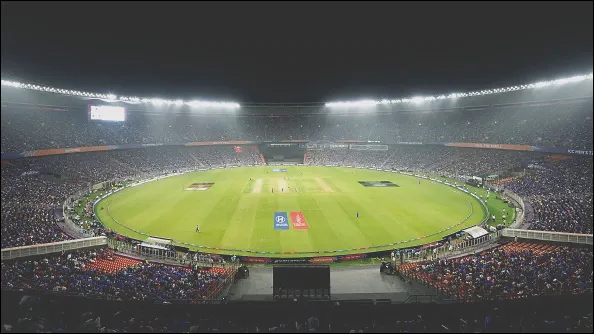
Ahmedabad’s Pitch: Key Factor for T20 World Cup Final
As the T20 World Cup final between India and New Zealand approaches in Ahmedabad, fans and analysts alike are debating team strategies and player match-ups. However, one significant aspect that could influence the game is the pitch at the Narendra Modi Stadium.
This venue is unique in India because it features three distinct types of surfaces: red soil, black soil, and a combination of both. Each type has its own characteristics. Black-soil pitches are generally slower and can make it tricky for batters to hit freely. In contrast, red-soil surfaces usually provide more bounce and speed, often leading to higher scores.
India’s earlier experiences during the tournament may weigh heavily on their choices. In the Super Eight stage, they suffered a substantial loss to South Africa on a black-soil pitch in Ahmedabad. As the game wore on, scoring runs became increasingly difficult.
Given this context, pitch curators are carefully considering their options for the final match. Reports suggest that the main pitch may be a hybrid of red and black soil, striking a balance that allows for both good bounce and some grip for bowlers as the match progresses.
Interestingly, the final pitch has yet to be confirmed, with broadcasters still installing cameras, indicating that the decision is still being finalized. Curators have shown keen interest in a particular strip, with BCCI officials also inspecting it closely.
This pitch has seen limited action during the tournament, hosting only one match where South Africa scored 213 runs, winning by 53 runs. This lack of use could mean fresher conditions for the final.
If the pitch behaves as expected, the final could turn into a thrilling, high-scoring event. Pitches like this one can provide excellent bounce, benefiting both aggressive batting and fast bowling.
India’s pace bowlers, like Jasprit Bumrah and Arshdeep Singh, could exploit the early overs effectively, especially if the pitch offers movement in the evening. Bumrah, known for his precision, can be particularly dangerous on bouncy tracks.
India also has a strong spin department with options like Varun Chakravarthy and Axar Patel, while Kuldeep Yadav may be considered for a wrist spin role. Even if the pitch doesn’t turn much, spinners will still play a vital part in managing the middle overs.
New Zealand’s bowlers are equally adept at these conditions. Matt Henry and Lockie Ferguson can generate bounce and pace, while James Neesham adds another seam option for crucial overs.
On the spin side, captain Mitchell Santner, along with Rachin Ravindra and Cole McConchie, will provide balance should the pitch begin to grip later in the game.
India heads into the final on the hunt for history, aiming to become the first team to defend a T20 World Cup title on home soil. They come off an impressive semi-final against England, where Sanju Samson’s remarkable innings helped them reach a staggering total.
New Zealand, meanwhile, is also eager to make their mark. They dominated their semi-final against South Africa, restricting them to 168 runs and chasing down the target swiftly.
With both teams featuring aggressive batting line-ups and pace-oriented bowling attacks, the pitch in Ahmedabad could add an exciting twist to what promises to be an unforgettable World Cup final.
