
AI’s Role in Modern Military Conflicts: An Overview
Recent clashes involving the United States, Israel, and Iran have highlighted a significant new trend: the use of artificial intelligence (AI) in military operations. The debate about its application in warfare is active and ongoing, with many experts weighing in.
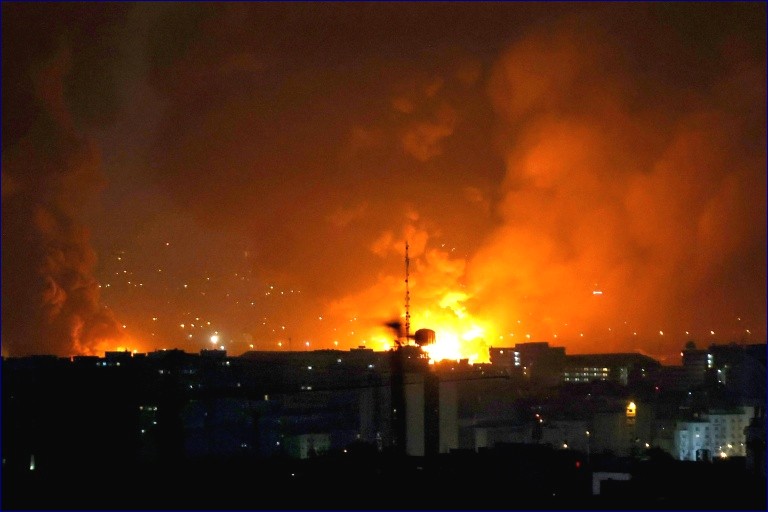
Reports indicate that various forms of AI have played roles in military actions, including Israel’s operations in Gaza and an American mission to capture Venezuelan leader Nicolás Maduro. Analysts suggest that AI has been crucial in helping to choose targets during the thousands of strikes against Iran since late February, though specific details about its use remain unconfirmed.
According to Laure de Roucy-Rochegonde from the French think tank IFRI, almost every major military force is heavily investing in AI for military purposes. She noted that AI can enhance nearly every aspect of military operations, from logistics and reconnaissance to information and electronic warfare.
AI technology also finds its way into semi-autonomous drones and other advanced weapons. One of the most notable advantages of AI is its ability to shorten the “kill chain” — the time it takes to identify a target and carry out a strike. For instance, U.S. forces utilize a system called the Maven Smart System (MSS) developed by Palantir, designed to identify and prioritize targets swiftly.
The Washington Post recently reported that Anthropic’s Claude AI model has been integrated with Maven to improve its target detection capabilities. However, both Palantir and Anthropic did not respond to requests for comments about this integration.
Bertrand Rondepierre, who leads the French army’s AI agency AMIAD, emphasized that AI makes it possible to process large amounts of information, including satellite images, drone videos, and real-time data, at a much faster pace.
Ethical Questions Surrounding AI in Warfare
While the use of AI is growing, it raises important ethical and legal questions, particularly concerning human oversight. For example, during the recent Gaza fighting, Israeli forces used a system called “Lavender” for target identification, but there were concerns about its error margins.
De Roucy-Rochegonde pointed out that such a system worked effectively in a confined area, aided by a comprehensive surveillance system that collected data on the region’s residents. In contrast, she noted that Iran likely lacks a similarly extensive surveillance setup.
Peter Asaro, chair of the International Committee for Robot Arms Control, highlighted the dilemma: if something goes wrong during an AI operation, who should be held accountable? He referred to a bombing incident at an Iranian school that reportedly resulted in significant casualties, questioning whether it reflected misuse of AI technology.
While both the United States and Israel have not accepted responsibility for this attack, the incident raises the issue of AI potentially misidentifying targets. Asaro stressed the importance of understanding the age of the data used for targeting decisions and whether errors originated from outdated databases.
The Path Forward for AI in Military Operations
Rondepierre dismissed the notion of AI functioning without human oversight as “science fiction.” He stated that military commanders are closely involved in the development and implementation of these AI systems in France, ensuring that they trust the technology used during military operations.
“Military leaders would only utilize AI if they felt confident in its reliability and the contexts wherein it is employed,” he asserted. He acknowledged the awareness among decision-makers regarding the risks involved and the limitations of these systems.
Experts believe the use of AI in armed forces is just the beginning. Benjamin Jensen from the Center for Strategic and International Studies (CSIS) noted that global militaries have yet to fundamentally rethink how they operate to fully utilize AI’s capabilities. Jensen remarked that it may take an entire generation to fully understand and integrate these advancements into military strategies.
As AI continues to evolve, its implications in warfare will likely remain a topic of vital discussion for years to come.
