
Iran’s Drone Strategy Stirs Concerns in the Middle East
Iran is ramping up its use of low-cost attack drones throughout the Middle East, targeting assets linked to Western nations. Experts warn that this approach is aimed at creating significant challenges for the United States and its allies.
Technology specialist Cameron Chell, CEO of Draganfly, pointed out that Iran is unleashing thousands of Shahed drones, which are designed to overwhelm sophisticated defense systems. He emphasized that while these drones may not decide the outcome of a war, they can create political tension and prolonged conflicts, similar to strategies used by the Viet Cong during the Vietnam War.
Chell explained, “A decentralized group using even a hundred of these drones can instill fear in neighboring countries like never before. Iran’s tactics are successful because they can inflict substantial costs on the U.S., forcing them to target these small, hard-to-detect drone units.”
This warning follows escalating tensions after a recent joint U.S.-Israel attack targeting Iranian nuclear sites and military leaders, including Ayatollah Ali Khamenei.
Iranian drones have already caused casualties, with reports of six U.S. service members killed during an attack on a tactical center in Kuwait. There was also a drone strike on a CIA facility in Saudi Arabia, which resulted in a small fire but no injuries.
Drones identified as Shahed models have also attacked structures in Bahrain, striking high-rise buildings near a U.S. Navy base, and targeted the U.S. Consulate in Dubai. The United Arab Emirates has reported intercepting several Iranian missiles and drones aimed at its territory.
Chell commented on the Dubai attack, saying, “The drone footage suggests we are looking at a Shahed-class one-way attack drone.” This insight highlights the capabilities of these UAVs in causing damage and escalating tensions in the region.
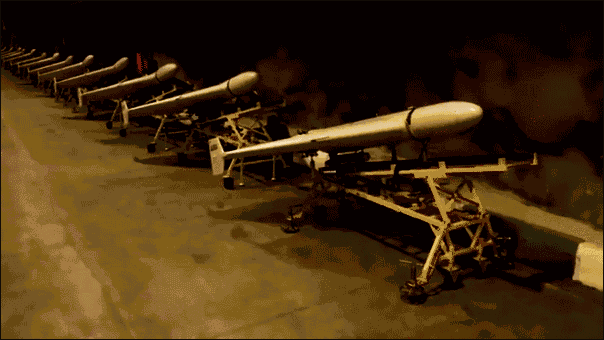
Amid these events, footage from Iranian state media claimed to show extensive stockpiles of attack drones stored in underground facilities. While the exact details are unverified, it raises questions about Iran’s production capabilities during ongoing conflict.
Experts are warning that the use of drones signifies a shift in military strategy. A report from the Carnegie Endowment for International Peace highlighted that Iran’s blend of ballistic missiles and drones represents a new age of warfare. Senior fellow Dara Massicot noted the high costs associated with intercepting these drones, pointing out the limited resources available for effective defense.
As the landscape of warfare continues to change, analysts agree that nations must adapt to these emerging threats, especially as unmanned aerial vehicles become more prevalent on battlefields around the world.
