
Election Commission’s Roll Revision Process: Key Updates
It’s been over eight months since the Election Commission of India (ECI) began its Special Intensive Revision (SIR) process aimed at updating electoral rolls across the country. This initiative kicked off in Bihar and has since expanded to include nine states and three Union territories, covering 237 of the country’s 543 Lok Sabha constituencies. However, the process differs in Assam, where it’s termed Special Revision (SR) and has its own set of rules. The ECI has stated that it will roll out this exercise in other regions starting in April.
On February 28, the ECI marked a key moment by releasing the final electoral roll for West Bengal, which includes six million electors still under review. This list came after a Supreme Court directive, ensuring that the ongoing scrutiny wouldn’t delay the crucial elections needed to form a new assembly by May 7. Similar issues are unfolding in Uttar Pradesh, where the process is also taking longer than expected. The revised deadline for Uttar Pradesh is set for April 10.
As the SIR process continues, some important trends are emerging:
-
Duration of the Process: Bihar was the quickest, completing the SIR in just 98 days, while Uttar Pradesh is expected to take 157 days, making it the longest.
-
Voter Reduction: A significant outcome of this exercise is the decrease in voter numbers across all states involved in the SIR. As it stands, a net reduction of 35.4 million voters has been recorded across the 12 states and Union territories, marking an 8.1% drop from the original numbers.
-
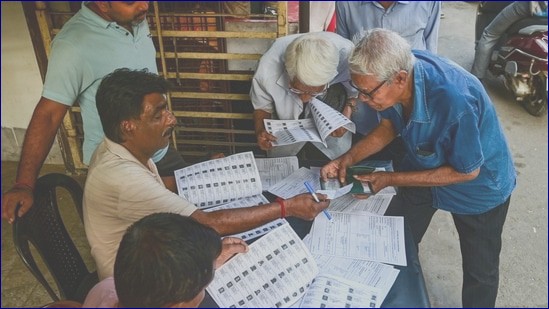
Draft and Final Rolls: The SIR is a three-step process. Initially, electoral rolls are frozen, followed by an enumeration where voters must validate their presence by filling out forms. After these steps, a draft roll is published, which usually shows fewer voters compared to the original roll but often sees numbers rise again in the final published roll. West Bengal has notably placed six million voters under review even after issuing its final roll.
-
Impact of Deletions: While a reduction in the number of electors raises concerns about potential voter suppression, states like Bihar have shown that fewer electors do not necessarily lead to lower voter turnout. In fact, Bihar saw an increase in voter participation in subsequent elections despite a significant number of deletions during the SIR.
-
Role of Migration: Analysis indicates that many deletions may be linked to migration patterns, as voters might register in urban areas without dropping their original registrations. This trend appears more pronounced in urban districts, though it doesn’t explain all deletions.
Furthermore, only a few states, including Tamil Nadu and Rajasthan, have provided detailed district-wise breakdowns of these deletions at the draft stage, which could offer further insights into the ongoing processes.
In summary, while the SIR process has its challenges and complexities, it continues to play a critical role in ensuring updated and accurate electoral rolls as the nation prepares for upcoming elections.
