
Cricket Fever in Visakhapatnam: A Marketplace Before the Match
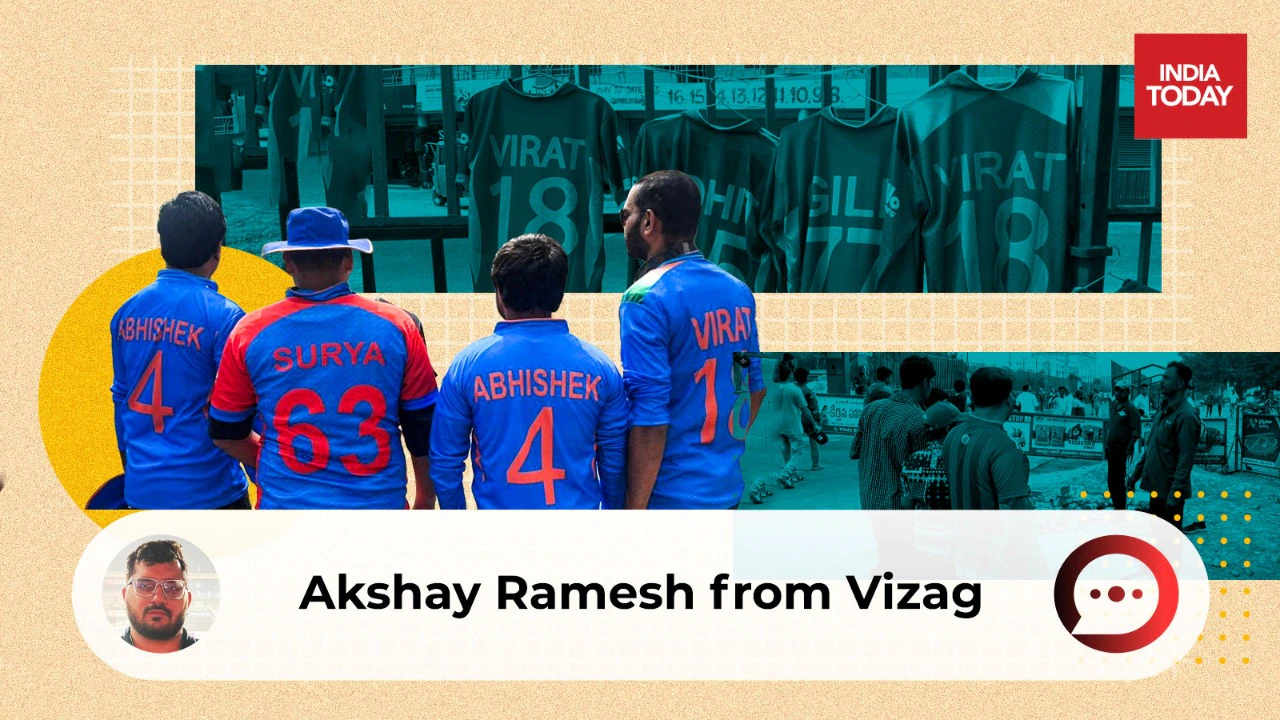
Just hours before the game began at the ACA–VDCA Stadium in Visakhapatnam, the area outside transformed into a bustling market. Fans arrived for the eagerly awaited fourth T20I between India and New Zealand, some pausing for selfies while others scouted for their entry gates. Stalls lined the pavement, displaying blue jerseys draped over ropes or stacked neatly.
Names of cricket legends like Virat Kohli, Rohit Sharma, and MS Dhoni were boldly printed, some jerseys already showing signs of wear from being tried on by excited fans.
The vendors setting up shop outside had come earlier. They had mastered this routine: before the stadium lights flickered on and the national anthem played, this patch of pavement became their domain.
Outside most cricket venues in India, sellers of jerseys are a common sight. Some are locals who show up specifically for match days, while others travel long distances across the country, mirroring the movements of the Indian cricket schedule like devoted fans. For them, cricket is their guide, marking their journey from one venue to the next.
In a thriving cricket scene, where major brands invest hefty amounts for the chance to be associated with the Indian team, a shadow market exists just outside the stadium doors. It’s estimated that out of every 10,000 fans, around 8,000 might sport unofficial jerseys.
These aren’t just random street vendors; they are a dedicated group committed to following the cricket calendar closely. In Visakhapatnam, the mix of local sellers and those from far away was evident, with each outstation seller easily discussing their next destination or match.
“There are over 100 days of cricket in a year now,” one seller noted. “This has become our work.”
When the season is in full swing, many are away from home.
The Traveling Merchants
These sellers often travel in groups of 20 to 40, splitting up according to regions. During the IPL, some cover cities in the northern part of the country, while others focus on the south. They follow both men’s and women’s international matches, ensuring their presence wherever cricket is played.
Among them was Bhuvan from Bihar, who juggled selling jerseys with daily-wage labor. Anal, from Kolkata, and Umesh, a teenager from Mumbai who has already been selling jerseys for eight years, shared their experiences. On a successful day, they could earn between Rs 4,000 and Rs 5,000.
“Virat Kohli and Rohit Sharma jerseys are the top sellers,” Umesh mentioned. “Abhishek Sharma and Hardik Pandya’s shirts are gaining popularity as well.”
The constant demand keeps them moving from one match to another.
Two brothers—Vishnu from Thane and Umesh from Solapur—had come to Vizag from Indore after a profitable game earlier in January. The brothers travel with family and friends, ensuring they don’t miss any match. They usually arrive a day or two beforehand to get familiar with the area and set their plans in motion.
“Local sellers are always around, but there are many like us who travel to every match,” Vishnu shared.
As they spend time in various cities, familiar faces begin to emerge—regular fans, fellow sellers, and even journalists moving between venues. The community is tight-knit.
Inside the Jersey Business
The jerseys they sell are replicas—unofficial copies of the authentic merchandise controlled by sports brands with exclusive rights. Official jerseys are often too expensive for many fans attending a match, making the replicas a more affordable alternative.
For every 10,000 fans, it’s estimated that up to 8,000 wear jerseys purchased from vendors like them. However, their profit margins are slimmer than it seems.
They get their stock from three key locations: Mumbai, Kolkata, and Tiruppur, with half-sleeve jerseys costing around Rs 140 and full-sleeve ones about Rs 170. Shirts from Tiruppur are slightly more expensive but considered higher quality.
“People often overlook slight differences in the logos or fabric quality, but we can tell,” Vishnu noted.
They typically price half-sleeve jerseys at Rs 200 and full-sleeve at Rs 250, which gives them a margin of Rs 60 to Rs 80 per shirt. However, buyer negotiations can shrink these margins significantly.
“Most times, we don’t sell at those prices,” Vishnu said. “Customers often bargain, and sometimes we only make Rs 10 or Rs 20, fearing we won’t sell enough shirts.”
Not every game day ends with profits; T20 matches typically see less spending compared to longer ODIs.
“In T20s, people know they won’t be there long and aren’t willing to spend much,” Umesh explained, noting that many simply use the jersey during the match and discard it afterward.
Their strategy is to look at overall earnings across the season rather than profits from individual games.
“Some venues are lucrative, others not so much. It’s all about the average,” Vishnu explained.
The brothers have been in this business since the first IPL season in 2008, which they say remains the best time for making money.
The Railway System
Most sellers operate through brokers based in Mumbai, with some also serving as group leaders. They work on a commission basis and can return any unsold stock, which reduces risk but ties them to this system.
Continuously replenishing their stock is essential. They order jerseys online with digital payments, having them shipped by freight trains to their next location.
“Carrying everything is impractical,” Vishnu said. “We reorder when something sells out.”
Women’s cricket jerseys also play a part in their sales, especially following the success of the Women’s World Cup in India, with jerseys of players like Smriti Mandhana and Harmanpreet Kaur performing well.
Now, they’re preparing for the upcoming T20 World Cup, already placing orders for jerseys of teams from abroad.
For them, cricket isn’t just about nostalgia; it’s all about logistics.
A Different Approach
Papai Das from Kolkata has a unique approach. He traveled to Vizag with friends but doesn’t work through a broker. Instead, he personally invests around Rs 50,000 for jerseys each series to sell on his own.
“It’s risky,” he admitted. “But if it succeeds, the profits can be higher.”
Like the others, he travels to matches all over India, immediately booking train tickets when cricket schedules are released.
Once the cricket season wraps up, he returns to Kolkata to work in construction as a daily-wage laborer.
“This is seasonal,” he said simply. “You need to keep moving.”
Balancing Risks and Rewards
The presence of these sellers outside stadiums often creates a tension with the official merchandise system. Brands, with their exclusive rights, are regularly trying to combat counterfeit sales. Raids and warnings are common.
But outside the venue gates, this parallel economy continues to thrive. For fans, the choice is clear—official jerseys can be pricey and hard to find, while replicas are cheaper and available right at their moment of excitement.
For sellers, risk is part of the game. A raid can take away an entire day’s earnings, leading to debt. Yet they persist.
The system endures because demand remains strong, and these nomadic sellers have learned how to navigate the gaps.
As the crowd grew thick in Vizag, more jerseys changed hands. Sellers adjusted their prices and rearranged their displays, calling out to passing fans.
Inside the stadium, the match would last a few hours. Outside, these dedicated sellers were already planning their next move—onto the next city, the next train, and the next patch of pavement that would become their temporary home.
After the gates closed, they would pack away their unsold stock and check train schedules once again. Cricket would continue, just as they would.
