
Protests Continue in Iran Amid Rising Tensions
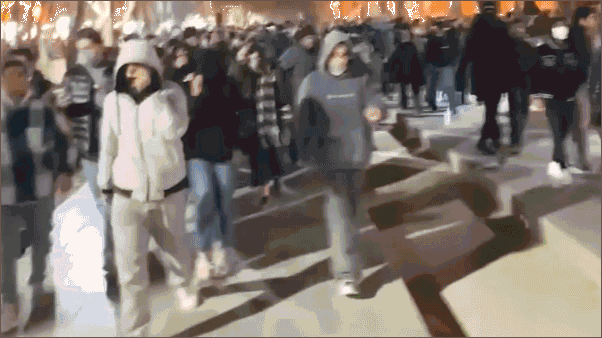
Protests in Iran have entered their fifth day, with demonstrations and clashes occurring in Tehran and various provincial cities. Reports from state media, rights organizations, and local authorities indicate an increase in violence, including additional deaths linked to the unrest.
Recent reports from Iranian media and human rights advocates suggest several fatalities as protests escalate. Officials have confirmed at least one death, with other reports coming in from different regions. The National Council of Resistance of Iran (NCRI) stated that protests and clashes were ongoing, particularly in Tehran and cities like Marvdasht and Kermanshah. They claimed that two protesters were shot in Lordegan, though these reports could not be independently confirmed.
The unrest began on Sunday when merchants protested against rising inflation, unemployment, and the devaluation of the Iranian currency. The situation rapidly expanded as students and other sectors of society joined in, voicing their frustrations in cities nationwide.
In Lordegan, clashes intensified with protesters throwing stones at government buildings, prompting a heavy police response involving tear gas. Reports indicated that several buildings were damaged, and there were conflicting accounts of casualties, with some sources stating that a protester was killed by security forces.
In a separate incident, a 37-year-old man was shot dead during protests in Fooladshahr, further highlighting the escalating violence. Police confirmed the man’s death but provided no additional details.
Meanwhile, six women arrested during protests in Tehran have been moved to a women’s prison, according to a rights group.
U.S. officials, including former President Donald Trump, have expressed support for the protesters, pointing to the ongoing economic difficulties faced by the Iranian public.
Maryam Rajavi, the NCRI’s President-elect, emphasized the determination of Iranians to overthrow what she calls a tyrannical regime, stating that the movement represents a powerful call for freedom.
As protests continue, Iran’s economy remains under significant strain from years of international sanctions, inflation, and currency instability. The government has announced a nationwide shutdown, claiming it was due to extreme weather, while offering to discuss the “legitimate demands” of merchants.
Reza Pahlavi, the exiled Crown Prince, also urged the international community to support the people of Iran, declaring that the current regime is at its weakest and unable to suppress growing dissent.
These protests, while echoing past movements in Iran, are largely fueled by economic grievances, with demonstrators increasingly directing their anger at the political leadership.
