
Somalia Faces Ongoing Challenges Amid Rising Violence and Resilience
Somalia, located on the Horn of Africa, remains a hotspot for terrorism, with groups like the Islamic State and al-Qaeda committing acts of violence and extortion against the population. According to a report by Human Rights Watch, hundreds have lost their lives in 2024 due to conflicts involving militant groups and clan disputes.
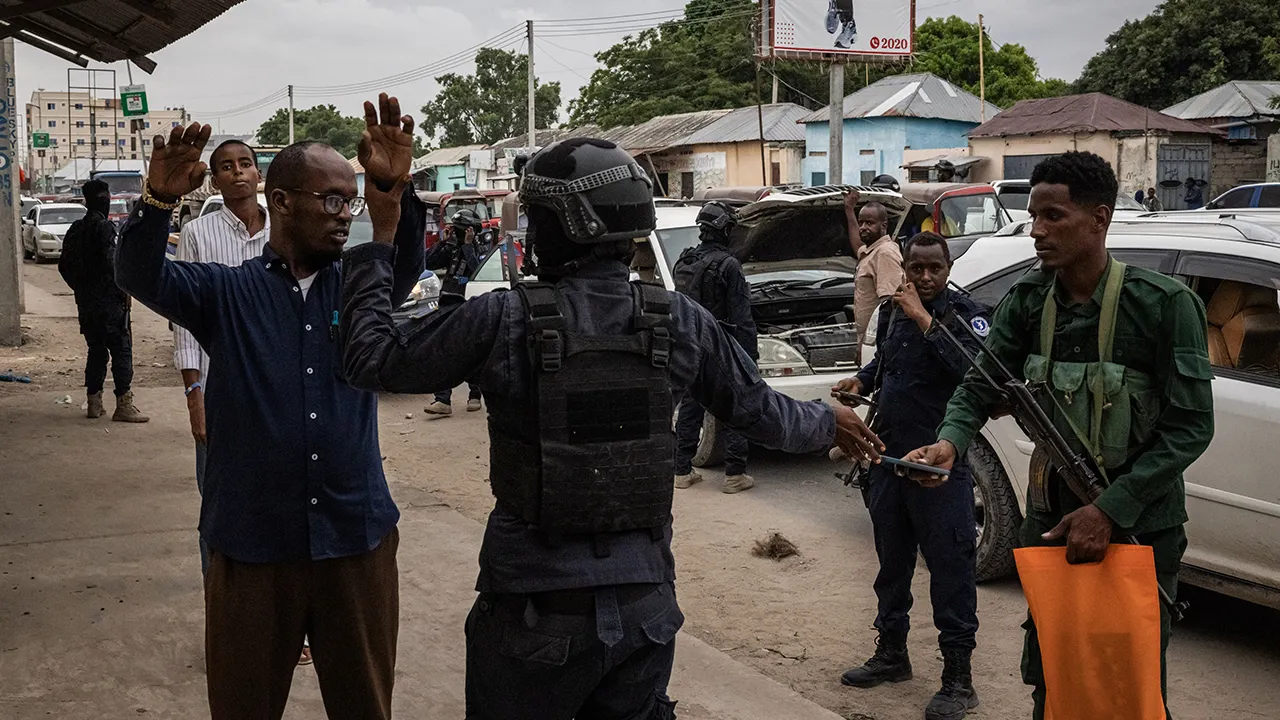
In many parts of Somalia, armed roadblocks are a reality, with government forces and terrorists often demanding money from civilians. Lawlessness and corruption are common concerns.
U.S. President Donald Trump recently commented on Somalia, describing it as a place where “people walk around killing each other.” He noted that the country is often seen as one of the world’s worst but admitted he hasn’t visited.
Escalation of U.S. Airstrikes
The U.S. government has ramped up airstrikes against terrorist groups in Somalia, increasing operations tenfold this year compared to those under President Biden in 2024. Recent strikes included targeting ISIS-Somalia in Puntland and al-Shabaab in Kismayo, with U.S. forces employing both drones and helicopters.
Despite the turmoil, the Somali Ministry of Endowments and Religious Affairs reports a predominantly Sunni Muslim population.
Bill Roggio, a senior fellow at the Foundation for Defense of Democracies, told reporters that al-Shabaab continues to hold significant territory, potentially controlling more than it did in previous years.
Life in Mogadishu: A Mixed Reality
Life in Somalia is complex. Mogadishu, the capital, has seen improvements, with residents noting a flourishing business environment and development projects. Samatar Talliye, a local resident, shared that experiences vary widely across the country; while Mogadishu has become relatively safe, areas outside the city face significant challenges.
Conversely, reports from Human Rights Watch indicate that the capital still suffers from occasional terrorist attacks. In August 2023, al-Shabaab attacked a beach restaurant, resulting in numerous casualties.
Anna Mahjar-Barducci, a project director at a media research institute, emphasizes that while urban areas show signs of improvement, regions in southern Somalia remain vulnerable to al-Shabaab threats. Corruption in government offices adds to the hardship, as accessing services often requires bribes.
A Struggle for Stability
Despite ongoing violence, many Somalis express hope for a better future. Abdisamad Artan Ahmed, also from Mogadishu, stated that, contrary to some perceptions, Somalia is one of the safest countries in East Africa today. However, the persistence of al-Shabaab’s influence creates a significant barrier to stability.
The group reportedly generates over $150 million annually through various means, including extortion and taxation, making it difficult for ordinary citizens to avoid contributing to its funding.
While the country grapples with its past and ongoing challenges, there are tangible signs of resilience. Residents seek a future free from fear, where they can live, work, and raise families without intimidation. The road to lasting stability remains complex, but the hope for accountability and change is growing among the people.
