
China Launches Urgent Space Mission Amid Crew Safety Concerns
BEIJING: In a swift response to a pressing issue, China launched an unmanned spacecraft on Tuesday to ensure the safe return of astronauts currently aboard its Tiangong space station. This decision came after damage to a previous mission’s return capsule left the crew without a reliable way to get back to Earth.
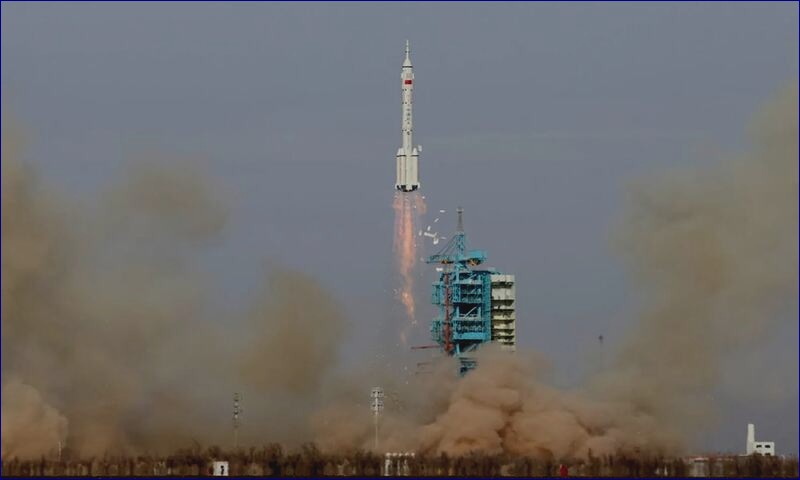
The Long March-2F rocket, which carried the Shenzhou-22 spacecraft, took off shortly after noon from the Jiuquan Satellite Launch Center in northwest China, as shown in footage from state broadcaster CCTV.
Typically, missions like Shenzhou are used to rotate astronauts at the Tiangong space station, with teams changing every six months. Shenzhou-22 was initially scheduled for a crewed launch in 2026 but was moved up to address the urgent situation.
The change in schedule was prompted by a suspected hit from space debris on the Shenzhou-20 return capsule, making it unsafe for re-entry. As a result, the crew of Shenzhou-20 found themselves temporarily stranded after their flight back was delayed until November 14, nine days later than originally planned.
To bolster its space exploration goals, China has also made efforts to collaborate internationally. In February, it signed an agreement with Pakistan to bring in the first foreign astronauts, known as “taikonauts,” into its space program.
The timely launch of Shenzhou-22 is crucial for ensuring the crew members Zhang Lu, Wu Fei, and Zhang Hongzhang have a secure and safe way to return home.
