
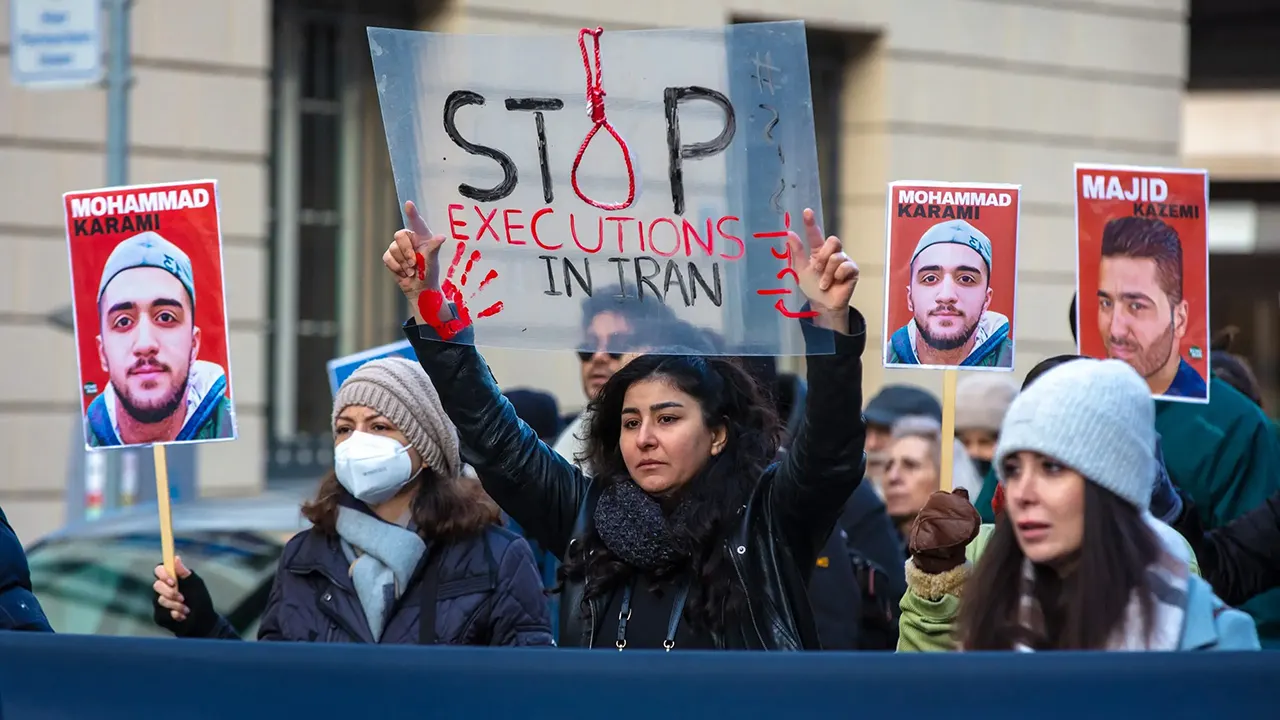
Iran Faces Global Outcry Over Surge in Executions
The United Nations has highlighted an alarming rise in executions in Iran, labeling it an “unprecedented execution spree.” According to the Office of the High Commissioner for Human Rights (OHCHR), the Iranian authorities have executed over 1,000 individuals since the start of the year, averaging almost nine executions daily. Most of these victims were charged with murder and drug-related offenses.
In response to the shocking number of executions, around 1,500 death row inmates in Ward 2 of Ghezel Hesar Prison began a hunger strike on October 13. Among them are 17 members of the Iranian opposition group Mojahedin-e-Khalq (MEK).
Maryam Rajavi, the president-elect of the National Council of Resistance of Iran (NCRI), is urging immediate intervention from the United Nations and other international bodies to stop the ongoing crisis under the current Iranian regime. Reports suggest that executions increased dramatically, with 38 occurring between October 13 and October 15 alone, bringing the total to an astonishing 2,008 executions since President Masoud Pezeshkian took office 14½ months ago.
Prison officials are allegedly attempting to undermine the inmates’ hunger strike. Footage has emerged claiming that inmates in other wards were eating to falsely suggest that the strike in Ward 2 isn’t occurring. Striking prisoners expressed their despair, stating they can no longer endure the daily threat of execution and calling for an end to the death penalty in Iran.
NCRI representatives informed that the Iranian regime executed two MEK members in late July but has not returned their bodies to the families. They claim the situation highlights the cruel treatment faced by Iranian prisoners, with many subjected to torture and trials that lack fairness.
The U.S. State Department has condemned Iran’s use of executions as a means of suppressing basic human rights. Spokesperson Stéphane Dujarric emphasized the United Nations’ position against capital punishment globally.
As protests grow both within Iran and internationally, activists continue to call attention to the human rights abuses and the urgent need for action to protect those at risk of execution.
