
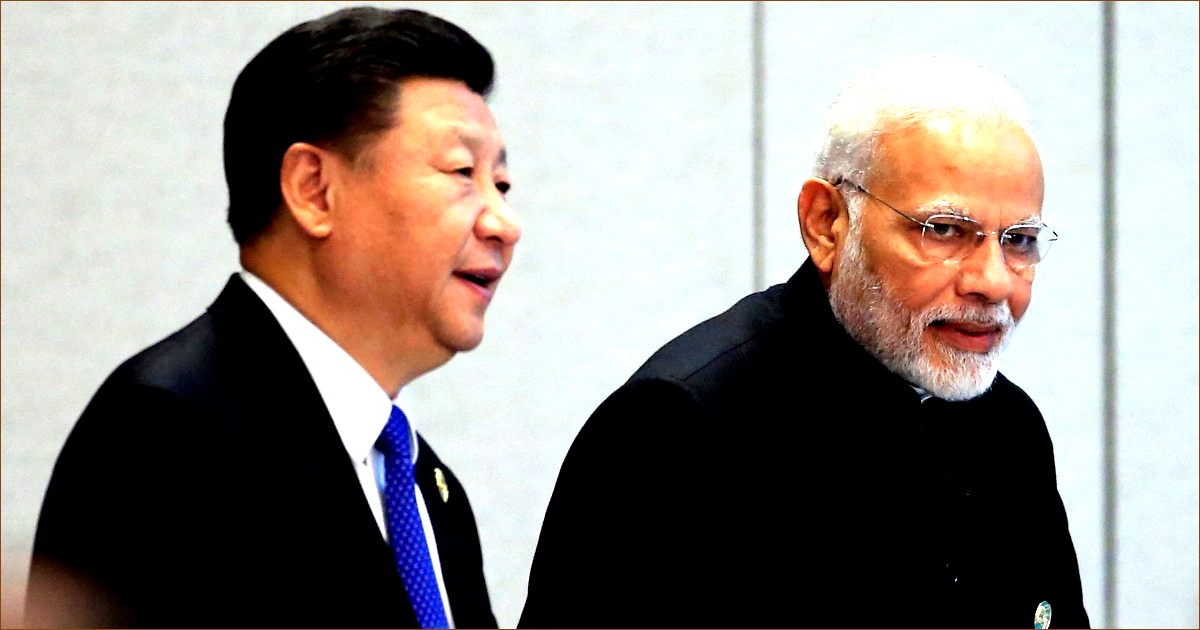
Leaders Gather for Shanghai Cooperation Organisation Summit
More than 20 world leaders, including Russian President Vladimir Putin and Indian Prime Minister Narendra Modi, are set to meet for the Shanghai Cooperation Organisation (SCO) summit, now recognized as the largest regional alliance in terms of population. The event will take place on Sunday and Monday in Tianjin, a city in northern China, and includes influential figures from Asia, Europe, and the Middle East.
Established in 2001 by China, Russia, Kazakhstan, Kyrgyzstan, Tajikistan, and Uzbekistan, the SCO’s focus has shifted over the last two decades. It has evolved from addressing regional issues in Central Asia to engaging with global challenges. According to Eric Olander, who is the editor-in-chief of the China-Global South Project, the SCO plays a vital role in creating dialogue spaces outside the US-led international system as China emerges as a dominant global power.
Though the summit is primarily symbolic, it presents a meaningful opportunity for leaders to express shared concerns, particularly in light of the ongoing trade disputes initiated by the US. The attendees include a wide range of leaders, from Putin, who is facing war crime charges, to Belarus’s leader Alexander Lukashenko, and the United Nations Secretary-General Antonio Guterres.
Tensions among the participants are notable, with countries like India and Pakistan, as well as India and China, grappling with long-standing rivalries. Olander noted, “There are complex dynamics at play here,” indicating that beneath the friendly facade, there are significant underlying issues.
The Dynamics of the Summit
In recent years, the SCO has expanded to include major players such as India, Pakistan, Iran, and Belarus as full members, while countries like Afghanistan and Mongolia have joined as observers. The summit will also feature leaders from Southeast Asia, a region that many see as crucial in the power struggle between the US and China. Attendees from this area include Malaysia’s Anwar Ibrahim and Indonesia’s Prabowo Subianto.
A noteworthy aspect of this summit will be the interaction between President Xi Jinping of China and Prime Minister Modi, who have not met in seven years. India, a traditional ally of the US, recently faced new tariffs from President Trump, raising concerns over its economic ties with Russia amid the conflict in Ukraine.
Interestingly, the current US tariffs may actually provide an opportunity for India and China to mend their strained relations. Although they reached an agreement regarding border issues in 2024, the relationship remains delicately balanced. Analysts suggest that China may perceive the US trade tensions as a chance to draw India away from American-led political alignments.
Expectations and Outcomes
With multiple influential leaders in attendance, observers anticipate a joint statement to come out of the summit. China and Russia are likely to advocate against “unilateralism,” often seen as a reference to US policies, although the final wording will probably be diluted to accommodate all members. As researcher Daniel Balazs noted, the unity displayed through a joint statement is often more significant than its content.
After the summit, leaders will have an additional day in China before attending a grand military parade in Beijing marking the 80th anniversary of the end of World War II in Asia. This event is expected to draw more heads of state, including North Korean leader Kim Jong Un and Serbian President Aleksandar Vucic, with Modi likely sending a representative.
The wide array of attendees at both the summit and the parade presents an opportunity for China to showcase its network of international relationships, particularly among nations in the Global South. As Soong remarked, the gathering emphasizes who stands with China and who subscribes to its vision for the future.
