
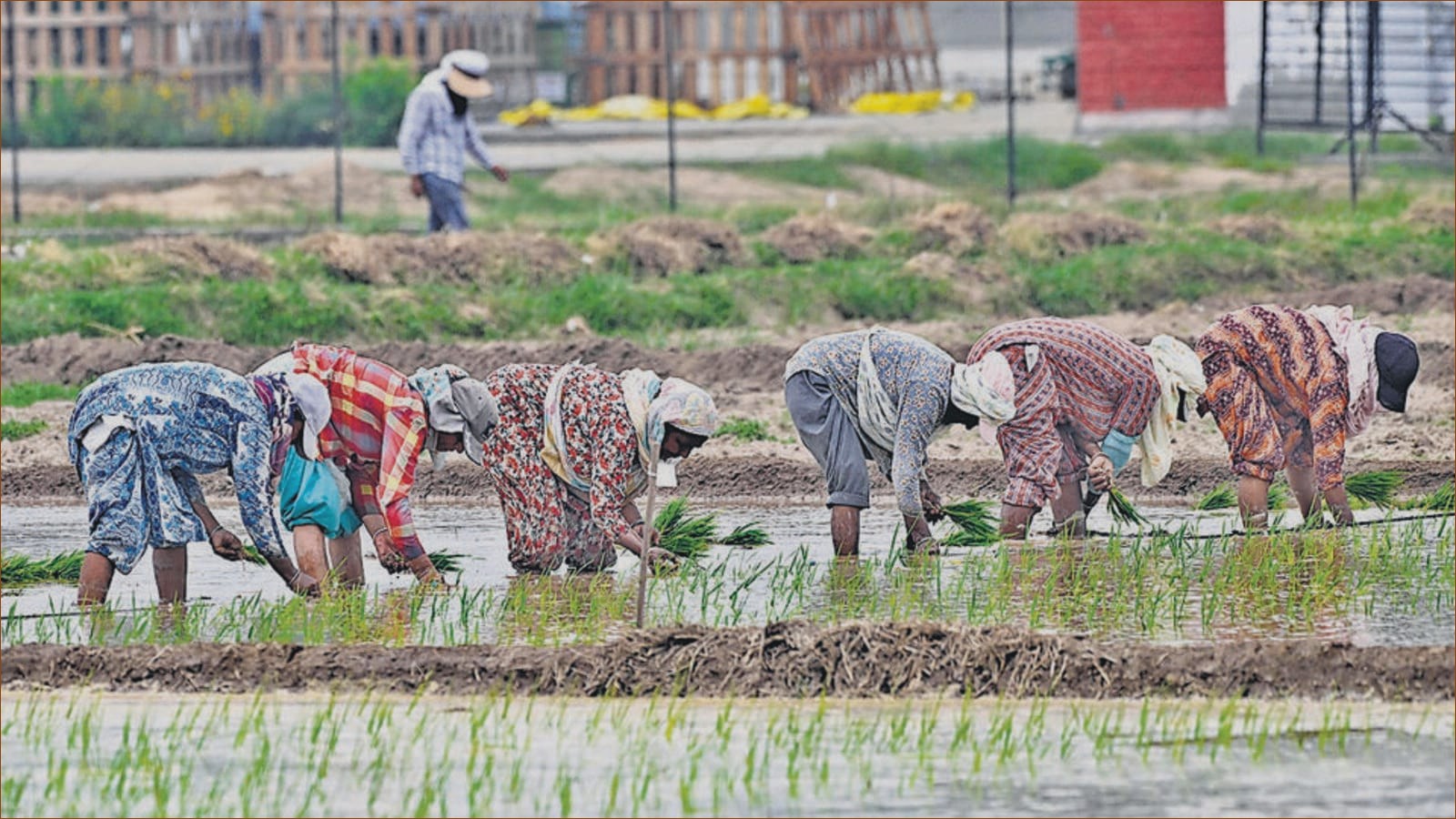
Basmati Farmers Worry Over Tariffs, Pakistan Gains Advantage
Punjab and Haryana’s basmati rice growers and exporters are facing tough times due to a hefty 50% tariff imposed by the Trump administration on Indian exports, raising concerns about their ability to compete in the U.S. market. The new tariffs come amid fears that Pakistan, a neighboring competitor, has a significant advantage with its lower 19% tariff.
“The 50% tariff is a double blow,” said Ranjit Singh Jossan, vice president of the basmati exporters association. He explained that India exports almost 300,000 tonnes of basmati rice to the U.S. each year, valued at around $350 million. This steep tariff is expected to hurt exporters while allowing Pakistan to take a larger share of the market.
While India faces this increase, the tariffs on Pakistani imports were lowered from 29% to 19%. This change makes Indian basmati rice 31% more expensive for U.S. buyers compared to Pakistani rice. “Traders in Pakistan have already begun securing orders from the U.S., while our exporters struggle due to the price gap,” Jossan remarked.
For example, if a ton of basmati rice costs $1,200 when imported from India, it comes with an additional $600 cost due to tariffs. In comparison, the extra cost for importing from Pakistan is only $228. “Right now, we have little chance of selling our rice in the U.S.,” Jossan added.
This new tariff comes at a bad time for the industry, as basmati prices are already declining. Popular varieties like 1121 and 1509 have seen their prices drop from ₹4,500 per quintal in the previous year to between ₹3,500 and ₹3,600 this year, with predictions they might fall to ₹3,000 soon.
Farmers, like Gurbakshish Singh from Tarn Taran, a district in Punjab, are concerned that continued price drops will lead them to abandon basmati farming altogether. Singh’s family has grown basmati for years but is now apprehensive due to the unpredictable market. He noted that the trend of lower prices may encourage farmers to switch to regular rice, which currently has a minimum support price of over ₹2,400 per quintal.
The uncertainty is evident in changes to farming patterns. The area under basmati cultivation in Punjab has shrunk from 763,000 hectares in 2015-16 to 639,000 hectares in the upcoming season. Most of the land is planted with popular varieties like 1509 and 1121, but these are fetching lower prices.
Haryana’s basmati farming area has fluctuated between 650,000 and 710,000 hectares and currently stands at 680,000 hectares in 2025. Together, Punjab and Haryana provide high-quality basmati rice, with varieties like 1121 and 1509 making up 40% of India’s total basmati exports. Punjab itself is responsible for nearly 40% of the nation’s basmati production.
“Although the quantity of basmati exports to the U.S. is a small segment of overall exports, these changes disrupt the trade and farming dynamics,” said Jagdeep Singh Aulakh, a farmer from Haryana.
Smaller exporters with annual revenues around ₹100 crore are particularly feeling the strain, reducing procurement prices from ₹7,100 to ₹6,200 per quintal. As a result, wholesale prices have dropped from ₹71 to ₹62 per kg, and retail prices may follow suit. Millers are also affected, as unsold basmati rice accumulates. “Exporters will hesitate to purchase until the situation improves,” Jossan said.
