
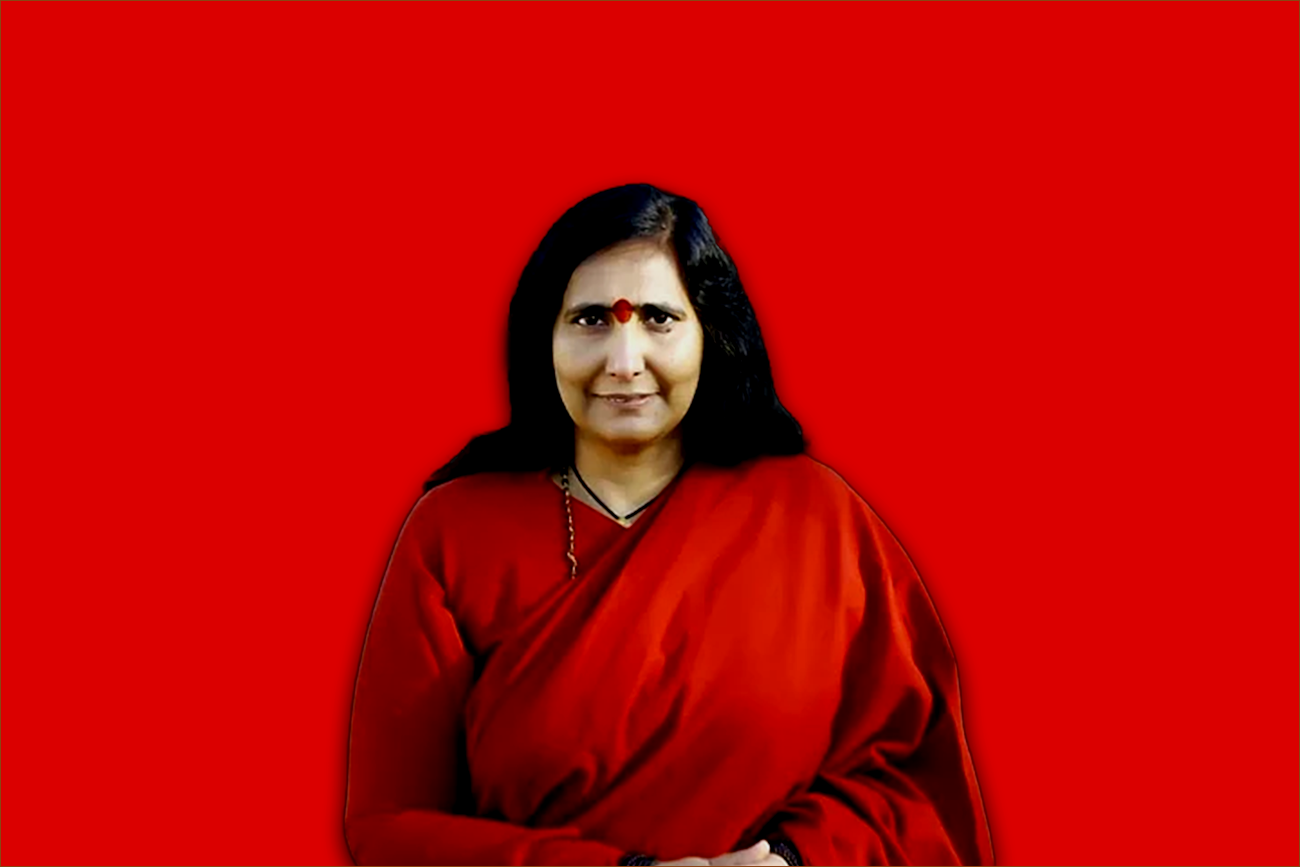
On a Saturday evening in April, I arrived at the Hanuman Temple of Greater Chicago in Glenview, Illinois. Right in front of a parked car, I saw a man displaying a flag of the Bharatiya Janata Party (BJP), a far-right political group in India. The temple was packed with people – families, children, and even teenagers glued to their phones. When Sadhvi Rithambara, a prominent figure known for her extreme views, arrived, the crowd erupted in applause, shouting the phrase “Bharat Mata Ki Jai,” which means “Victory to Mother India.”
Glenview is a typical middle-class suburb that largely voted against Donald Trump in the last election. So, seeing hundreds cheer for Rithambara, who has a history of promoting violence against minorities in India, was surprising. In the 1990s, her speeches inspired crowds that led to the destruction of the Babri Masjid in Uttar Pradesh. Just a few months before this event, Indian Prime Minister Narendra Modi opened a new temple at the site where the mosque once stood, and Rithambara was now touring the U.S. to promote this narrative.
Concerns Over Ethnic Tension
Rithambara represents an ideology that aims to shift India’s secular government towards a Hindu-centric one, often leading to discrimination against Muslims, Christians, Dalits, and other minorities. This mindset is increasingly making its mark in the U.S., where Indian communities support Hindu nationalist projects that influence American political leaders. Some prominent figures, such as Steve Bannon, are involved with groups promoting these ideas.
Rithambara’s talk reflected a broader rise in ethnonationalism worldwide, often aligning far-right movements across India and the U.S. Representation from organizations like the Overseas Friends of the BJP were present at her event, alongside representatives from the Indian Consulate in Chicago.
Despite protests from various groups urging the temple to cancel her talk, the event went ahead. Rithambara spoke not just as a politician but as if sharing a heroic tale, detailing her escapades and how she rallied supporters. As she described a moment when she rallied millions in a chant, her accounts took on a near-mythical quality, drawing enthusiastic applause.
Questions on Beliefs and Values
With such an atmosphere, I found myself wrestling with important questions. Did those around me notice the political undertones of this supposed spiritual gathering? Was the presence of BJP imagery significant to them? But I hesitated to ask, not wanting to present myself as a reporter in that space, especially with memories of past tensions at similar events lingering in my mind.
While Rithambara was speaking, I felt a deep discomfort. The cheers echoed a disturbing past, reminiscent of troubling moments in history. I wanted to understand if others saw the connection between Rithambara’s views and the broader nationalistic sentiments tied to figures like Trump.
Meanwhile, those working towards inclusivity were also holding events. Earlier that day, I had attended a gathering at a church celebrating Dalit History Month, showcasing the history and heritage of the Dalit community. This event, in stark contrast to Rithambara’s, reflected values of equality and justice. Speakers drew parallels between the struggles of Dalits in India and Black Americans, emphasizing the need for unity against oppression.
A Call for Equality
In a world filled with disparities, the call for equality persists. Ambedkar, the leader who advocated for a society free from caste discrimination, is honored every year. The timing of his celebration coexisting with Rithambara’s event was not lost on the attendees. Activists voiced concerns that platforms like the Hanuman Temple should not showcase divisive ideologies.
Throughout this day, I felt the tension between those who push for nationalistic agendas and those who seek peace and connection across cultures. Both Rithambara and leaders like Chandrashekar Azad were traveling through the U.S., each advocating for their visions of society. Ambedkar’s dream of equality serves as a reminder that as long as discrimination exists, there will be spirited efforts for change and solidarity.
