
At Upper Bound Conference, Expert Predicts Human-Like AI Is On the Horizon
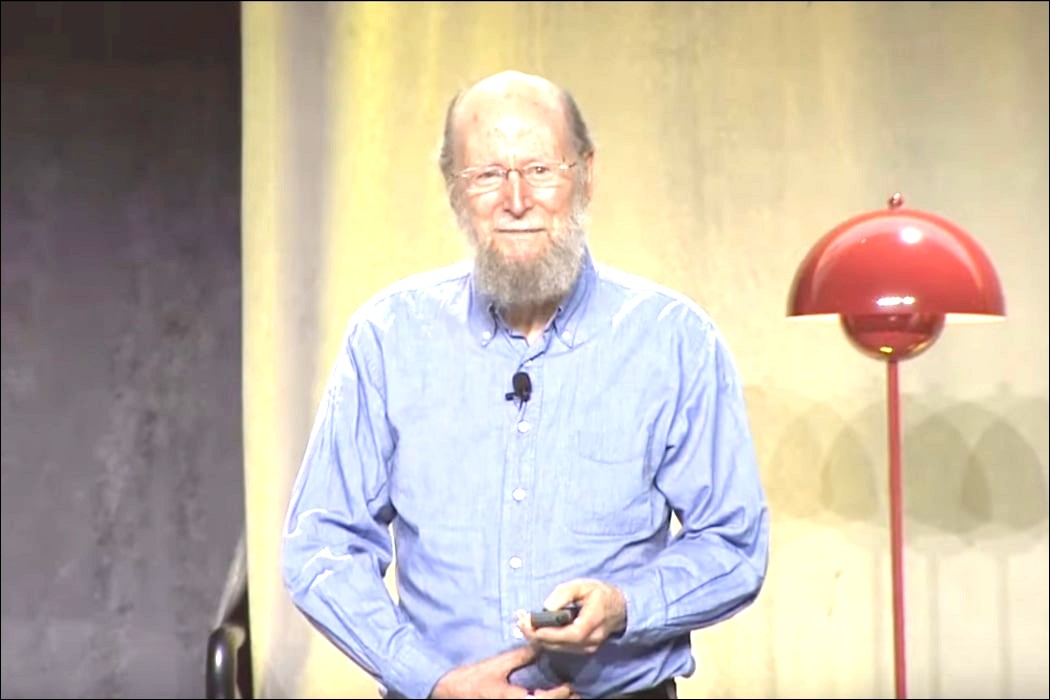
During the recent Upper Bound conference in Edmonton, Richard Sutton, a Canadian Turing Award winner, shared his thoughts on the future of artificial intelligence (AI), suggesting that advanced AI resembling human intelligence is “inevitable.” Instead of fearing this transformative technology, Sutton encouraged people to approach it with “courage, pride, and a sense of adventure.”
Sutton, who serves as the chief scientific advisor at the Alberta Machine Intelligence Institute (Amii), emphasized the need for “decentralized cooperation.” This concept involves individuals or machines working towards different goals while also benefiting each other. He noted that humans often struggle with cooperation, highlighting the challenges we face in navigating the future of AI.
In his keynote speech, Sutton compared calls for strict AI regulation to the “centralized control” often seen in society, such as restrictions on speech and various economic policies. He criticized the fear-driven reasoning behind the push for centralized control, suggesting instead that collaboration can lead to mutual benefits.
His comments came at a time when Canadian tech companies and government officials are increasingly focusing on AI. Canada’s new AI and digital innovation minister, Evan Solomon, addressed conference attendees, stating that making Canada a global leader in AI is a top priority. Prime Minister Mark Carney also emphasized the importance of integrating AI into government work to boost productivity.
Sutton explained that part of human existence involves creating intelligent machines that can, in return, innovate further. He predicts that the development of technology akin to artificial general intelligence (AGI) could be one in four by 2030 and one in two by 2040. He is also involved with Keen Technologies, where he is exploring “human-like” intelligence through research.
Earlier this year, Sutton received the Turing Award for his groundbreaking work in reinforcement learning, a vital process that helps AI models learn from experience rather than just from human-provided data. He believes that future AI systems will primarily learn through their own interactions with the environment, allowing them to generate original insights rather than merely repeating information.
Despite the serious implications of his predictions, Sutton maintains an optimistic approach. He emphasized that AI should not be perceived as something foreign; it is part of the ongoing journey to understand intelligence, which humans have explored for centuries.
Sutton stands apart from some of his peers, like Turing Award winners Yoshua Bengio and Geoffrey Hinton, who have raised alarms about the risks associated with unregulated AI. While they express concerns over potential dangers, Sutton believes that fears surrounding AI are often exaggerated. He fears that AI could be blamed for broader societal issues and urged others in the field not to contribute to unnecessary panic about technology.
As governments worldwide begin to shape regulations for AI, including the European Union’s introduction of the AI Act, Canada is taking steps towards its own framework with the Artificial Intelligence and Data Act aimed at ensuring AI safety and equity.
Sutton’s insights at the Upper Bound conference lead us to contemplate a future where AI not only aids in progress but also becomes a significant part of our collective adventure.
