
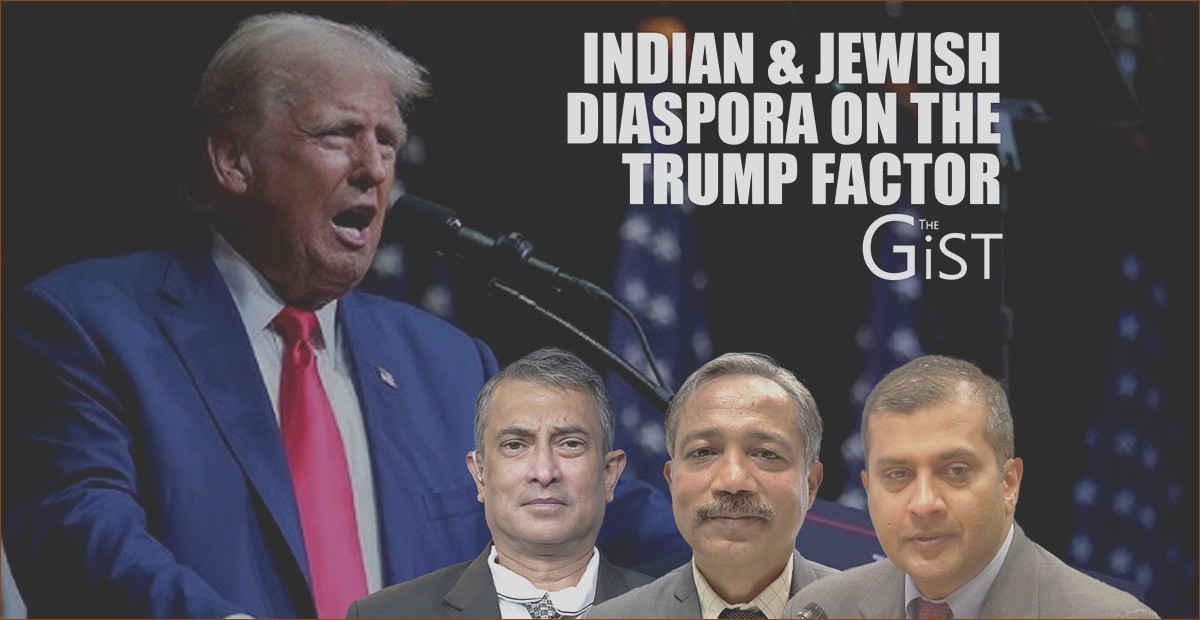
Insights from the Indian and Jewish Diasporas on Trump’s Second Term
As Donald Trump embarks on his second term in the White House, members of two significant communities in the U.S.—the Indian diaspora and the Jewish community—share their thoughts and expectations for his presidency. In a recent discussion, Khanderao Kand, President of the Foundation for India and Indian Diaspora Studies, and Nissim Reuben, Assistant Director at the American Jewish Committee, provided insights into their shared concerns and hopes.
Opinions from the Indian Diaspora
Changing Political Loyalties
- Historically, many Indian Americans aligned with the Democratic Party. However, an increase in perceived biases against Indian interests has led a notable number to lean towards Republican views.
- Issues such as false narratives regarding human rights in India and attacks on Hindu sites have played a role in this shift.
Stronger US-India Relations
- The Indian diaspora appreciates Trump’s active engagement with India, which includes efforts to diminish China’s influence and enhance defense and trade relationships.
- Continuation of programs like the Initiative for Critical and Emerging Technologies (iCET) is essential for their community, as they strive for robust U.S.-India ties.
Concerns
- Worries about immigration policies, especially those impacting H1-B visas, remain a significant concern.
- Trade and unresolved issues affecting South Asia also need attention.
Views from the Jewish Diaspora
Support for Israel
- The Jewish community sees value in Trump’s support for Israel, particularly through the Abraham Accords, which aim to foster peace in the region.
- Following the recent Hamas attacks, there has been a noticeable increase in support for Israel from the Indian diaspora, strengthening ties between these two communities.
Political Alignments
- While the Jewish community has traditionally leaned Democratic, the sentiment has shifted slightly in favor of Republicans due to recent events, including the Hamas attacks.
- Bipartisan support for U.S.-Israel relations is critical for this group.
Strategic Goals
- There is a desire to expand the Abraham Accords to new countries, such as Indonesia, and strengthen the partnerships between the U.S., India, and Israel.
- Initiatives like the India-Middle East-Europe Economic Corridor are seen as vital for boosting global trade and countering China’s influence.
Common Ground Between Indian and Jewish Communities
Shared Values
- Both communities share a focus on education, family values, and economic success in the U.S.
Collaboration
- They have a history of working together, including advocating for joint interests on Capitol Hill and collaborating in fields like technology and medicine.
Looking Ahead: Expectations from Trump’s Second Term
Continued Strategic Focus
- Both communities hope Trump will maintain his commitment to strengthening U.S.-India and U.S.-Israel relations.
Focus on Trade and Security
- Anticipations include enhancing defense relationships and advancing trade, as well as tackling geopolitical challenges in regions like the Indo-Pacific and the Middle East.
Concerns About Democratic Leadership
Both the Indian and Jewish diasporas have expressed unease regarding certain factions within the Democratic Party, which they feel may be influenced by extreme left views, leading to rhetoric that is perceived as unsupportive of Israel and India.
As Trump continues his presidency, members of these influential communities are eager to see how their concerns and expectations will shape his policies moving forward.
