
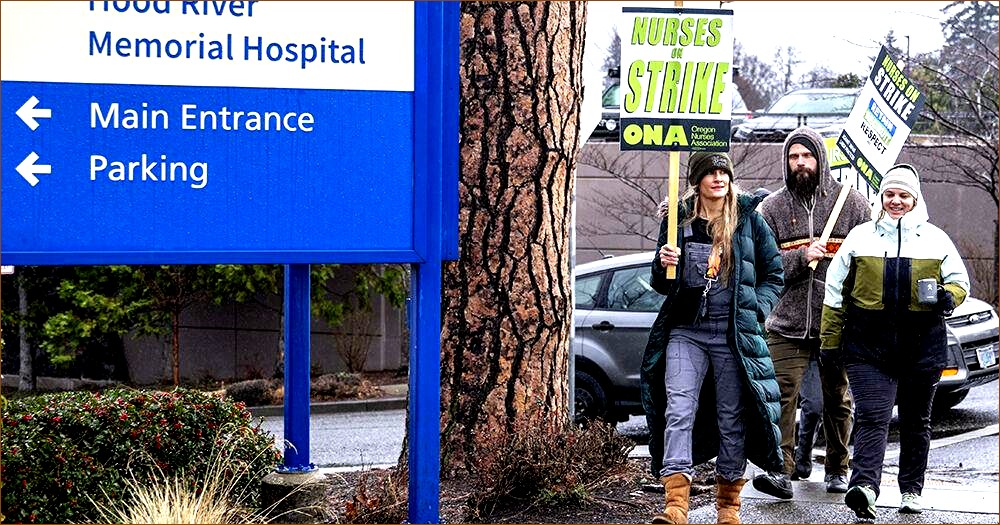
Hood River Nurses Strike for Better Conditions
Hood River, Oregon — On Friday, January 10, Brittany Foss stood firmly on the picket line, expressing the sentiments of many nurses at Providence Hood River. "We don’t want to be out here," she noted, highlighting the difficult decision to strike after exhausting all other options.
Foss, who is a nurse and a representative of the Hood River bargaining team for the Oregon Nurses Association (ONA), stated that the open-ended strike is a last resort after the nurses have worked for ten months without a contract. This strike is not just a local event; it is part of the largest healthcare strike in Oregon’s history, involving 5,000 union-represented nurses and doctors across eight hospitals and six clinics.
While doctors and physicians at other Providence locations joined the strike, the medical staff at Providence Hood River did not participate. Paula Chakowski, a registered nurse in the emergency department and a member of previous bargaining teams, emphasized the critical issue of low staffing levels, which is beginning to impact patient care. "Patients often have to wait for beds because we aren’t fully staffed," she explained. The nurses feel they are losing staff to other hospitals due to unfavorable working conditions and pay.
Chakowski recalled a significant nurses strike in 2001 at Oregon Health and Science University (OHSU), where nurses fought for better contracts, including tuition assistance and favorable pay rates for mandatory overtime. Reflecting on that experience, she said, “We would like to negotiate soon, but we’ll stay out here until Providence offers us something solid.”
Foss added, “An open-ended strike means we are prepared to be here as long as necessary until Providence engages meaningfully in negotiations.” As of last Friday, the ONA had made a proposal, but Providence had yet to respond. The following day, Providence announced it was reaching out to the ONA to resume mediation talks.
Despite the strike, over 600 union-represented nurses across the state continued working. Providence highlighted that the involvement of so many nurses who chose to work amid the strike has allowed them to potentially resume negotiations.
Foss criticized Providence for their approach to negotiations, stating that negotiators have been late to meetings, neglected to reschedule, and disregarded ONA proposals. She pointed out that nurses are squeezing these discussions into their personal time, while management meets during regular working hours.
“We’re juggling our shifts and finding time to prepare, which is challenging for us,” Foss remarked.
The striking nurses plan to maintain their presence daily, from 7 a.m. to 5 p.m. They urge anyone needing medical assistance not to hesitate, even offering reassurance that they hope to provide care themselves if negotiations improve. The ONA has encouraged the community to support nurses by visiting specific websites to sign petitions and stay informed about ongoing efforts.
As the strike continues, the nurses remain hopeful for fruitful discussions with Providence to improve their working conditions for themselves and the patients they care for.
