
Sales Tax Changes Impact Mental Health Services in McHenry County
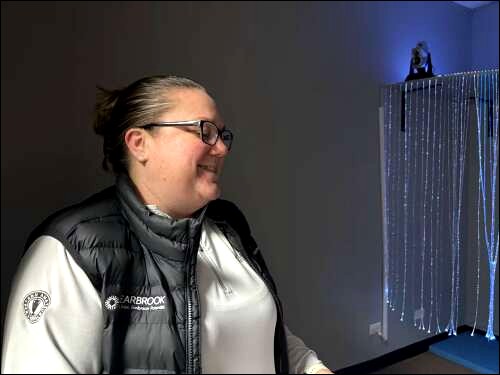
In Crystal Lake, Emily Fencl is actively engaged in the sensory room at Clearbrook, a nonprofit providing essential services for individuals with developmental disabilities. This organization, along with many others, relies on funding from the McHenry County Mental Health Board, which is currently facing a financial crisis.
Lore Baker, the president and CEO of the Association for Individual Development (AID), emphasizes the critical nature of these services, stating they can be a matter of life or death for some clients. AID supports individuals facing developmental, physical, and mental challenges across the Northwest and West suburbs. Baker has expressed concern over the reduced funding that AID is experiencing, which is creating challenges in meeting the needs of McHenry County residents.
This year, AID’s funding from the mental health board dropped by approximately $100,000, falling from $345,725 to $245,000. This funding is vital for vital services, including psychiatric care and recovery support. Baker attributed this decline to the new quarter-cent sales tax implemented for mental health funding, which has generated less revenue than anticipated. County officials have admitted that this shortfall stemmed from an error in estimating tax revenues.
AID is not alone; around 30 organizations and social-service nonprofits in the county rely on this funding. Though AID was part of the advocacy group that pushed for the new sales tax, the revenue has been about 20% lower than the estimated $1 million per month. The original estimate mistakenly included auto sales as part of the tax, which is not allowed under state law.
Clearbrook, another agency dependent on mental health board funding, is also feeling the impact. Emily Fencl, their vice president of program services, highlighted the importance of this funding for supporting McHenry County residents.
Due to the revenue shortfall, the mental health board has had to dip into its reserves to maintain operations. There are discussions about returning to voters for an additional sales tax increase, although the likelihood of county board support for such a move remains uncertain.
For the year 2025, the mental health board has allocated just over $10 million. This financial uncertainty meant that no new agencies could be funded this year, and while some organizations received slight increases, others, including AID, Rosecrance, the Pioneer Center for Human Services, and the Northern Illinois Recovery Center, faced funding cuts.
During a meeting in December, board officials raised concerns about the board’s cash flow, stating it was falling short of covering monthly expenses. Lindsay Keisman, a board member, noted that it would be regrettable if the board did not consider another referendum to address the funding issues.
Executive Director Leonetta Rizzi stated that relying on reserves to subsidize the budget cannot continue indefinitely. In her report, she warned that without additional support, cuts to service providers might become necessary in the near future. She also expressed concern that the funding levels prior to the sales tax, estimated at $11 million, might not return until 2028, if they return at all.
An analysis suggested that for the fiscal year 2025, the board would need at least $15 million, excluding strategic initiatives. County leaders have stated their intention to collaborate with mental health board staff to create a more sustainable financial model. Any additional funding from the county will ultimately be up to the county board to decide, according to Chief Financial Officer Kerri Wisz.
