
Healthcare Organizations Urged to Embrace a Unified Data Strategy
As healthcare providers face the challenges of managing large volumes of data, Info-Tech Research Group has shared a guide that gives IT leaders crucial strategies to tackle issues like fragmented data, compliance hurdles, and cybersecurity threats. This resource offers a clear plan for healthcare organizations looking to harness their data effectively and make informed decisions. By adopting a cohesive data strategy, healthcare professionals can streamline operations, enhance patient outcomes, and adapt to the ever-changing demands of today’s healthcare landscape.
In a recent announcement from Sydney on December 17, 2024, Info-Tech Research Group highlighted the urgent need for a comprehensive data strategy amid the rapid growth of healthcare data. The firm’s new plan, titled “Build a Holistic Data Strategy for Your Healthcare Organisation,” emphasizes the importance of addressing several key concerns, including broken data systems and increasing regulatory requirements. These challenges can limit the ability to utilize data for insightful decision-making, thus hindering healthcare innovation and quality of care.
George Khreish, managing partner at Info-Tech Research Group for the APAC region, mentioned, “Organizations in healthcare are entering a new era of digital transformation where they can convert challenges into opportunities. By focusing on integrating data systems, we can eliminate data silos and boost operational efficiency. This combined effort, alongside a commitment to improving data understanding, prepares us to meet regulatory demands effectively.”
Info-Tech’s report stresses the vital importance of implementing a unified data strategy. By concentrating on crucial aspects like data integration and education on data use, healthcare providers can fully maximize their data resources. When these strategies are aligned with the organization’s main objectives, healthcare institutions can truly become data-driven, leading to better management practices and improved patient care.
Sharon Auma-Ebanyat, research director at Info-Tech Research Group, expressed that fragmented systems and data silos, along with compliance obligations, often complicate effective data management. She added, “Competing priorities and the threat of cyberattacks, alongside a lack of data literacy, further hinder the ability to exploit data’s full potential. This underscores the need for a cohesive plan to optimize our data resources, especially with the rise of AI and health information exchanges.”
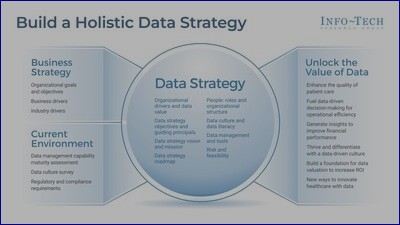
The resource provided by Info-Tech outlines essential drivers for IT leaders to consider when developing a data strategy, including:
- Enhancing Patient Care: Utilize analytics to create personalized care plans and predict patient risks.
- Operational Efficiency: Apply data analysis to improve hospital workflows and reduce patient wait times.
- Financial Performance: Manage costs and enhance resource allocation through analytics.
- Quality Improvement: Focus on key healthcare metrics to drive improvements in care quality.
- Strategic Decision-Making: Use predictive analytics to guide informed decisions.
- Regulatory Compliance: Ensure data practices meet healthcare regulations.
- Technology Integration: Combine advanced analytics tools with current healthcare systems.
- Innovation and Research: Leverage data to advance research and adopt new technologies.
By following the guidance and recommendations offered in this blueprint, healthcare organizations can effectively tackle the complexities of data management, extract significant insights from their data, and support essential innovations such as AI in healthcare. This strategic approach allows for better integration of clinical and operational data, ultimately leading to enhanced patient care.
About Info-Tech Research Group
Info-Tech Research Group is a leading research and advisory firm, dedicated to serving over 30,000 IT and HR professionals worldwide. With nearly 30 years of experience, the organization provides unbiased research and advisory services, helping decision-makers make strategic and informed choices for their organizations.
