
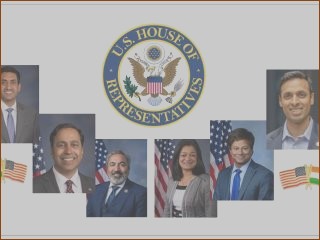
In a groundbreaking event, six Indian Americans have secured seats in the U.S. House of Representatives, marking a historic high for the Indian American community in Congress. This group, commonly referred to as the "Samosa Caucus," welcomes Suhas Subramanyam, who has made history as the first Indian American elected to Congress from Virginia and the entire East Coast. Subramanyam joins fellow representatives Ami Bera, Raja Krishnamoorthi, Ro Khanna, Pramila Jayapal, and Shri Thanedar, all of whom were re-elected, highlighting the growing influence of Indian Americans in U.S. politics.
Suhas Subramanyam: A Historic Victory
Suhas Subramanyam, previously a Virginia State Senator and a former advisor at the White House under President Obama, has claimed a significant victory in Virginia’s 10th District by defeating Republican opponent Mike Clancy. His election is not only a milestone for Indian Americans but also for the East Coast, where such representation has been limited. Subramanyam expressed gratitude, saying, “I am honored and humbled that the people of Virginia’s 10th District have placed their trust in me to fight for meaningful change in Congress.”
Subramanyam’s success adds strength to the "Samosa Caucus," now consisting of six Indian American lawmakers. This achievement reflects the increasing diversity and influence this community holds in U.S. politics, with members advocating for important issues including healthcare and social justice.
The Indian American Representatives in Congress
-
Ami Bera – Democrat, California’s 6th District
Serving since 2013, Bera is the most senior Indian American Congressman and is known for his efforts in healthcare reform and foreign policy. -
Raja Krishnamoorthi – Democrat, Illinois’ 8th District
Recently re-elected for a fifth term, Krishnamoorthi focuses on economic opportunities, immigrant rights, and education. -
Ro Khanna – Democrat, California’s 17th District
Representing Silicon Valley, Khanna is a strong advocate for technology policy and income equality. -
Pramila Jayapal – Democrat, Washington’s 7th District
As a progressive leader, Jayapal emphasizes immigrant rights, social justice, and access to healthcare. -
Shri Thanedar – Democrat, Michigan’s 13th District
Reelected for a second term, Thanedar is an advocate for educational reform and economic equity in Michigan. - Suhas Subramanyam – Democrat, Virginia’s 10th District
Bringing extensive experience as a state senator and White House advisor, Subramanyam aims to promote economic growth and social justice.
Elections and Challenges
In Arizona, Republican David Schweikert has successfully held on to his House seat, defeating Democrat Amish Shah, a physician who campaigned on healthcare reform. Schweikert has served in the district since 2011 and focuses on economic policies as vice chair of the Joint Economic Committee.
Should Shah have won, he would have made history as the seventh Indian American in Congress, further enhancing the community’s representation and influence in American politics.
Leadership Changes in Michigan
In Michigan, Rep. Ranjeev Puri has been named the Minority Leader of the State House for the next term. Despite the Democrats losing their majority in the legislature, Puri aims to unite his caucus and work towards regaining that majority in the future. He has been involved in the House since 2020 and has previously served as the House Majority Whip.
Importance of Indian American Representation
The rise in Indian American representatives signifies the growing political engagement within this community and the acceptance of varied perspectives in U.S. politics. With potentially seven Indian Americans in the House, they are poised to bring unique viewpoints on critical issues such as healthcare, economic policy, immigration, and civil rights. The Samosa Caucus demonstrates how immigrant communities can influence governance and advocate for their constituents, shaping the future of American democracy.
