
In the daily struggles endured by countless injured warriors and military veterans, a silent adversary often remains shrouded in obscurity: tinnitus. This incessant ringing in the ears stands as the predominant disability recognized by the U.S. Department of Veterans Affairs (VA), reveals Dr. Tom Tedeschi, the esteemed chief audiology director at Amplifon Hearing Health Care.
Hailing from Utah and proudly a veteran of the Vietnam War era, Dr. Tedeschi shared insights on the alarming prevalence of auditory impairments in the veteran population. Stark statistics illustrate the crisis: nearly 60% of veterans from the Vietnam War and around 50% of those who served during the Gulf War grapple with hearing loss.
“In essence, it’s estimated that about one in three veterans is afflicted by some level of hearing impairment or the vexing hum of tinnitus,” Dr. Tedeschi posits. “Exposure to constant noise is an intrinsic part of military life; let’s be real, it’s hardly a sanctuary for the auditory senses.”
Yet, each individual’s auditory experience is distinctly personal, shaped by a variety of sound pressures and conditions. “A singular loud bang—think gunfire—might irreparably damage one person’s hearing, while another may withstand similar levels of noise without immediate repercussions,” he elaborates.
Military roles dictate varying degrees of sonic exposure, with combat soldiers often enduring relentless noise, even in what are deemed peacetime. Although protective measures like earplugs are standard issue, practicality often wanes amidst the chaos of active conflict.
“We’re witnessing a surprising trend: there are now more individuals under 50 experiencing hearing loss than those over that age,” he cautions, underscoring the irony of youth’s robust self-image. “There’s a common misconception that hearing loss is merely an affliction of the aged—this is palpably false.”
Encouragingly, combat veterans are urged to confront the subtle yet impactful realities of their hearing health, for many are unaware, deferring acknowledgment to the observations of those around them. Tedeschi emphasizes, “If you notice that persistent ringing, or find it increasingly challenging to engage in conversation or follow along during TV shows, it’s imperative to seek assistance.”
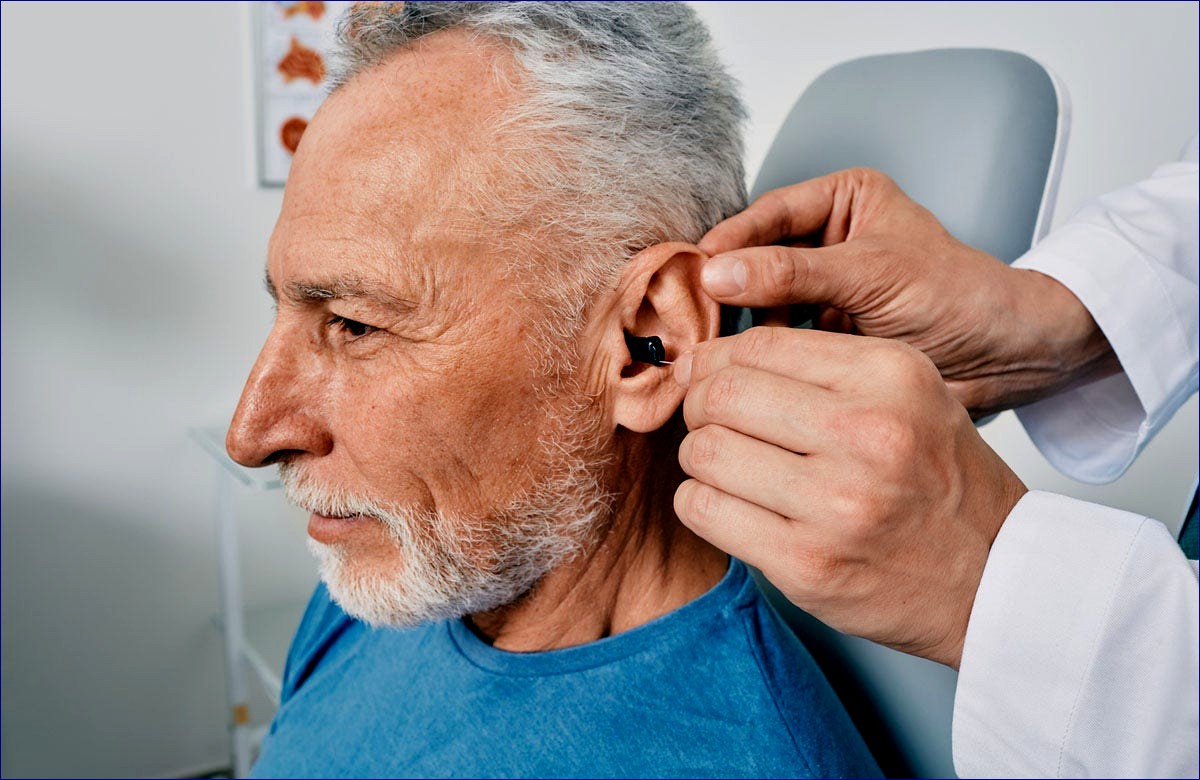
Though tinnitus may elude a definitive cure, a spectrum of approaches exists to mitigate its effects. Among the advances in auditory technology, Dr. Tedeschi notes that modern hearing aids have made leaps and bounds since their predecessors, transforming the landscape of auditory rehabilitation.
Moreover, he champions the implementation of effective hearing protection—be it earbuds or earmuffs—beyond military settings. “We inhabit a world saturated with noise. Mowing the lawn or attending a raucous concert? Your ears deserve that extra shield,” he asserts.
And let this be a cautionary tale: If one experiences ringing following exposure to loud sounds, such as at a concert, it signals that some degree of hearing damage has likely occurred. “Recovery may come, but heed this: such damage can often leave indelible marks,” he warns.
Dr. Tedeschi also brings attention to the implications of certain medications, like aspirin, which may exacerbate hearing issues. “If you’re regularly consuming aspirin for arthritis or similar conditions, it’s prudent to consult your physician about potential alternatives,” he advises.
In conclusion, he implores veterans not to overlook their hearing health, for untreated auditory loss can precipitate cognitive decline. “A growing body of evidence links untreated hearing issues to accelerated diminishment in cognitive capabilities,” he observes. “For our heroes in uniform, there exists a wealth of resources available, dispelling the necessity for solitude in grappling with the myriad health challenges entwined with hearing loss.”
Veterans can find solace and support at local VA centers to seek evaluations or referrals to specialists who can guide them through this critical aspect of health.
