
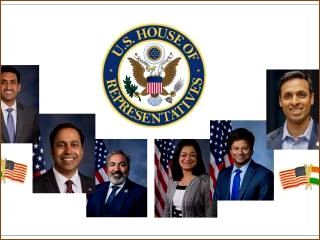
In an unprecedented milestone that resonates deeply within the corridors of power, six Indian Americans have triumphantly seized their places in the U.S. House of Representatives, heralding an extraordinary chapter in the political narrative of the Indian American community. Dubbed the “Samosa Caucus” in a nod to their cultural heritage, this coalition now has a fresh, groundbreaking addition—Suhas Subramanyam—who has made history by becoming the first Indian American to represent Virginia, indeed, the entire East Coast, in Congress. He stands alongside re-elected stalwarts Ami Bera, Raja Krishnamoorthi, Ro Khanna, Pramila Jayapal, and Shri Thanedar, fortifying the influence and visibility of Indian Americans on Capitol Hill.
Suhas Subramanyam: A Historic Triumph in Virginia
Emerging from the vibrant political landscape of Virginia, Suhas Subramanyam, a distinguished State Senator and former advisor to President Obama, has inched his name into the annals of history. He emerged victorious in a highly scrutinized contest against Republican Mike Clancy, clinching a seat in the 10th District—a dynamic achievement not only for him personally, but also for the Indian American community and the East Coast at large, which has long been starved of such representation. “With immense gratitude, I accept the trust placed in me by the people of Virginia’s 10th District,” Subramanyam stated, reflecting on his arduous journey and unwavering dedication to the very community that has nourished his ambitions.
The induction of Subramanyam not only enriches the ranks of the “Samosa Caucus” but also signifies a burgeoning chapter of Indian American engagement in the political arena. His entry into Congress is not merely about numbers; it symbolizes the melding of diverse voices with legislative authority on key issues—healthcare, technology, social justice, and more.
The Noteworthy Six Indian Americans in the House
-
Ami Bera – Democrat, California’s 6th District
- Since his inauguration in 2013, Bera has stood as the most senior Indian American Congressman, advocating robustly for healthcare reform and nuanced foreign policies.
-
Raja Krishnamoorthi – Democrat, Illinois’ 8th District
- Holding his position for a fifth term, Krishnamoorthi firmly addresses economic opportunities, championing immigrant rights and educational advancements.
-
Ro Khanna – Democrat, California’s 17th District
- A potent advocate in the heart of Silicon Valley, Khanna’s fierce stance on technology policy and income equality resonates strongly within his constituency.
-
Pramila Jayapal – Democrat, Washington’s 7th District
- As a torchbearer for progressive ideals, Jayapal champions immigrant rights and tirelessly works toward ensuring equitable healthcare access for all.
-
Shri Thanedar – Democrat, Michigan’s 13th District
- Reelected for a second time, Thanedar tirelessly fights for educational reforms and economic equity in the heart of Michigan.
- Suhas Subramanyam – Democrat, Virginia’s 10th District
- With his extensive background as a state senator and advisor, Subramanyam’s focus on economic growth and social justice serves as a beacon for his constituents.
A Seventh Seat on the Horizon?
While the representation has firmly been established with these six, a potential seventh seat lingers tantalizingly on the horizon. In Arizona’s fiercely contested First Congressional District, Dr. Amish Shah, a physician and astute Democratic candidate, finds himself in a slender lead against incumbent David Schweikert—a race closely watched as results trickle in, revealing Shah with a narrow margin of 50.9%, amidst a vote count of 63%. His district, encompassing the affluent areas of Scottsdale, Paradise Valley, and Fountain Hills, has transformed into a battleground characterized by a significant independent voter base.
Having served for over twenty years as an emergency room physician, Dr. Shah entered the political landscape with his election to the Arizona House in 2017. His campaign pulsates with the promise of affordable healthcare, transparency in medical pricing, and unwavering access to quality health services. In a state where healthcare reform is of paramount importance, Shah’s advocacy magnifies issues like medication pricing and women’s healthcare rights—an essential narrative in Arizona’s evolving political discourse.
Should he secure victory, Dr. Shah would not just claim a congressional seat but also etch his name into history as the seventh Indian American lawmaker in Congress, a significant leap for a community whose political clout appears to be amplifying with each election cycle.
The Ripple Effect of Indian American Representation
The swell in Indian American voices reflects a broader societal shift—a progressive acceptance of diversity in the political landscape of the United States. With the prospect of six, possibly seven seats, this emerging bloc elucidates the unique perspectives that Indian Americans bring—addressing a myriad of pressing issues, from healthcare to civil rights, and beyond. The “Samosa Caucus,” thus, stands not only as a symbol of representation but as a powerful testament to the influence immigrant communities wield, as they navigate the intricacies of governance while championing the causes of their constituents. The story continues to unfold, resonating with hope and ambition, propelling future generations of Indian Americans to contemplate lives in public service.
