
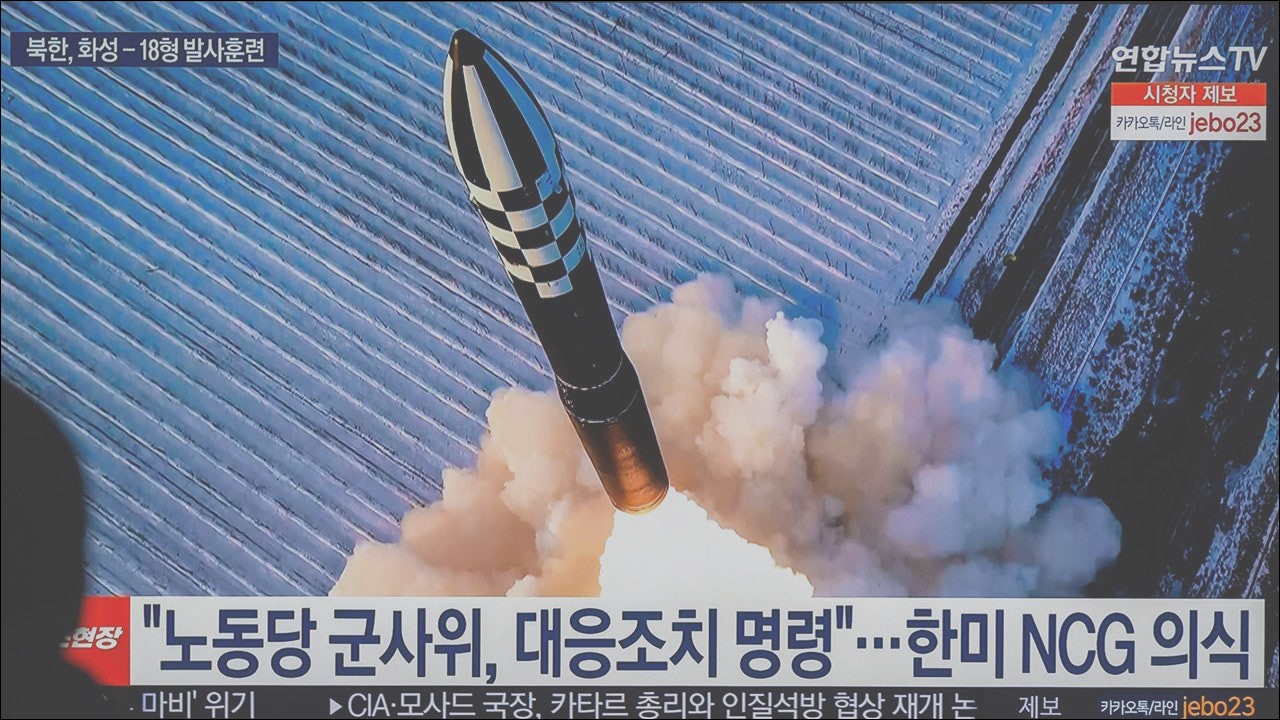
In a dramatic turn of events, North Korea initiated a long-range ballistic missile launch toward the Sea of Japan on Wednesday night. This occurred a mere day after South Korean officials speculated a looming test of an intercontinental ballistic missile (ICBM), which was rumored to boast the most extended flight duration of any previous test.
According to statements from the Joint Chiefs of Staff, the missile took off at 7:10 a.m. local time, elegantly arcing from a location near Pyongyang, the capital of North Korea. The subsequent descent culminated in the missile splashing down into the sea at 8:37 a.m., a full 87 minutes after its launch.
Japanese defense officials, including Minister Gen Nakatani, indicated that this missile’s flight time appeared unprecedented for North Korea, hinting it might represent a new class of missile. They predicted its landing zone would be approximately 190 miles west of Okushiri Island, just outside Japan’s exclusive economic zone. Thankfully, Japanese Prime Minister Shigeru Ishiba reported no damage resulting from this provocative act.
Gen Nakatani voiced Japan’s strong condemnation of North Korea’s actions, asserting they pose threats not only to Japan, but to the international community at large.
In a separate development, South Korea’s Defense Intelligence Command revealed that North Korea had mobilized a launcher, potentially setting the stage for an aggressive ICBM test aligned with the timing of the forthcoming U.S. presidential election next Tuesday.
The National Security Council (NSC) reacted swiftly, condemning North Korea’s missile test as a blatant breach of several United Nations Security Council resolutions. NSC spokesperson Sean Savett emphasized that while the U.S. INDOPACOM had determined the missile launch did not pose an immediate threat to American forces or allies, it undeniably exacerbates tensions and jeopardizes regional stability. “This maneuver starkly illustrates North Korea’s prioritization of illicit weapons development over the welfare of its citizens,” Savett remarked. He urged the global community to denounce these violations and call upon the DPRK to halt its reckless actions, advocating for genuine dialogue instead. The U.S. is vigorously collaborating with its allies to bolster security measures.
Historically, although North Korea undertook a ballistic missile test on July 1, 2024, the last ICBM trial occurred in December of the previous year, involving a solid-propellant missile launched at a steep angle. This test suggested a formidable reach of around 9,300 miles under conventional trajectories, potentially capable of hitting any location within the continental United States.
This complex web of missile launches and international tension illustrates a precarious moment in geopolitical stability, leaving the world watching closely for North Korea’s next move.
