
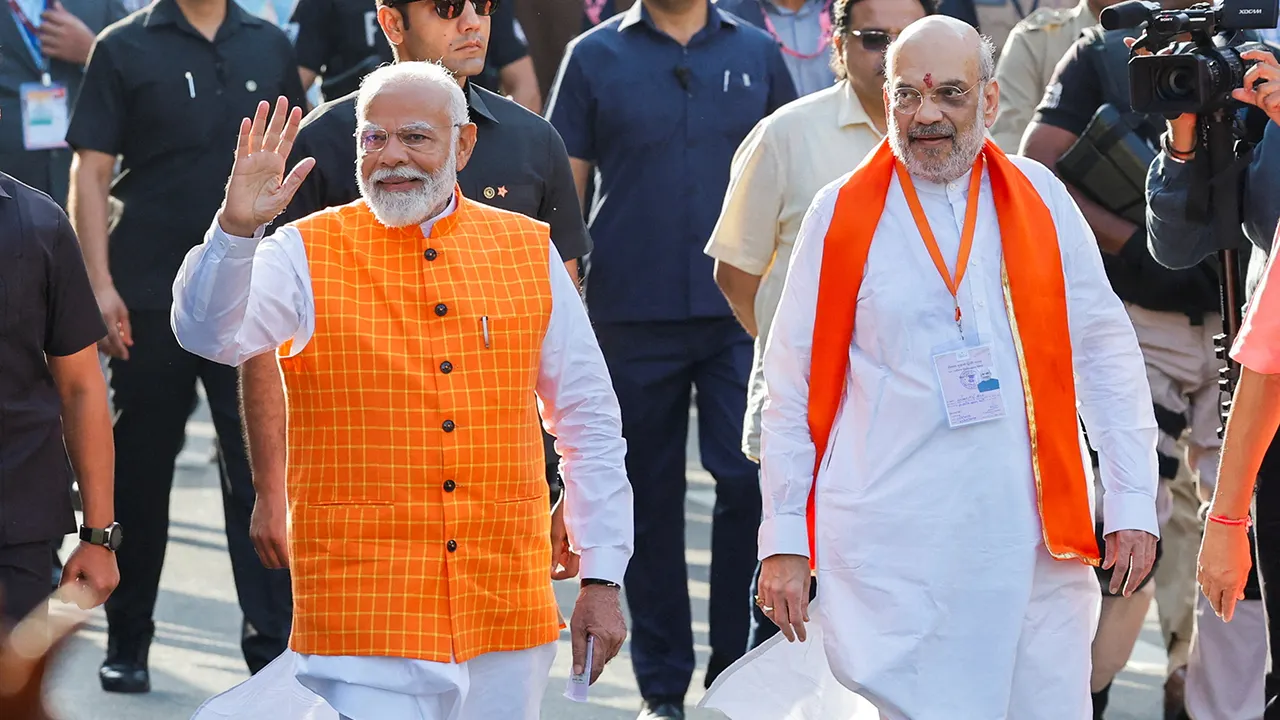
The Canadian government dropped a significant bombshell on Tuesday, accusing Amit Shah, India’s Minister of Home Affairs and a key lieutenant of Prime Minister Narendra Modi, of orchestrating sinister plots targeting Sikh separatists on Canadian soil. This revelation, which adds layers to an already complex geopolitical tapestry, has sparked outrage and concern.
In a swift rebuttal, the Indian government chose not to engage immediately, opting instead to categorically dismiss Canada’s allegations as unfounded, maintaining a firm stance against any implication of involvement.
CANADA-INDIA RELATIONS: A LONG ROAD TO REPAIR
The Washington Post was the first to shed light on this extraordinary claim, reporting that Canadian officials believe Shah—an influential figure ranked just below Modi—has been steering a campaign characterized by violence and intimidation directed at Sikh separatists residing in Canada.
David Morrison, Canada’s Deputy Foreign Affairs Minister, made waves during a parliamentary session on Tuesday, revealing that he had confirmed to the U.S.-based newspaper that Shah was indeed the individual in question. “The journalist inquired if this (Shah) was that person. I affirmed that it was him,” Morrison disclosed, albeit without delving into the specifics or providing substantial evidence to bolster the claim.
Meanwhile, the High Commission of India in Ottawa, together with the Indian foreign ministry, maintained silence while directing any inquiries towards the foreign ministry.
An Indian source in New Delhi informed Reuters that Canada had informed them about Shah’s alleged involvement around October 2023. However, skepticism looms large over New Delhi’s perception of the evidence at hand, deeming it flimsy and insufficient to threaten Shah’s position or the government’s stability.
The contentious dynamics surrounding Sikh separatists, referred to by India as "terrorists," stem from their demand for an independent homeland known as Khalistan—an aspiration drenched in a fraught history marred by violence, particularly during an insurgency in the late 20th century that wreaked havoc, claiming tens of thousands of lives. The echoes of the 1984 anti-Sikh riots, a tragic chapter in India’s history triggered by the assassination of then-Prime Minister Indira Gandhi by her Sikh bodyguards, still resonate deeply.
The diplomatic rift escalated dramatically when Canada, in a show of defiance, expelled Indian diplomats in mid-October, a move tied to the 2023 killing of Sikh leader Hardeep Singh Nijjar on Canadian territory. In retaliation, India mandated the expulsion of Canadian diplomats, exacerbating the already tenuous relationship.
However, this Canadian episode is merely one facet of a broader saga involving India’s alleged actions against Sikh separatists abroad. Notably, accusations against a former Indian intelligence officer, Vikash Yadav, have surfaced in the United States, implicating him in a foiled plot to eliminate Gurpatwant Singh Pannun, a dual U.S.-Canadian citizen and prominent critic of the Indian state.
Warnings from the FBI about retaliatory measures targeting a U.S. resident have added further complexity, yet India has remained somewhat reticent since initiating an investigation into the allegations in November 2023.
This unfolding drama poses significant challenges to the trilateral relations among Washington, Ottawa, and New Delhi, particularly as India is often regarded by the West as a pivotal ally against the backdrop of an increasingly assertive China. The future of these relationships teeters on a precarious balance, with the potential for confrontation lurking in the shadows.
