
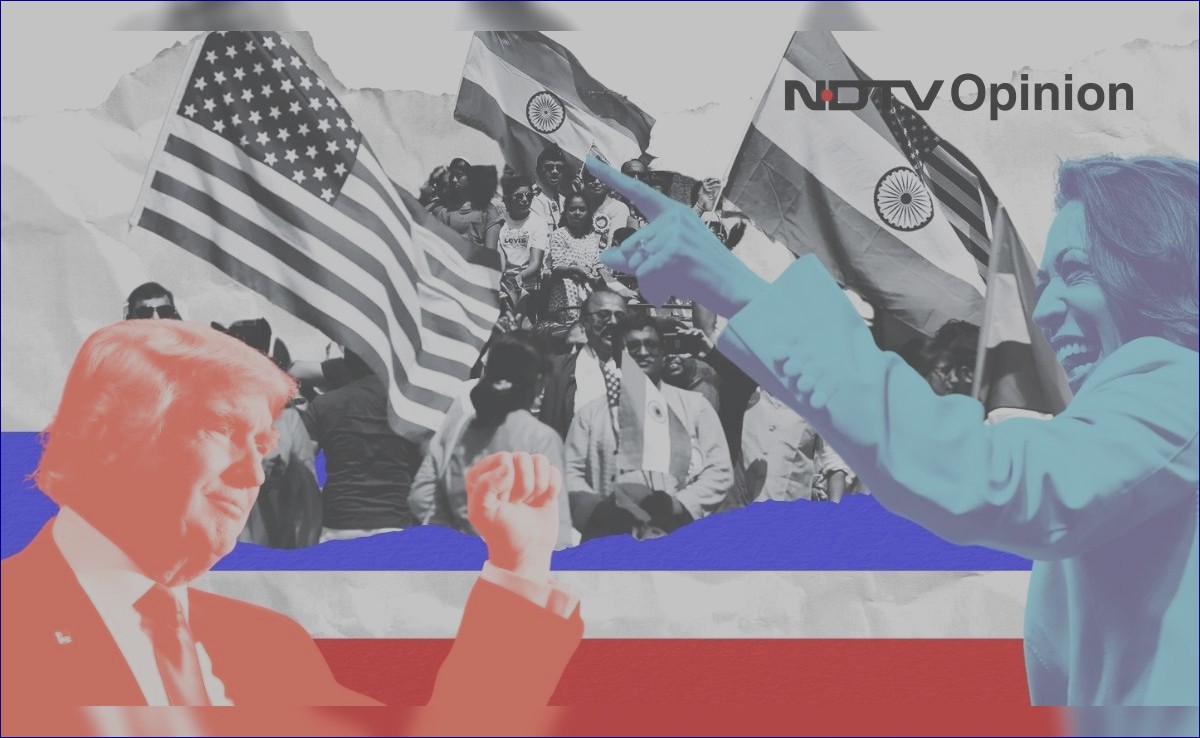
The Indian American electorate, numbering around 2.1 million, might seem like a mere ripple in the vast ocean of over 161 million voters in the United States. Yet, they wield an influence that belies their size. With the dynamic Kamala Harris mounting a bid for the presidency, enthusiasm within this aspirational community is palpable. This previously marginalized group, now recognized as educated and economically successful, realizes that their voices must resonate within the power structures of American politics. Their clout has expanded beyond mere voter participation; they are becoming candidates, mobilizers, and key fundraisers.
Unprecedented Fundraising
A seismic shift is underway as political fundraising efforts witness a surge in engagement from Indian Americans. Ajay Bhutoria, a stalwart of the Democratic National Finance Committee and seasoned fundraiser, observes, “The landscape is different now; contributors are not only stepping up with greater sums but also becoming intricately involved in the tapestry of the political process.”
The median income for Indian American households, sitting at an impressive $145,000, eclipses the overall US median by a striking 21%. Shekar Narasimhan, founder and chairman of the AAPI Victory Fund—the preeminent Super PAC within the Asian American community—contends that while pinpointing exact financial contributions remains a challenge, notable philanthropic figures within the Indian American demographic are undeniably reshaping campaign finance. Intriguingly, despite constituting a mere 1% of the US population, Indian Americans account for a striking 5% of the Democratic National Finance Committee. Narasimhan underscores the significance of grassroots contributions too—small-dollar donations are equally pivotal.
M.R. Rangaswami, the visionary behind Indiaspora, notes the burgeoning financial influx: “With formidable PACs like the AAPI Victory Fund and the Indian American Impact Fund now thriving, the financial stakes have escalated remarkably.” The Indian American Impact Fund (the largest desi PAC) is also on a mission to cultivate and mentor the next generation of leaders from this vibrant community.
Dr. Sangay Mishra, an associate professor at Drew University, adds a scholarly perspective, revealing that since 2012, Indian Americans have garnered attention for their "bundling" efforts—collecting contributions from multiple sources to amplify political clout. "The influence is considerable, fueled by a network of affluential fundraisers," he affirms.
As the saying goes, the path to the White House winds through Silicon Valley—the nexus of affluent Indian tech entrepreneurs. Harris’s fundraising blitz in California recently reaped a staggering $55 million over a single weekend, contributing to her billion-dollar war chest since becoming the nominee. Notable fundraisers, including one led by renowned billionaire investors like Vinod Khosla, have made headlines. More than 60 venture capitalists of Indian descent have backed Harris, including influential corporate figures such as Indra Nooyi.
The Enduring Republican Vote
However, Harris’s candidacy doesn’t pose the same draw for all; staunch Trump supporters within the Indian American community remain resolute in their allegiance to the Republican Party. Figures like Sampat Shivangi, the lone Indian American delegate at the Republican National Convention this year, reinforces his loyalty, backing Trump with significant financial contributions. Similarly, hotelier Danny Gaekwad has consistently supported Republican candidates, having contributed to every presidential campaign since George W. Bush. "The recent event was a financial juggernaut," enthuses Gaekwad, highlighting the overwhelming interest among his circle in attending high-stakes fundraisers.
Some Republicans like Shivangi assert that their support for Trump stems from the belief that "Harris is not a friend of India." Critiques of her perceived disconnection with her Indian heritage, coupled with her failure to visit India during her tenure as Vice President, further fuel their loyalty to the Republican candidate. Nevertheless, there’s a whisper of dissent within party ranks; they acknowledge a cooling fervor among Indian American supporters, particularly Hindus, since 2020 when Trump’s camaraderie with Prime Minister Narendra Modi sent ripples through the community. "Perhaps it’s because he’s a third-time candidate," Gaekwad conjectures.
Despite overtures from both political parties, a significant majority of Indian Americans continue to favor the Democratic agenda. A recent AAPI Data survey revealed that 55% identify as Democrats, while 25% lean Republican and 15% remain Independents.
Sway in Swing States
The Indian American community plays a pivotal role in the electoral landscape, particularly in crucial swing states. Though they represent only 1% of the US populace, about one-third live in battleground territories such as Michigan and Georgia, where their votes could tip the scales. Dr. Mishra recalls the razor-thin margins in Georgia’s 2020 Democratic victory: "In such a context, the Indian American vote holds immense weight; had they voted differently, the outcome could have shifted dramatically."
Recent elections have unfolded as nail-biters, often decided by minuscule gaps in key states. Current polls suggest a similarly tight race for the upcoming election, with nearly 400,000 voters of South Asian descent in the ten most contested swing states. "The potential for Indian Americans to impact the electoral outcome is substantial," Dr. Mishra concludes.
Strategically leveraging their resources, this politically engaged community mobilizes volunteers in swing states. Sangeeta Ramakrishnan, tasked with directing efforts for They See Blue, notes, "Our numbers may be higher in blue states, making it feasible to effectively channel our resources without the need for extensive door-knocking here."
Pennsylvania’s Bucks County has earned a reputation as the "swingiest county in the swingiest state." Volunteer Rupa Mohan describes how diverse linguistic capabilities among volunteers—spanning Gujarati, Malayalam, and Urdu—fuel their outreach efforts.
Moreover, the political engagement of young Indian Americans is surging. In the past two presidential elections, their voter turnout has mirrored that of white Americans. In 2020, 71% of eligible Indian Americans cast their votes, a jump of 9 percentage points from 2016. This upward trend is anticipated to continue, with a recent survey revealing that a remarkable 91% plan to participate in the upcoming election.
Office Dreams
Electoral success is not the only aspiration for Indian Americans; ambitions to hold public office are equally robust. Their pursuit ranges from the highest echelons of the presidency to congressional seats, state senates, city councils, and beyond. While it’s challenging to ascertain the exact number of Indian Americans vying for office in 2024, current statistics indicate five Indian Americans serve in Congress—this number is projected to rise to seven post-election. Historically, Indian American representation in Congress has been a gradual ascent since the first member was elected in 1956, but the past two decades have witnessed exponential growth, largely fueled by a highly educated second generation.
Despite constituting just 0.6% of the adult US citizen population, Indian Americans occupy approximately 4.4% of senior government roles, with over 150 currently in the Biden-Harris administration—this figure is set to soar if Harris secures the presidency.
The Pursuit of Influence
Having made significant strides across key indicators—votes, financial clout, and candidate representation—Indian American leaders are now aiming for a visibility and influence akin to that of the historically established Jewish American community, which, despite constituting only 2% of the population, claims 10% of congressional seats. "We’ve been a part of this landscape for about 30 years," Rangaswami reflects. "We represent 7% of US physicians, 10% of the tech sector, and are actively engaged in academia and government—so why shouldn’t we command a similar level of influence?"
As early voting kicks off, supporters from both sides of the aisle are intensifying their outreach through door-to-door canvassing, postcard campaigns, phone banking, and text messages. "Things are destined to heat up in the coming weeks!" exclaims Shobha Chokkalingam, a prominent figure leading the Georgia chapter of the American Hindu Coalition. Yet, for ‘desi’ Democratic supporters, this election is particularly monumental. With Kamala Harris in the race, the Indian American community stands on the brink of potentially making history. "If Kamala Harris were to ascend to the presidency," Rangaswami emphasizes, "it could signify monumental progress—considering the absence of a Jewish president in US history, this would be a watershed moment." Let’s wait and watch.
(Savita Patel, based in the San Francisco Bay Area, is a journalist and producer focused on the Indian diaspora, US-India relations, geopolitics, technology, public health, and the environment.)
Disclaimer: The views expressed are solely those of the author.
