
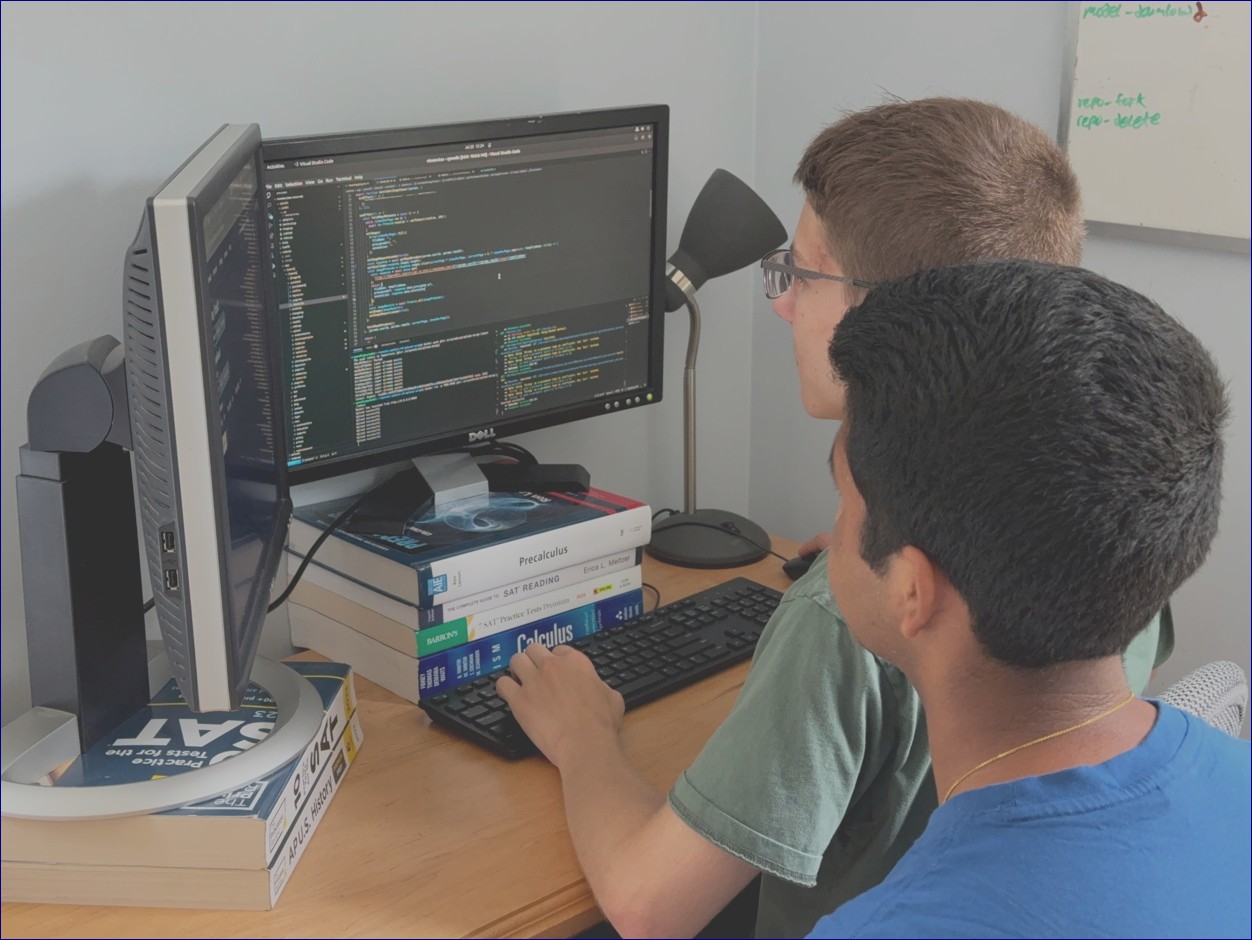
In the vibrant pulse of Boston, where history entwines with scholarly fervor, a remarkable odyssey has unfolded—one that bridges the realms of technology and visionary innovation. At a mere seventeen years of age, Arjun Goray has embarked on a monumental venture, establishing Synodic AI with the audacious aim of democratizing the domain of computer vision. His narrative is not just a tale of youthful ambition but a vivid illustration of familial encouragement and the limitless horizons of artificial intelligence.
A Birth of Perspective
Arjun’s journey into the captivating universe of technology began in his formative years, kindled by his involvement in the high school robotics team—a fellowship of aspiring engineers molded by the principles of FIRST Robotics. It was here, amidst the spark of competition and the warmth of camaraderie, that Arjun, in collaboration with his friend Sean Mabli, plunged into the complex realms of computer vision—a discipline dedicated to enabling machines to perceive and interpret the visual landscape akin to human perception. Their aspiration was nothing short of groundbreaking: to engineer a truly autonomous robot through the creation of sophisticated computer vision models.
Yet, the path was riddled with challenges. Crafting comprehensive datasets, vital for training these models, emerged as an insurmountable hurdle for a team that lacked the necessary resources and expertise. However, this very obstacle ignited a transformative idea. Arjun and Sean conceived Dataset Colab, a collaborative arena where robotics teams could forge and share their computer vision datasets and models. Launched in the lead-up to the 2023-2024 FRC robotics season, Dataset Colab quickly captivated over 500 users within just six weeks—an echo of a pressing need and a validation of their innovative vision.
From Concept to Creation: The Dawn of Synodic AI
The resounding success of Dataset Colab illuminated a bigger picture—the daunting barriers that stifled the adoption of computer vision technology across diverse industries. Recognizing the potential for a more widely applicable solution, Arjun’s vision morphed into the creation of Synodic AI—a platform designed to render computer vision not just accessible, but also swift and cost-effective.
Synodic AI transcends the realm of ordinary AI platforms; it’s a trailblazing mechanism crafted to revolutionize the entire computer vision workflow, stretching from data accumulation to model deployment. It promises unparalleled speed, affordability, and adaptability—a treasure trove for both novices and seasoned AI practitioners alike. Its arsenal includes efficient data collection and annotation, rapid model training with customizable architectures, and extensive deployment alternatives. Unlike its counterparts, the platform’s open-weights architecture sidesteps vendor lock-in, empowering users to run their models on their own infrastructure or utilize Synodic AI’s lightning-fast inference platform.
Navigating the Uncharted
Forging the path for Synodic AI was no trifling endeavor, especially for a high school student juggling the rigors of academia. Arjun’s daily life cascaded through a whirlwind of coding marathons, strategic meetings, and scholastic responsibilities. Yet, the unwavering support from his family formed the bedrock of his expedition. They reshaped their home life to nurture his passion—from flexible meal schedules to a lighter chore load. His parents proactively harnessed their connections, arranging meet-ups with entrepreneurs and industry stalwarts who bestowed invaluable mentorship—transforming trials into triumphs.
In late May, the alpha version of Synodic AI made its debut. This initial phase, while fraught with challenges, tested their resolve and fostered resilience. By late June, they celebrated a pivotal milestone: securing their first paying customer. With renewed vigor, the team now turns its attention to marketing and expanding features, propelled by a vision to make cutting-edge computer vision technology ubiquitously accessible.
Envisioning Tomorrow’s Possibilities
At its essence, computer vision is the art of enabling machines to decode and derive meaning from visual data. This groundbreaking technology possesses the potential to revolutionize numerous sectors by automating what was once reliant on human expertise. In the realm of manufacturing, for instance, computer vision systems can meticulously inspect products for defects, outperforming human inspectors in both efficiency and precision. In healthcare, this technology aids physicians in diagnosing ailments from X-rays and MRIs with remarkable accuracy. In agriculture, it monitors crop vitality and alerts farmers to critical issues like water shortages or harvest readiness, ultimately optimizing yields.
The current landscape presents a variety of solutions for those venturing into the world of computer vision. Cloud-based AI training services like AWS SageMaker and Google Cloud AI Platform boast scalable pre-built models but come tethered to hefty ongoing expenses and data privacy dilemmas. Alternatively, crafting in-house models through open-source frameworks like TensorFlow offers flexibility, yet demands extensive expertise and infrastructure management. Platforms focused on transfer learning, such as Roboflow, enable quicker development times but often compromise on customization. AutoML tools like Google Cloud AutoML Vision simplify the process, yet they provide scant control over model architecture.
Synodic AI: A Catalyst for Change
Amidst these varying solutions, Synodic AI emerges as a transformative force, striving to bridge existing gaps by offering an inclusive, user-oriented platform that amalgamates the best features of current technologies while addressing their inherent pitfalls. Designed for users of all skill levels—from trailblazing individuals to sprawling enterprises—Synodic AI boasts inference latencies that are two to three times faster, alongside costs that are comparably lower than its competitors. It stands as a beacon of efficiency and cost-effectiveness in the arena of computer vision.
The inspiring journey from a high school robotics endeavor to a groundbreaking AI enterprise encapsulates a narrative of ingenuity, resilience, and communal support. Arjun Goray’s story is a celebration of youthful curiosity intertwined with the influence of a nurturing environment. Synodic AI, championing the democratization of computer vision, embodies the very spirit of this journey, with aspirations of making AI-driven solutions accessible to all.
A Call to the Changemakers
Yet, Arjun’s vision extends far beyond the horizons of his enterprise. He rallies innovators, developers, and businesses alike to partake in this revolutionary age of computer vision. Synodic AI stands as an open invitation for collaboration and growth, encouraging users from all walks of life to dive into its expansive capabilities. As Arjun balances the dual roles of student and entrepreneur, his path serves as a poignant reminder that age is merely a number, unbound by barriers when it comes to making lasting, impactful change.
