
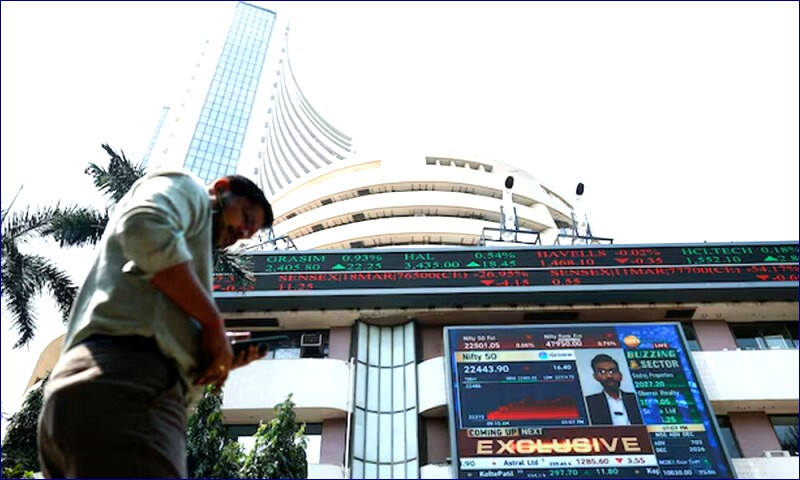
MUMBAI/SINGAPORE: Global investors are moving away from India’s stock market in large numbers, choosing to sell their shares at an unprecedented rate as they shift their focus towards Chinese stocks. This change comes as a surprise, given the contrasting fortunes of these two Asian economies in the past six months.
High inflation and rising interest rates have caused a 13% drop in Indian stocks since hitting a record high last September, resulting in a staggering loss of $1 trillion in market value. Meanwhile, China’s anticipated economic support measures are attracting more investors.
“When investment flows to China, India suffers,” explained Jitania Kandhari from Morgan Stanley Investment Management. Since October, foreign investors have withdrawn nearly $29 billion from Indian stocks—the highest amount in any six-month period—after previously favoring India for a couple of years.
This money has found its way to China, where the Hang Seng Index, which includes many prominent Chinese firms, has surged by 36% since late September, driven by enthusiasm for artificial intelligence developments from companies like DeepSeek.
For the first time in two years, Britain’s Aubrey Capital Management, which invests in consumer firms, now has a higher investment weight in China compared to India. Portfolio manager Rob Brewis noted that profits gained from Indian stocks over the past couple of years have been distributed, with some moving towards China and other Southeast Asian markets.
Although companies like Morgan Stanley and Fidelity International still favor India, they’ve been cautious and have reduced their investments there while increasing their stakes in China. Nitin Mathur from Fidelity mentioned they have become more careful regarding India, slightly dialing back their exposure.
China’s stock market has emerged as an unexpected safe haven, providing a relatively affordable alternative and showing signs of an economic bounce-back, despite ongoing trade tensions with the U.S.
Before the significant downturn in Indian stocks, investors were rushed to catch up with a booming market that pushed valuations to extreme levels. However, weakening corporate earnings and economic growth—forecasted to be the slowest in four years—have diminished investor confidence.
Data shows that earnings for firms in India’s blue-chip Nifty 50 index grew only 5% in the last quarter of the year, marking the third consecutive quarter of single-digit growth after a period of double-digit increases.
Anwiti Bahuguna from Northern Trust Asset Management pointed out that the Indian market was “priced for perfection,” so even a minor decline in earnings triggered a significant drop in stock prices. Currently, India’s BSE Sensex is valued at 20 times its expected 12-month earnings, while the Hang Seng Index stands at just 7 times, according to market data.
Sammy Suzuki from AllianceBernstein highlighted that there is still potential for further withdrawals from Indian stocks, given the decline in earnings linked to such a high price tag.
However, not all investors are abandoning India just yet. Ryan Dimas from William Blair believes India offers one of the strongest economic landscapes among major markets, supported by various economic drivers and a resilient stock market.
Still, Kandhari believes that foreign investments in Indian stocks may only stabilize after the second half of 2025.
