
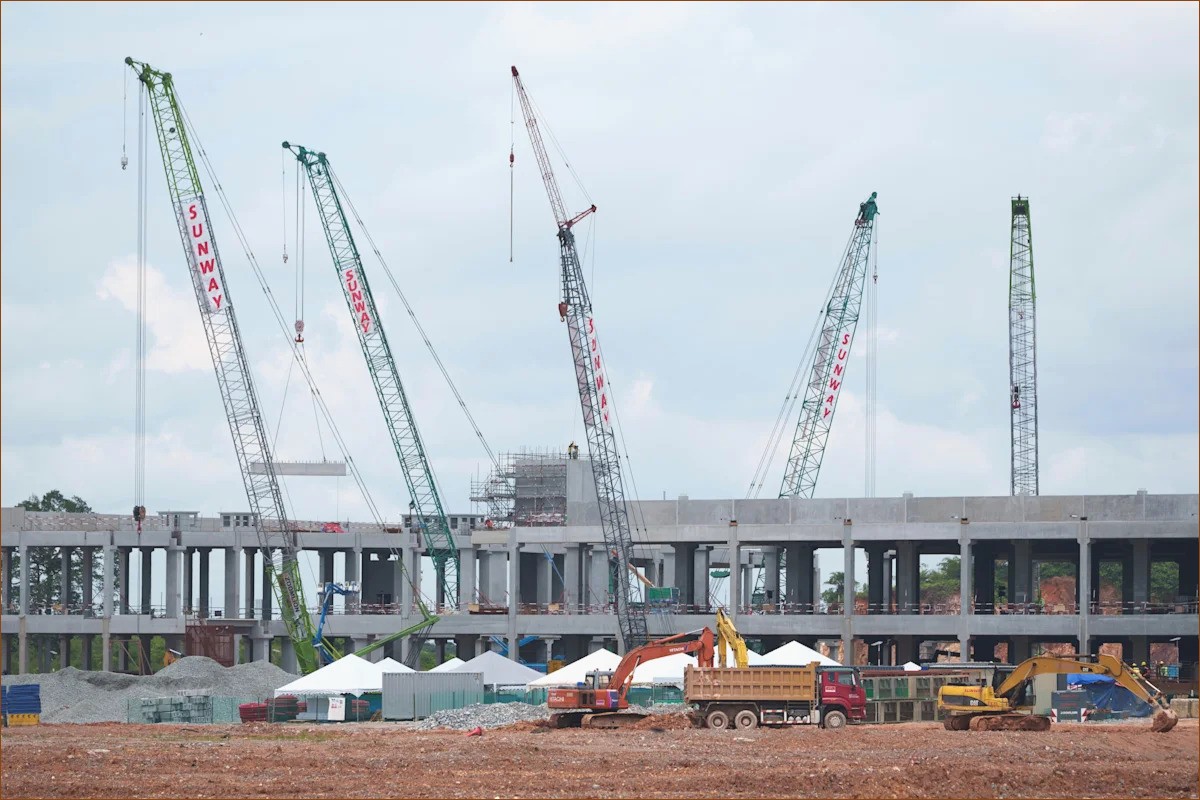
To meet the ambitious expectations of the stock market regarding profits from artificial intelligence (AI), there’s a crucial need for skilled workers. These individuals are essential for building data centers and managing various other tasks in the supply chain. However, finding enough of these trained workers is becoming more challenging.
A recent report from the Alliance for America’s Skilled Trades highlights that the U.S. will require around 1.7 million skilled trades workers each year until 2035. Unfortunately, the current training programs are only producing 55 workers for every 100 that are needed.
The Alliance for America’s Skilled Trades was created by prominent companies, including BlackRock, Ford, Google, and Carhartt. Recently, tech giants such as Meta, Microsoft, Nvidia, and Waymo joined the alliance. This collaboration shows the growing need for workers in the AI infrastructure sector.
Ford CEO Jim Farley emphasized that no single company can address the skilled labor shortage alone. He warned that training only 55 workers for every 100 required could hinder economic growth and limit job opportunities for many individuals. Farley called for the collective effort of employers, educators, and policymakers to help people access the necessary training and job support to prosper in these careers.
The importance of these skilled trades cannot be overstated, particularly as the U.S. develops the infrastructure necessary for AI. Jobs for electricians, HVAC technicians, and mechanics are expected to grow significantly faster than the average across all occupations, according to the report.
By the year 2034, specific states will face notable demands: Arizona will require 29,000 electricians, Texas will need 86,000 auto mechanics, and North Carolina will seek 19,000 carpenters.
The report also highlights the “essential economy,” which spans construction, utilities, agriculture, transportation, oil and gas, and equipment manufacturing. This sector contributes $12 trillion to the gross domestic product and supports 95 million jobs in 3 million businesses. However, labor shortages persist as older workers retire, and younger generations often view demanding jobs, like loading trains, as unappealing. Additionally, some existing workers may lack the skills needed to adapt as AI becomes more integrated into the supply chain.
A survey conducted by PRT Staffing found that 17.4% of manufacturing companies face worker shortages. The firm predicts that 3.8 million manufacturing jobs will need to be filled in the next ten years.
One factor contributing to the shortage is the decline of vocational education in schools, according to Mike Rowe, the host of “Dirty Jobs.” He pointed out that this gap in education has led to a current perception that these jobs are undesirable. “Now, decades later, we’re faced with the reality that no one wants to do this work,” Rowe said on the Power Players With Brian Sozzi podcast. He noted the negative stereotypes and misconceptions that surround these essential jobs, further complicating efforts to attract new workers.
