
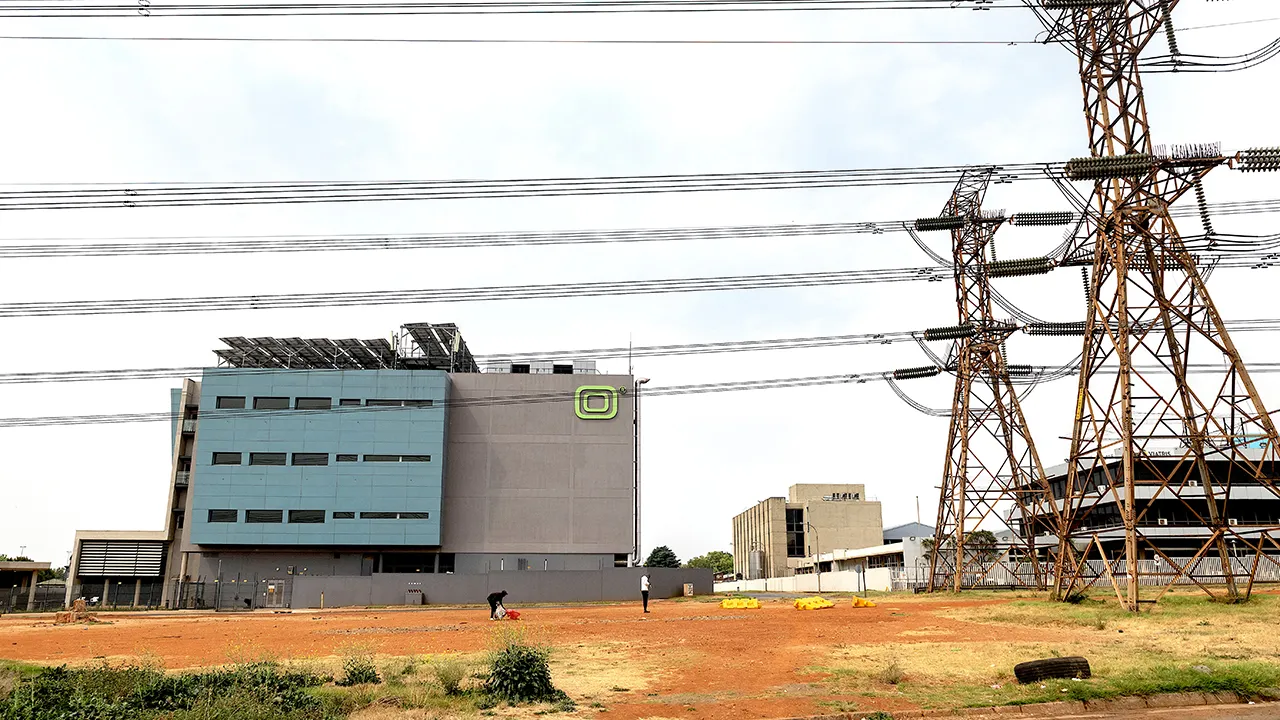
Africa Emerges as the Next Frontier for Data Centers and AI Development
Experts are suggesting that Africa is set to become a key player in the field of data centers and artificial intelligence (AI). The region is drawing increasing attention from American companies looking for growth opportunities, especially as strict regulations and growing concerns about the environment have restricted data center developments in the U.S.
Abhishek Goyal, a consultant with Arizton Advisory & Intelligence, emphasizes that Africa presents a compelling case for building AI infrastructure. “Many developed markets are facing challenges like limited power supply and environmental regulations, while Africa’s developing infrastructure can actually be beneficial,” he notes.
The U.S. government is explicitly supporting American companies to position AI as the “gold standard” globally. A spokesperson from the State Department explained that the aim is to assist these companies in upgrading telecommunications networks and enhancing AI capabilities in partnerships with foreign governments.
In an impressive display of commitment, American firms have secured multi-billion-dollar contracts in various African nations. For example, a U.S. company recently won a $6.2 billion project in Lesotho for a data center and hydropower plant. Similar efforts are underway in Gabon, where assistance from the U.S. Embassy has led to a $600 million contract for American businesses.
Africa is on the brink of a data center boom, albeit starting from a low base. Arthur Goldstuck, CEO of World Wide Worx, states that while the continent is still far behind the U.S. and Europe in installed capacity, the demand for local cloud and AI services is skyrocketing. As governments and businesses seek more localized data storage solutions, the competition for establishing these services is heating up.
Countries such as South Africa, Kenya, Nigeria, Morocco, and Egypt are becoming hubs for large-scale AI projects. Analysts believe that partnerships with local companies can also ensure the viability of renewable energy projects, integrating the development of data centers with energy generation.
However, challenges remain. The lack of regulation can lead to inconsistencies in business practices across the continent. Professor Pitso Tsibolane from the University of Cape Town points out that without a public register of data center facilities in South Africa, it becomes difficult to monitor resources like water and electricity consumption.
Despite these challenges, many analysts remain optimistic about Africa’s potential. The continent’s vast renewable energy resources, lower development costs, and rapidly growing digital economy could pave the way for a successful future in data center and AI development. As Goyal puts it, “Africa could indeed be the destination for exciting new opportunities in technology.”
In conclusion, with its unique advantages and growing market demand, Africa is positioning itself as a significant player in the global technology sector, making it an attractive location for investment and innovation in data centers and AI infrastructure.
