
Protest at Jantar Mantar: Voices of Frustration from Across India
We arrived expecting a youthful protest, but it turned out to be a gathering of people ranging from 18 to 50 years old and even older. Under the scorching sun of Delhi, it became clear that the story of the Cockroach Janta Party (CJP) was more than just humorous memes. It was about the frustrations many had brought with them to the iconic Jantar Mantar in central Delhi.
As we stepped out of our vehicle at the Parliament Street Police Station early Saturday morning, the heavy police presence and a small crowd of supporters surprised us. This turnout wasn’t what you’d typically expect from a protest originating from a viral online campaign.
The atmosphere shifted when chants of “Inquilab Zindabad” rang out, marking the true start of the day. Meanwhile, CJP founder Abhijeet Dipke was active on social media, sharing updates about his arrival and directing protesters to gather at Jantar Mantar, just 800 meters away from our location.
Chatting with protesters revealed that this demonstration had drawn people from various states including Maharashtra, Uttar Pradesh, Bihar, and others. Their grievances ranged from unemployment and irregularities in the NEET-UG exams to a general desire for change in the current BJP-led government.
By mid-morning, we spoke with teachers, parents, and young job seekers who expressed disappointment with the education system. One father, Arvind Jain from Jodhpur, who came for his son’s NEET re-exam following a cancellation due to a paper leak, shared, “These issues have a mental toll on students. My son believed he did well, only to have the exam canceled later.”
As the day heated up, the crowd was lively, adorned with colorful banners and wearing cockroach-themed face masks. Jain even helped us cope with the heat by suggesting we tie a cotton handkerchief around our heads.
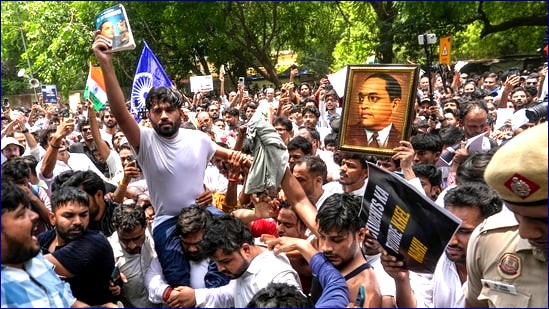
Then, a wave of excitement swept through the crowd as Dipke finally arrived. Uniting with his supporters, he raised slogans and called for the resignation of the Union Education Minister, Dharmendra Pradhan, while carrying a portrait of Dr. B.R. Ambedkar.
Some protesters were initially reluctant to speak with media, expressing distrust in journalists. “We don’t talk to ‘godi media,’” one woman said, walking away.
A notable moment happened when respected activist Sonam Wangchuk joined the protest. His arrival sparked cheers similar to those for a favorite celebrity, drawing many to flock toward him.
Throughout the day, the diverse frustrations of protesters reflected a collective sentiment of anger—some focused on exam irregularities and unemployment, while others voiced concerns about the overall education system.
The CJP’s statement later characterized the protest as a response to heightened public frustration lacking a proper outlet. This was evident in the creative posters displayed, with slogans like “Indian Paper Leak” cleverly linking sports and education issues.
As the protest continued, logistical challenges arose, particularly regarding the availability of water. Though supply ran low, people remained steadfast, many reliant on local sellers to endure the heat.
By day’s end, it was clear that this gathering at Jantar Mantar had transformed a wave of frustration into a tangible expression of hope for change, showing how deeply resonant and impactful collective action can be.
