
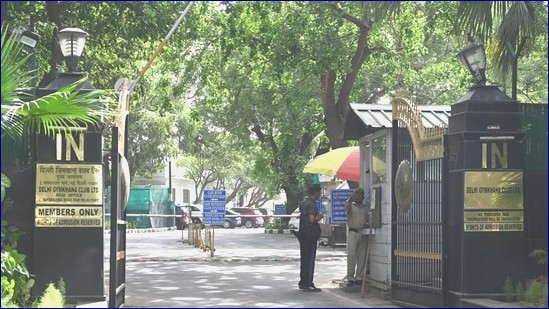
Delhi Gymkhana Club Faces Closure Amid Controversies
The famed Delhi Gymkhana Club is on the verge of significant change as it has been ordered to vacate by June 5. Many believe this development has been looming for a while.
The club has found itself caught up in various legal disputes, including proceedings at the National Company Law Tribunal and challenges concerning its management and elections. This situation raises broader issues regarding the state’s relationship with established institutions, urban heritage, and even India’s image on the global stage.
Politically, the Gymkhana Club seems like an easy target. No major party is likely to lose support over its fate; whether on the left or right, most won’t raise an outcry. Activists may see this as a win against privilege, while many who couldn’t join the exclusive club might feel satisfied to see it face challenges.
However, while the situation looks appealing for the government—taking a strong stance against a privileged institution—there’s an underlying contradiction. The club has not been a part of welfare politics, nor has it contributed financially to any political campaigns.
Though the land was given in 1913 during British rule, if historical allotments are now grounds for dismantling institutions, this principle should apply uniformly. Numerous educational and cultural organizations and other clubs currently occupy government-leased land. This selective approach raises questions of fairness.
The government cites defense and security reasons for the closure, but concerns about why this land is crucial from a security standpoint, especially if plans to relocate the Prime Minister’s residence are underway, remain valid.
For many years, the Gymkhana has served a purpose beyond just a recreational facility. It has been a rare place where civil servants, military staff, diplomats, and business leaders could interact in a relaxed setting, away from their official roles.
Its amenities—tennis courts, green spaces, and peaceful walkways—offer a much-needed escape in a bustling city. Temporary memberships further allowed international guests to connect with their Indian peers in an informal environment.
Such spaces are often more significant than governments understand. Diplomacy is nurtured not just in formal settings but also through social and cultural interactions. Global leaders assess cities not only based on economic metrics but also by the quality of life and the presence of spaces that encourage meaningful interactions.
Reform vs. Destruction
As India aims to become a leading economic and geopolitical player, concerns about foreign businesses potentially relocating due to infrastructure issues and urban living conditions are growing.
In this light, dismantling prestigious institutions may signal instability rather than progress. This doesn’t mean that elite institutions should escape scrutiny. Accountability, transparency, and lawfulness must be upheld. If any issues arise, they need to be addressed correctly. However, reform does not have to equate to destruction. Mature societies can maintain heritage while correcting past mistakes.
India consists of diverse socio-economic classes. Governance should not turn into a competition between them. While the needs of the underprivileged should take priority, the quality of life for professionals and scholars is also crucial. Cities build their character from the institutions they preserve over decades, even centuries.
Shutting down the Delhi Gymkhana might draw applause as a move against elitism, providing short-term political gain. However, removing such a cornerstone of Delhi’s civic history may ultimately hurt the city more than it helps the government.
Great nations are not only defined by new achievements but also by their efforts to preserve and reform the institutions that contribute to their history and identity.
