
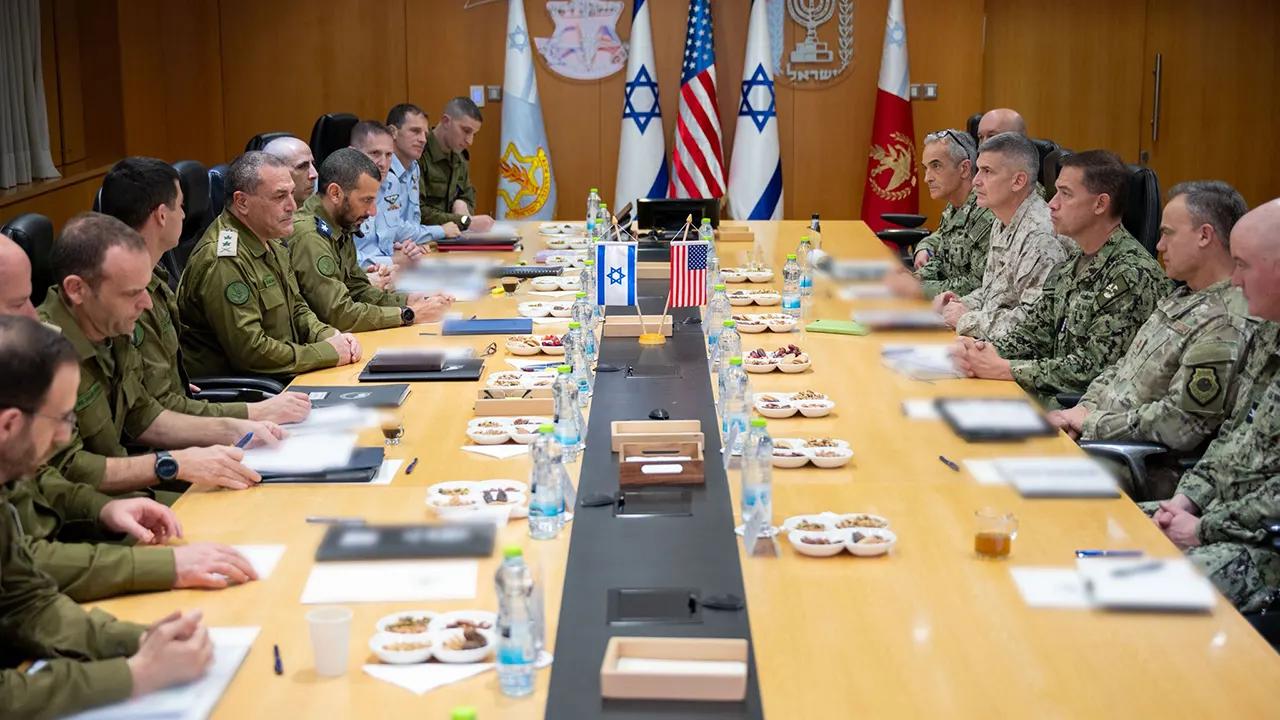
U.S. National Defense Strategy Highlights Israel as Key Ally
Recently, Secretary of War Pete Hegseth introduced the 2026 National Defense Strategy (NDS), outlining the Pentagon’s vision for military assistance. The document positions Israel as a “model ally” while translating former President Donald Trump’s security strategies into actionable military support.
The NDS emphasizes that Israel has shown it can defend itself with limited U.S. support. It notes, “Israel is not just a passive partner but an operational force that aids U.S. interests in the region.” This approach seeks to empower capable allies rather than limit them, building on Trump’s previous efforts to foster peace through the Abraham Accords.
The updated strategy is already sparking discussions on U.S. military aid to Israel. Some influential conservative groups are suggesting a gradual reduction of direct aid, arguing this would enhance U.S. leverage.
Israel’s Role in U.S. Security
The NDS underscores how Israel demonstrated its capability to protect itself after the attacks on October 7. Jonathan Ruhe, from the Jewish Institute for National Security of America, highlighted that U.S. military aid spent in Israel supports American industry and, in turn, enables Israel to better safeguard U.S. interests. He anticipates that future agreements could expand beyond financial aid to include joint research, development, and intelligence-sharing.
Moreover, the strategy notes how allies purchasing U.S. military equipment can strengthen domestic production and distribute regional security responsibilities.
Avner Golov, a vice president at the Israeli think tank Mind Israel, emphasized that Israel wants to enhance its defensive capabilities independently with support from the U.S. He stated, “We need the tools to protect ourselves,” also noting that this approach improves America’s reputation in the Middle East and internationally.
As negotiations for the next ten-year Memorandum of Understanding (MOU) begin, the current agreement provides Israel with $3.3 billion in military funding annually, along with an additional $500 million for missile defense.
Concerns Around U.S. Military Support
The ongoing discussions come amid previous tensions during the Biden administration, where the U.S. paused certain weapon deliveries to Israel. This raised concerns in Israel about relying too heavily on U.S. resources, which could affect their military readiness.
Experts have pointed out that around 70% of Israel’s military supplies come from the U.S., leading to Prime Minister Netanyahu advocating for greater domestic military production to reduce dependency.
Golov argued that prioritizing optics rather than readiness could backfire, stressing the need for Israel to remain prepared for potential conflicts. “Israel must be the strongest military in the region, which is also vital for U.S. interests,” he said.
Changing Dynamics of U.S.-Israel Relations
Ruhe noted that nearly two years of conflict have highlighted vulnerabilities tied to dependency on U.S. supply chains. Both leaders from Israel and the U.S. recognize the complexities of their partnership as they navigate their future security arrangements.
Despite the discussions of reducing direct aid, the consensus remains that Israel still relies significantly on the U.S. for advanced military systems, such as the F-15 and F-35 aircraft.
With this in mind, Ruhe suggested that stable funding under the next MOU could ease political tensions in Congress, which often complicate military appropriations.
Golov believes the goal should be to strengthen ties with the U.S. rather than lessen them. He envisions a shift in their partnership from an aid-based model to a strategic collaboration that benefits both nations economically and militarily.
He emphasized the need for consistent U.S. support during this transitional phase, warning that any abrupt cut in aid could signal weakness to adversaries and jeopardize Israel’s defense preparedness.
In conclusion, as discussions move forward for future military support and partnerships, the focus remains on ensuring both nations can effectively collaborate to address shared security challenges in the region.
