
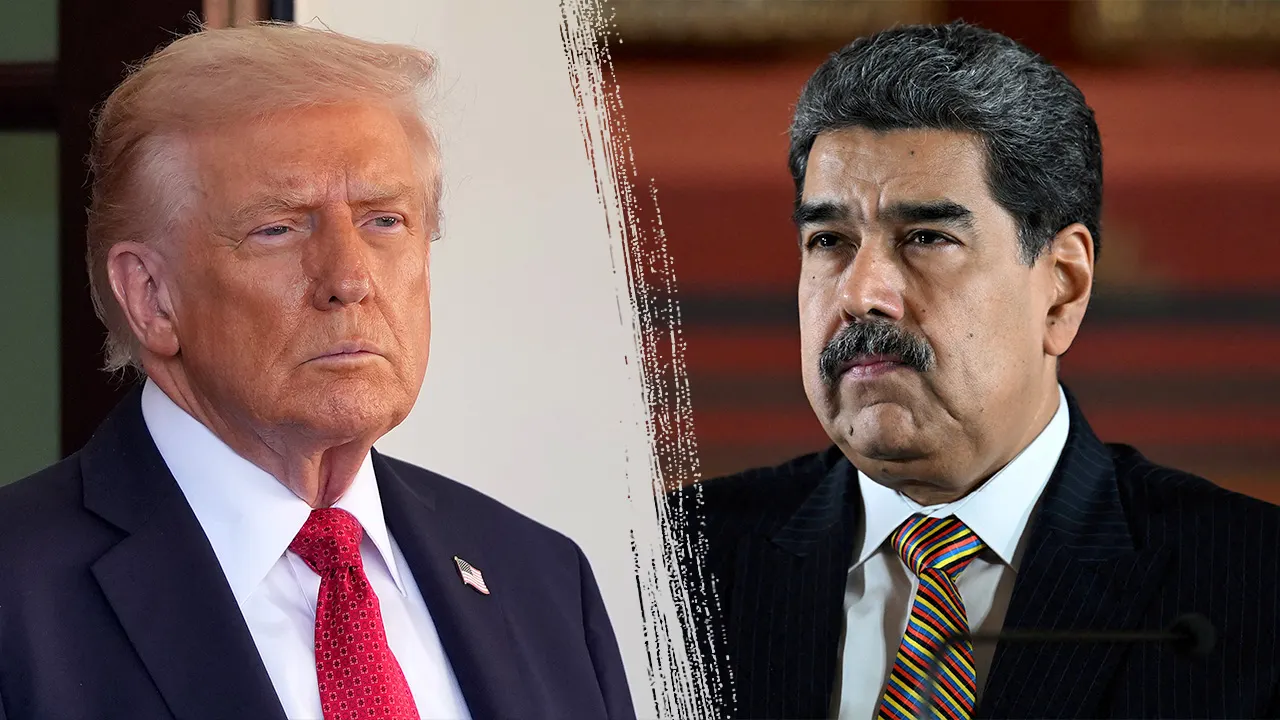
U.S. Takes Strong Action Against Venezuela
The Trump administration is ramping up its approach to Venezuela, implementing a significant naval blockade on oil tankers under sanctions and designating Nicolás Maduro’s government as a Foreign Terrorist Organization. This move aims to undercut the authoritarian regime’s main revenue source while addressing what the White House describes as an escalating threat from drug cartels and foreign interventions in the region.
In a social media announcement, Trump stated that Venezuela is now “completely surrounded” by a naval fleet considered the largest ever assembled in South America, focusing on the country’s oil sector, which makes up about 88% of its export earnings.
The new National Security Strategy from the administration now prioritizes the Western Hemisphere in U.S. security planning, highlighting issues such as instability, mass migration, drug trafficking, and the influence of foreign powers as direct threats. While the document does not mention Venezuela directly, it positions crises like Venezuela’s economic collapse as critical to safeguarding what it terms America’s “immediate security perimeter.”
A New Focus on Regional Security
The National Security Strategy emphasizes preventing large migrations, countering drug cartels and transnational criminal organizations, and ensuring stability in the region. It also introduces a “Trump Corollary” to the Monroe Doctrine, which seeks to block foreign incursions into the Western Hemisphere.
A senior official from the White House stated that the Western Hemisphere strategy is intended to reinforce American leadership by enhancing regional security partnerships, halting drug trafficking, and minimizing factors that lead to mass migration. The strategy reflects a shift in U.S. foreign policy that views the hemisphere as a vital component of national defense and prosperity.
According to White House spokesperson Anna Kelly, this new strategy is part of a historic shift in U.S. foreign policy, aiming to restore American strength domestically and globally while promoting peace in the world.
Melissa Ford Maldonado, director of the Western Hemisphere Initiative at the America First Policy Institute, explained that the Maduro regime, characterized as a narco-dictatorship, is closely connected to criminal cartels that are now labeled as foreign terror organizations, and it has support from countries like China, Iran, and Russia.
Potential Risks and Future Implications
Experts caution that the administration’s aggressive stance could lead to destabilization if tensions rise further. Roxanna Vigil from the Council on Foreign Relations stated that if the U.S. approach escalates to conflict, controlling the situation could become very challenging.
With the potential for escalated confrontations, analysts are concerned about what would happen if the Maduro regime collapses. Vigil warns that the absence of a negotiated transition could result in worse outcomes, as armed groups and criminal organizations vie for control.
Jason Marczak from the Atlantic Council emphasized that as long as Maduro or his associates are in power, achieving regional goals will be difficult. He pointed out that Venezuela serves as a conduit for foreign influence in the Americas.
Marczak believes there’s a strong desire for change among Venezuelans as the 2024 elections approach, but cautioned that merely replacing Maduro with another insider won’t address deeper issues. He and Vigil noted that without a thoughtful transition, criminal networks and militia groups could emerge as the dominant forces.
Root Causes and Broader Context
According to Ford-Maldonado, confronting a narco-regime supported by foreign adversaries isn’t a distraction from America’s interests; at its core, it’s about protecting American lives and communities. This adoption of a more assertive stance signals that the U.S. sees the Venezuelan crisis not only as a humanitarian issue but also as a fundamental test for its security principles: managing migration, combating drug trafficking, and restricting the influence of foreign adversaries.
In summary, the U.S. administration’s latest moves against Venezuela highlight a significant shift in foreign policy. Experts believe that the implications of these actions will extend well beyond Venezuela’s borders, emphasizing the need for careful navigation in this complex geopolitical landscape.
