
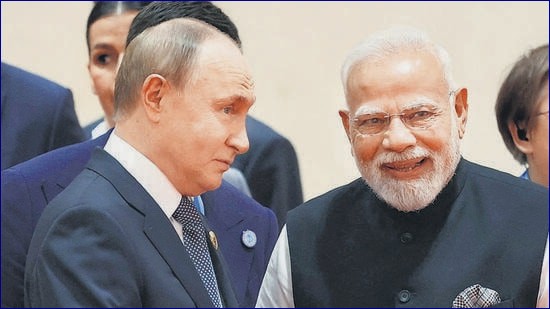
India is currently facing a complex situation as it strives to manage trade agreements while nurturing its relationships with both the United States and Russia. This balancing act comes as President Vladimir Putin is set to visit India in December, amid increasing tensions due to recent U.S. sanctions on major Russian oil companies, Rosneft and Lukoil.
These sanctions, initiated by U.S. President Trump, are a response to frustrations over the ongoing war in Ukraine and are set to take effect on November 21, just days before Putin’s expected visit. The impact of these sanctions has prompted Indian oil refiners, like Reliance Industries, to review their purchases of Russian oil. Reliance has indicated it will adjust its refinery processes to comply with the new regulations.
While there has been a noticeable dip in Russian oil purchases, experts suggest that completely halting these imports is unlikely before Putin’s arrival. The additional 25% tariff on Russian oil imports presents a significant challenge, complicating India’s options as it tries to navigate U.S. regulations without jeopardizing its longstanding relationship with Russia.
Despite discussions between Indian and U.S. officials on various global and regional matters, progress on trade has not been encouraging. Meanwhile, Russian Foreign Minister Sergey Lavrov has postponed his trip to India, but a meeting between him and Indian External Affairs Minister S. Jaishankar is anticipated at next month’s G20 Summit.
Experts note that while U.S. sanctions affect major Russian producers, there are still other channels for India to procure crude oil that are not directly sanctioned. However, they warn that these options may not extend to India without facing resolutions from the U.S. regarding the tariffs.
The situation underscores India’s tricky position as it looks to maintain a steady supply of energy while trying to appease the U.S. demands, all while preparing for a crucial summit with Russia’s leadership.
