
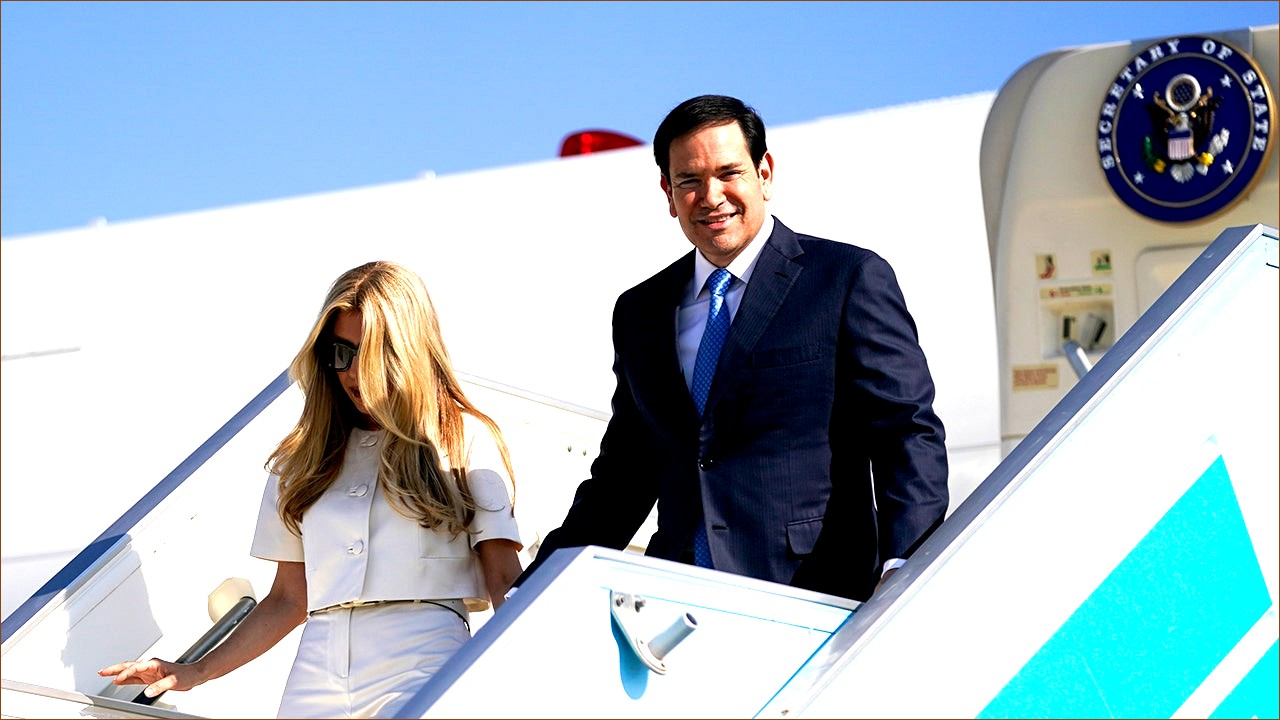
JERUSALEM: U.S. Secretary of State Marco Rubio assures that the strong relationship between the U.S. and Israel remains intact, despite criticism concerning Israel’s recent strike aimed at Hamas negotiators in Qatar. In an interview in Jerusalem, Rubio stated, “We will continue to be strong allies and partners.” He acknowledged the President’s concerns about the incident but emphasized that it would not sever their alliance.
Rubio is set to travel to Doha on Tuesday, where he plans to encourage Qatar to aid in resolving the ongoing conflict in Gaza and work towards securing the release of hostages held by Hamas.
“We’re heading back to meet with them soon,” Rubio mentioned. “We understand their frustrations and the Israeli stance. However, our priority remains on securing the release of hostages and finding a way to defeat Hamas for lasting peace.”
Rubio’s visit follows an Arab-Islamic summit held in Qatar a day earlier, which culminated in a draft resolution criticizing Israel for jeopardizing peace prospects in the region. He urged everyone to focus on future actions rather than dwelling solely on past incidents, stating, “We need to tackle the ongoing challenges together.”
Rubio also refrained from commenting on whether the U.S. supports Israel’s potential annexation of parts of the West Bank, attributing any pressure Israel faces to international recognition efforts for Palestinian statehood that may have prompted a more defensive stance from Israel.
He highlighted the complexities involved in achieving peace, stating, “We’ve warned that recognition of Palestinian statehood could provoke a reaction from Israel, impacting negotiations.”
In response to broader geopolitical tensions, Rubio denied claims that Russian President Vladimir Putin feels emboldened following a summit with former President Trump, despite recent drone incursions by Russia in Eastern Europe. He reiterated that conflicts tend to escalate rather than resolve through ongoing warfare.
Regarding Venezuela, Rubio dismissed the notion that the U.S. placed a bounty on President Nicolás Maduro after announcing a substantial reward for information leading to his arrest. He clarified that Maduro’s indictment relates to drug trafficking involving government elements in Venezuela, portraying him as a primary figure in a narcotics network threatening U.S. national security.
Rubio remarked, “When you push drugs into the U.S., you’re meddling in our internal affairs and posing a direct threat.”
The Secretary’s remarks emphasize the ongoing diplomatic challenges faced by the U.S. amid international tensions, highlighting the importance of strategic partnerships and conflict resolution efforts in a turbulent global landscape.
