
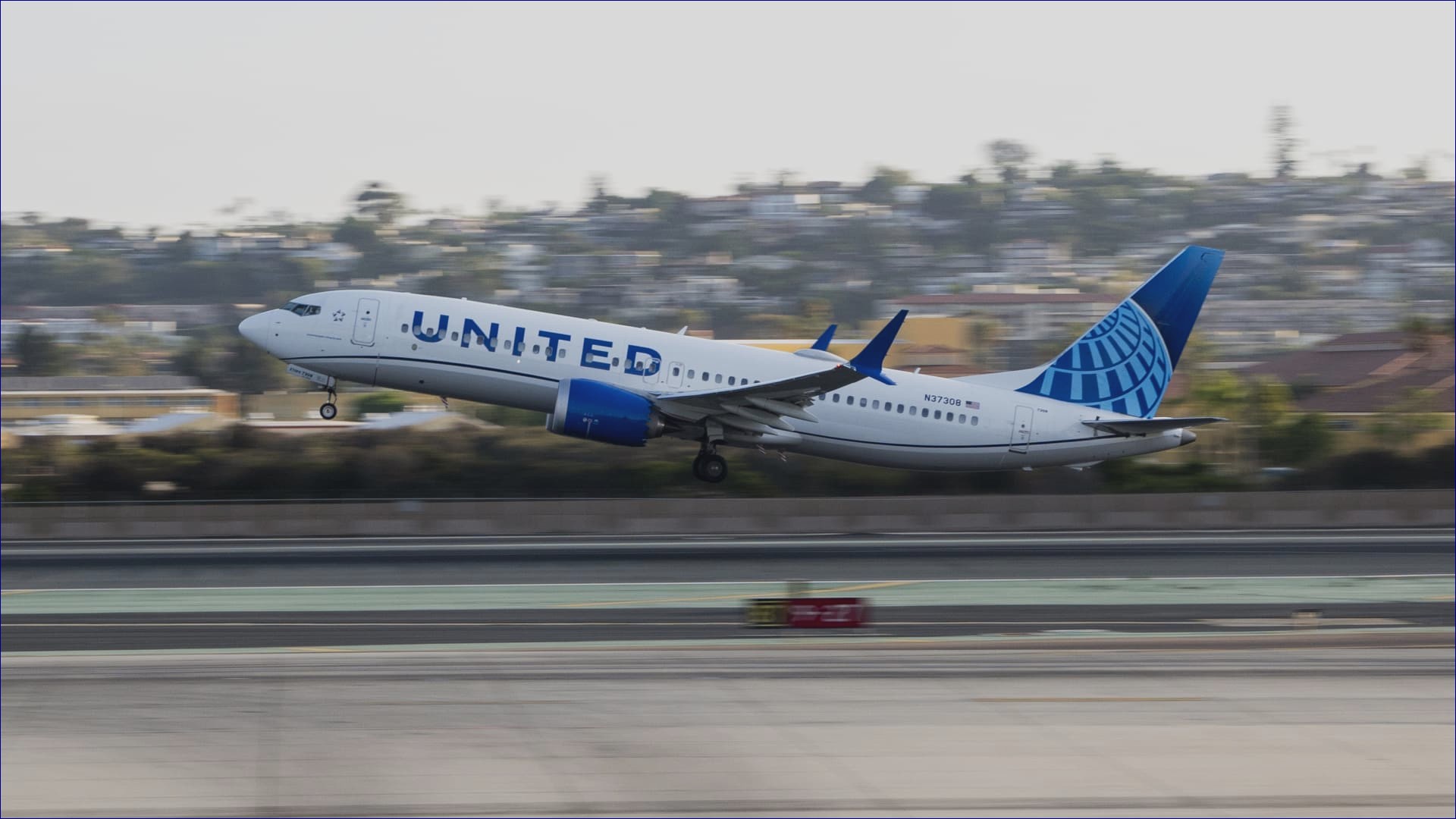
A United Airlines Boeing 737-MAX 8 whirred into the skies on August 24, 2024, departing from the bustling San Diego International Airport, bound for the vibrant metropolis of New York. This moment was more than just a flight; it marked a significant turn in United’s financial narrative.
United Airlines recently declared its ambitious $1.5 billion share buyback plan, an intriguing move announced on a Tuesday that came hand-in-hand with remarkable earnings surpassing expectations during the peak summer travel frenzy. The airline not only anticipates adjusted earnings between $2.50 and $3.00 per share for the fourth quarter—an impressive leap from the previous year’s $2.00—but also outpaces the analysts’ forecast of $2.68, showcasing its robust recovery trajectory.
In a head-to-head comparison with Wall Street’s predictions, United’s third-quarter performance revealed the following striking figures, as detailed in estimates assembled by LSEG:
- Earnings per share: $3.33 (adjusted) compared to the expected $3.17
- Revenue: $14.84 billion, edging above the anticipated $14.78 billion
This share buyback represents a pivotal milestone; it’s United’s first foray into repurchases post-Covid-19 pandemic. During the depths of the pandemic, airlines, including United, navigated a turbulent financial landscape, buoyed by over $50 billion in governmental aid that thwarted such buybacks and dividends.
In parallel, Southwest Airlines had previously set the stage with its own $2.5 billion share repurchase initiative last month, indicating a competitive spirit among the giants of the skies.
Scott Kirby, the CEO of United, articulated the rationale behind this new strategy in a message to employees, affirming his unwavering commitment to investing in people and operational excellence, despite the financial maneuvering aimed squarely at Wall Street’s approval.
The airline’s third-quarter report painted a complex picture: revenue climbed 2.5% year-over-year to $14.84 billion, while net income saw a decline of 15%, settling at $965 million. Yet, signs of recovery arose as United reported positive domestic unit revenue in August and September—delivering a welcomed counter to the earlier glut of flights that had pressed fares downward. The airline also expanded its capacity by 4.1% during the quarter, buoyed by a surging 13% boost in corporate revenue and a noteworthy 5% increase in premium revenue, coupled with a staggering 20% increase in its no-frills basic economy sales.
As if expanding its horizons further, United unveiled a groundbreaking international expansion plan for the coming year that hints at flights to exotic locales such as Mongolia, Senegal, Spain, and even Greenland—an audacious response to the burgeoning demand for international travel.
When stripped of one-time charges, United’s earnings per share hit $3.33, surpassing both Wall Street projections and the earlier company estimate of between $2.75 and $3.25.
As tension mounts, airline executives will engage with analysts on a pivotal call at 10:30 a.m. ET on Wednesday, poised to discuss not only year-end demand but also the challenges posed by production disruptions at Boeing, following a prolonged machinist strike that has left many factories dormant.
However, the announcement spiraled into controversy, as the union representing United’s flight attendants, embroiled in labor negotiations, expressed vehement opposition to the share buyback decision. Sara Nelson, president of the Association of Flight Attendants-CWA, voiced her disappointment, asserting, "That money United just promised Wall Street belongs to Flight Attendants who labored tirelessly throughout the pandemic and during this demanding recovery."
In a high-stakes game of balance between shareholder expectations and employee welfare, United Airlines stands at a crucial crossroads.
