

Ah, Halloween: a season teeming with delightful frights! Be it meandering through a spine-chilling haunted house or indulging in a heart-racing horror film, these activities are engineered to stir fear yet remain, paradoxically, sources of enjoyment for countless enthusiasts.
Particularly in the realm of horror cinema, various surveys reveal a fascinating dichotomy of preferences, with viewers sharply divided on their appreciation of the genre.
Take, for instance, a revealing 2022 survey by Statista: it showed that a striking 64% of adults aged 30 to 44 either relished or adored immersing themselves in horror movies.
EMBRACING THE CHAOS: STRATEGIES FOR THRIVING WITH ANXIETY
This begs the question: why do some individuals find delight in chilling escapades while others recoil in discomfort?
As one settles into a horror film, an interesting psychological phenomenon unfolds; the audience, aware at a rational level that the terrors unfolding on screen are mere fabrications, can nevertheless find themselves engulfed in spine-tingling dread.
Many people find amusement in scary activities, such as watching a horror movie or going to a haunted house. (iStock)
“When we consider triggers, each of us carries a unique tapestry of experiences,” Dr. Mary Poffenroth, a fear connoisseur and scientist plucked from the heart of Los Angeles, shared in a recent conversation. The author of “Brave New You” articulated this distinction, exemplifying the two primary buckets into which our fears tend to tumble: a lack of sufficiency or the sensation of relinquishing control.
Take, for instance, the heart-stopping jolt of a jump scare—a quintessential manifestation of losing grip over one’s environment, as per Poffenroth’s insightful observations.
Moreover, the realm of self-assurance may also play an understated yet significant role.
UNLOCKING INSIGHTS: SUBSCRIBE TO OUR LIFESTYLE NEWSLETTER
“For those grappling with self-doubt, engaging in nail-biting experiences—from horror flicks to haunted escapades—can amplify feelings of inadequacy or insufficient bravery,” Poffenroth elucidated.
This internal tempest often triggers primitive responses housed within our brains, which may spur the body into a state of alarm, even in scenarios where danger is entirely fabricated, experts assert.

Even though a horror movie can’t actually hurt you, it could cause a response such as a jump scare—triggering a feeling of losing control. (iStock)
“Nestled within our brains are two almond-shaped treasures, the amygdalae—one perched left, the other right,” Poffenroth elaborated. “Though the dynamics of fear are markedly intricate, this tiny duo primarily governs our fear response, toggling between alarm and serenity, while navigating a spectrum of intensity.”
“Navigating through challenges not only boosts our self-esteem but also stimulates those delightful dopamine rushes.”
The amygdala, a gatekeeper of sorts, can signal imminent danger or extend a reassuring pat that all is well.
HAUNTING READS FOR HALLOWEEN: BOOKS BLOOD-CURDLING ENOUGH TO SPINE-CHILL YOU!
“In our hyper-connected and modern existence, that amygdala is easily set into overdrive, sometimes becoming overly protective,” Poffenroth warned. “It yearns to keep us cocooned within our comfy blankets, sheltered from the vast and daunting world surrounding us—but this isn’t the essence of the vibrant life we aspire to lead.”
For more enthralling lifestyle content, navigate to www.foxnews.com/lifestyle
The thrill of confronting fear, it turns out, can yield an exhilarating surge of adrenaline. There’s a palpable sense of achievement that comes with surmounting challenges, whether they flicker on the silver screen or loom in the real world.
“Engaging in scary endeavors, surmounting those hurdles, and leveling up can embolden us to face not just the minuscule frights, but also the larger opportunities awaiting us,” Poffenroth noted.
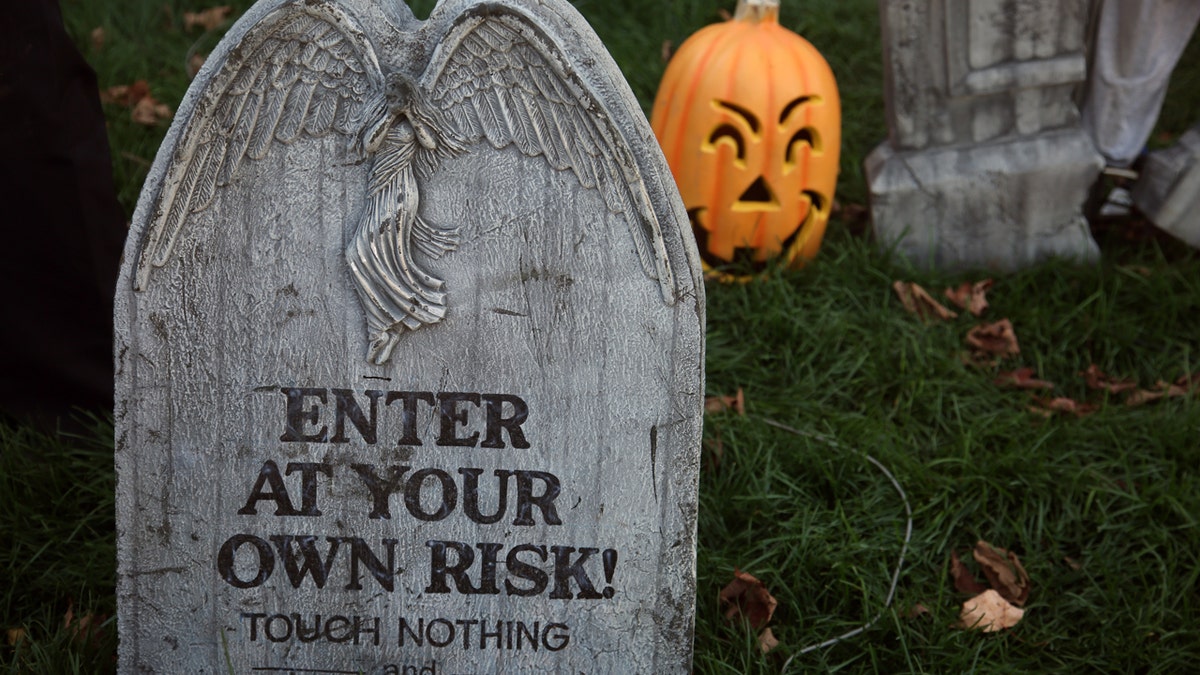
Those who revel in frightening experiences often thrive on the adrenaline rush of overcoming hurdles. (Creative Touch Imaging Ltd./NurPhoto via Getty Images)
Interestingly, this predilection for adventure can sometimes be simply woven into the tapestry of one’s personality, fuelling an insatiable desire to push beyond familiar boundaries.
“Sometimes it’s merely a trait of character,” Poffenroth remarked. “For me, the thrill of testing my own limits—what I deem possible, versus societal expectations—is an exhilarating pursuit.
GET THE FOX NEWS APP HERE
“Conquering obstacles not only fortifies our self-perception but also ignites those delightful dopamine surges, tickling our reward centers,” Poffenroth concluded with enthusiasm.
“And if we emerge from these harrowing experiences with a sense of fulfillment, we will undoubtedly crave more.”
