
Bangladesh has reached out to India to begin talks on a fresh water-sharing agreement regarding the Ganges River, as the current treaty is set to expire on December 12. Officials in Dhaka are concerned that without a new agreement, freshwater shortages could worsen, putting the livelihoods of millions at risk.
The existing agreement, which took effect in 1996, was designed to last for 30 years and regulates the sharing of water during dry seasons near India’s Farakka Barrage, located about 20 kilometers from Bangladesh. However, it does not automatically renew.
Rashed Al Mahmud Titumir, who advises the Bangladeshi Prime Minister on water-sharing issues, stated that any new agreement should focus on “mutual benefit and respect.” Despite Bangladesh’s request to initiate discussions on a new deal, India has yet to respond.
India’s Ministry of External Affairs has mentioned that issues related to rivers are managed by the two nations’ Joint Rivers Commission. The latest technical discussions took place in May, and the last ministerial meeting took place in 2022 after a long gap of twelve years.
Both India and Bangladesh share 54 rivers that cross their borders, and disagreements over water sharing have been ongoing for many years. Talks about a separate agreement for using water from the Teesta River have been stalled since 2011.
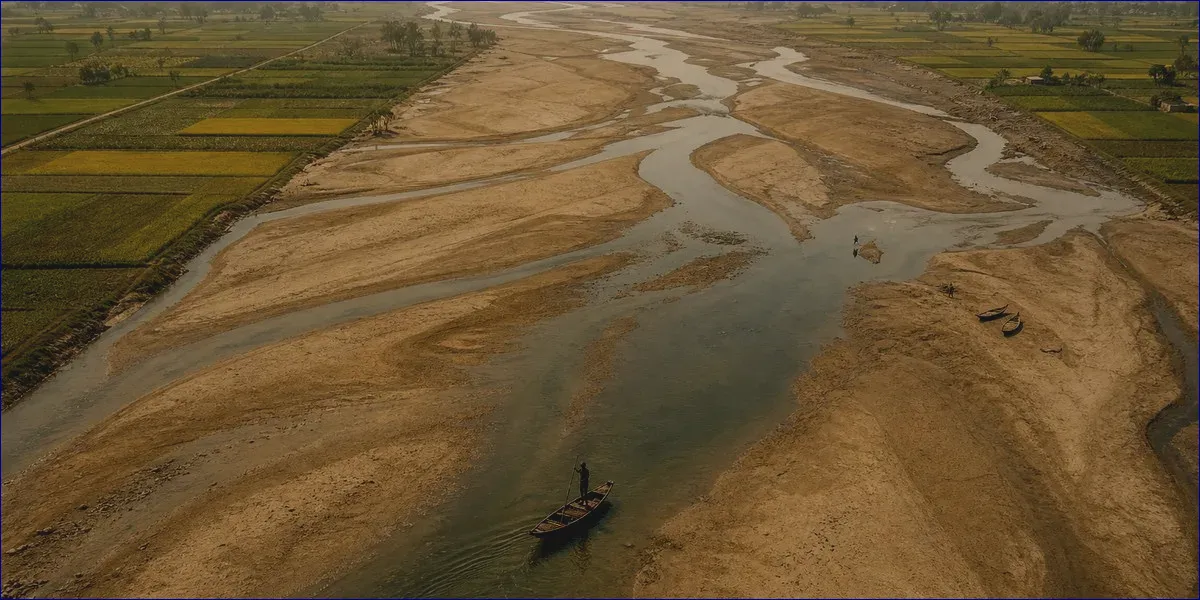
The impact of reduced water flow is being felt in various regions. In the Barind area, local residents have reported a significant drop in the Ganges River’s water level, which is referred to as the Padma in Bangladesh. Priest Bikash Soren, aged 72, noted that for nearly three months each year, the river barely flows, leading to fewer fish catches and losses in rice and wheat production.
Sheikh Rokon, from the environmental group Riverine People, warned that previous periods without water-sharing agreements had dire outcomes, including the near-drying up of at least three rivers. This has particularly harmed the Gorai River, essential for supplying freshwater to the Sundarbans mangrove forests.
According to the state agency BSS, the area irrigated by the Ganges-Kobadak project has decreased from a planned 955 square kilometers to just 550. In May, Bangladeshi authorities approved a $2.8 billion dam project on the Padma River. This project aims to address water shortages and will include a hydropower plant that can produce 113 megawatts of electricity.
