
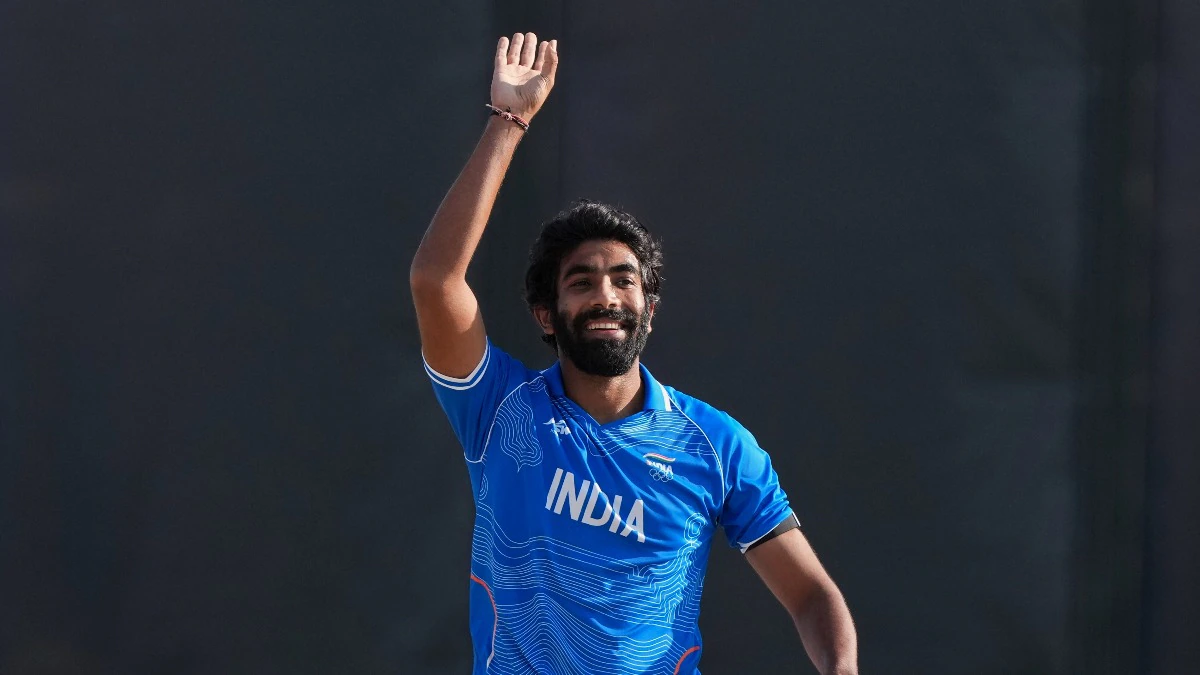
When it comes to the Indian cricket team, Jasprit Bumrah feels like a secret weapon. On pitches where the ball moves around or against a batsman in form, Bumrah can change the game completely. His ability to mix up his deliveries and outsmart batsmen has made him a key player for India in all formats of the game.
However, the question arises: what happens when Bumrah is not in the lineup?
Whenever Bumrah is missing, India’s bowling attack often looks weak. The team tends to struggle without their star pacer, as was evident during the recent ODI series against the West Indies. Indian bowlers like Gurnoor Brar and Auqib Nabi faced challenges in keeping the runs in check, highlighting the difficulties of defending scores without Bumrah’s skill.
This issue became more pronounced in the second T20I against the West Indies when India failed to protect a massive total of 250 runs. Despite their strong batting, the bowlers couldn’t deliver when it mattered.
Statistics reveal a troubling trend. In T20Is this year, Bumrah has claimed 23 wickets in 17 games, making him India’s top wicket-taker. With him on the field, India has snagged 128 wickets at an impressive average of 21.49 and an economy rate of 8.62.
Without Bumrah, though, the figures tell a different story. In the 16 matches that he missed, India took just 90 wickets at a higher average of 27.84 and an economy of 9.16. The ODI numbers are worrying as well; without Bumrah in 10 matches this year, the bowlers managed only 66 wickets at an alarming average of 44.83.
This raises an uncomfortable question: Is India’s pace attack becoming overly reliant on Bumrah?
Former Indian spinner R. Ashwin has voiced his concerns. After the team’s struggle to defend 250 runs in the second T20I, he questioned whether India has enough quality bowlers to succeed without Bumrah. “We don’t have enough quality in our bowling, and that makes it tough,” he stated, emphasizing the need to nurture high-quality bowlers who can perform under pressure.
Bumrah has made it easier for Indian captains like Rohit Sharma and Suryakumar Yadav, allowing them to depend on a bowler who can operate effectively in challenging conditions. “It’s a blessing for the captains to have a bowler like Bumrah,” Ashwin commented, echoing concerns about the future of Indian bowling.
So, what is holding back India’s fast-bowling resources? Bharat Arun, a former bowling coach for India, points to two main issues: managing workloads and skill development under pressure.
The Importance of Workload Management
Fast bowling is tough, and recent injuries among Indian pacers highlight the need for careful management of their workloads. Bumrah himself has faced fitness issues, and the handling of younger bowlers like Harshit Rana and Mayank Yadav has come under scrutiny. There are worries that some players may have returned too soon from injuries, leading to further setbacks.
Arun argues that managing workloads isn’t just about resting players; it’s about keeping them physically fit to perform well. He believes it’s crucial for bowlers to be as fit as possible on match day. “It’s about ensuring they are ready and sharp when they take the field,” he said, stressing that the entire team management, including physios and coaches, plays a part in this process.
Moreover, Arun is quick to point out that India has always produced skilled fast bowlers but emphasizes that talent alone isn’t enough. “We have seen many great bowlers like Zaheer Khan and Ashish Nehra,” he noted. “The challenge is keeping these bowlers fit and ready to perform consistently.”
Skill Development is Key
While fitness is vital, it doesn’t guarantee success. The ability to adapt and understand different conditions is crucial for bowlers at the highest level. Bumrah excels in this area, as he’s known for adjusting his tactics based on the match situation.
Arun believes India’s other fast bowlers need to develop similar adaptability. He sees immense potential in the talent available but emphasizes the importance of honing their skills and learning to respond to various challenges.
“Understanding their own bowling and how to adapt to different conditions is what sets great bowlers apart,” Arun explained. He stressed the need for bowlers to be aware of their strengths and trust them, especially under pressure.
The true test for any bowler comes when games become tight. As pressure mounts, bowlers might feel tempted to change their plans, often leading to mistakes. “It’s crucial to keep a clear mindset under pressure and rely on what has worked for them,” Arun advised.
Bumrah’s impact goes beyond his wicket tally; he can control challenging situations and give his captain a reliable option. It’s this mix of skill, fitness, adaptability, and composure that makes him hard to replace.
However, even the best bowler can’t consistently shoulder the entire burden. As the next World Cup approaches, it’s essential for India’s other pacers to step up and share the load.
India has the talent, but the challenge remains: turning that talent into a dependable bowling unit. While Bumrah may be a standout player, the long-term success of the team cannot rely solely on his presence.
