
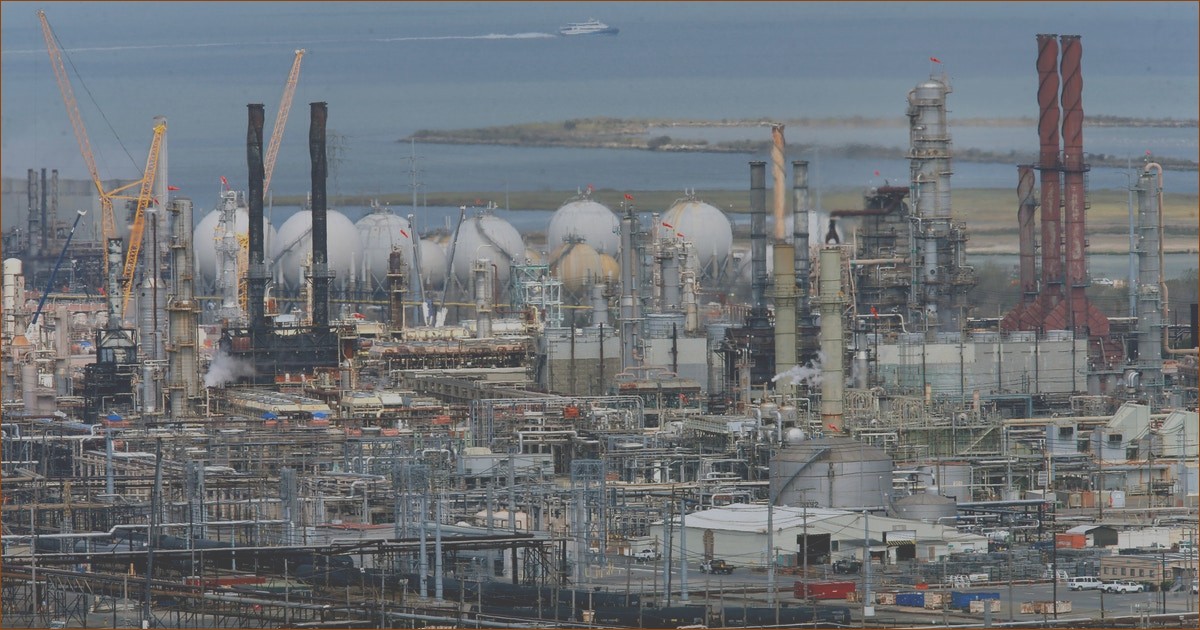
The Chevron Richmond Refinery has been found to produce air pollution that poses health risks, including an increased chance of cancer, according to a recent report from air quality regulators in the Bay Area.
On Tuesday, the Bay Area Air District shared a preliminary assessment that evaluated the emissions from the refinery and their impact on the health of workers and residents living nearby. The findings revealed that residents face a cancer risk of 37 cases per million, which means there are approximately 37 additional chances per million people of developing cancer due to long-term exposure. If the risk reaches or exceeds ten cases per million, the facility is required to create a plan to reduce this health risk.
The report also highlighted that the short-term health risks from toxic air pollutants exceeded safe levels for brief exposures, although the risk for long-term non-cancer health effects remained within acceptable limits. Notably, the assessment identified that a significant portion, about 74%, of the cancer risk is linked to one pollutant, benzo[a]pyrene, which leaks from pipes and storage tanks. Additionally, much of the short-term health risk arises from benzene emissions from the refinery’s wastewater treatment system.
Dr. Philip Fine, the executive officer of the Air District, stated that these findings provide valuable information to the Richmond community regarding the health impacts of emissions from the refinery.
In 2017, the Bay Area Air District introduced Rule 11-18, aimed at assessing health risks from facilities like Chevron and determining their effects on the surrounding communities. This rule is known for having some of the strictest risk thresholds in the United States.
Fine emphasized the importance of community involvement in the assessment process, noting that those living closest to the refinery are most affected by these risks.
In response to the report, Chevron acknowledged the Air District’s analysis but argued that many assumptions influencing the cancer risk estimates may exaggerate actual emissions. A spokesperson for Chevron mentioned that the report references equipment that is no longer operational and does not accurately represent the current conditions of the refinery. They further added that regulations based on outdated information might complicate the operation of essential energy infrastructure in California, potentially leading to increased fuel prices for consumers.
Chevron also pointed out that in comparison, air districts in Los Angeles and the San Joaquin Valley have set cancer risk action thresholds significantly higher, at 25 and 100 cases per million, respectively, compared to the Bay Area’s limit of 10 cases per million.
