
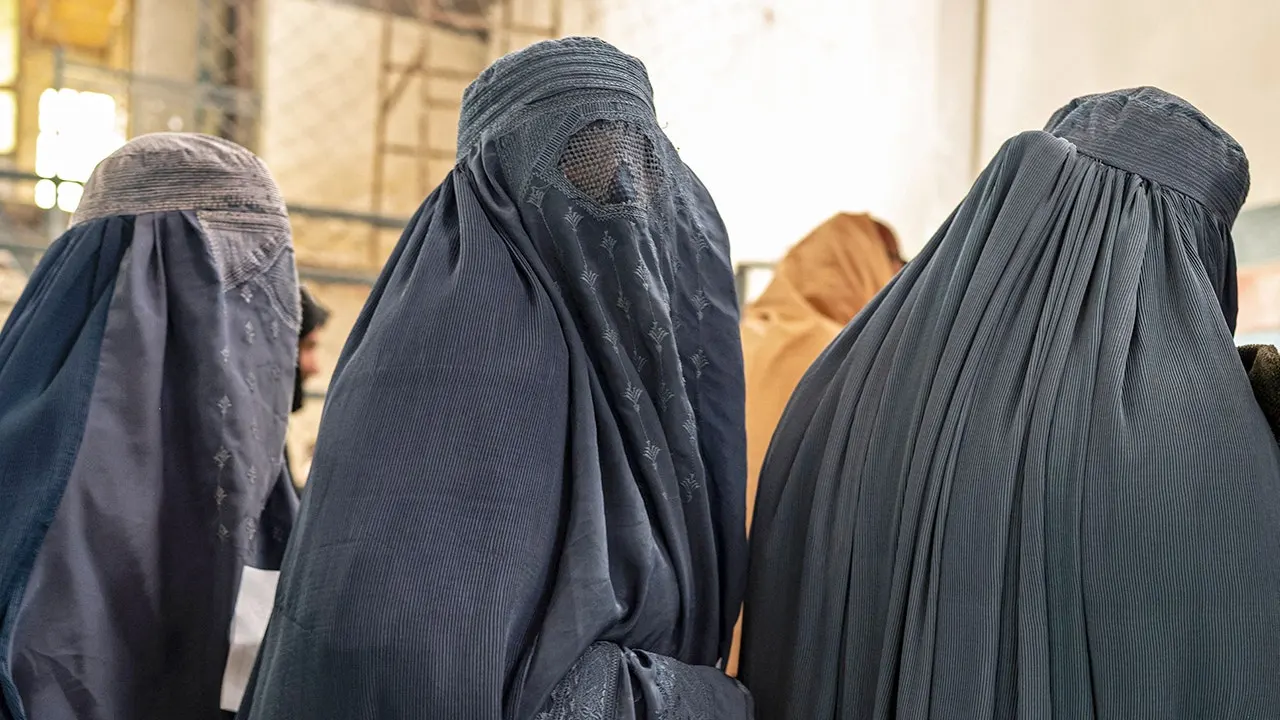
Portugal Enforces New Face-Covering Law Aimed Mainly at Public Settings
Portugal has introduced a new law that mostly bans individuals from hiding their faces in public places. This measure is seen as primarily targeting Muslim women who traditionally wear face-covering garments like the burqa, according to reports from various news agencies.
The law does provide exceptions for certain situations where face coverings may still be appropriate, such as for health reasons, professional needs, artistic expression, or in cases where weather conditions warrant it. Additionally, face coverings will still be allowed in places of worship, on diplomatic missions, and during air travel.
Noncompliance with the law can lead to fines ranging from 150 to 3,000 euros, which is roughly equivalent to $175 to $3,500.
The legislation, often referred to as the “burqa law” by local media, was passed by the Portuguese parliament last month. It prohibits wearing items that obscure the face or obstruct personal identification in public spaces. Furthermore, the law bans any mandate for individuals to cover their faces based on gender, religion, age, or origin.
President António José Seguro expressed that having an uncovered face is vital for fostering social trust within Portuguese society. He emphasized that social integration and non-discrimination are foundational principles behind this decision. The president’s statement reiterated the belief that the face plays a crucial role in our identity and communication, serving as a basic element for recognizing each other as fellow citizens.
He also pointed out that requiring only women to cover their faces creates an imbalance that contradicts the values of equality and dignity that are core to European democracies.
