
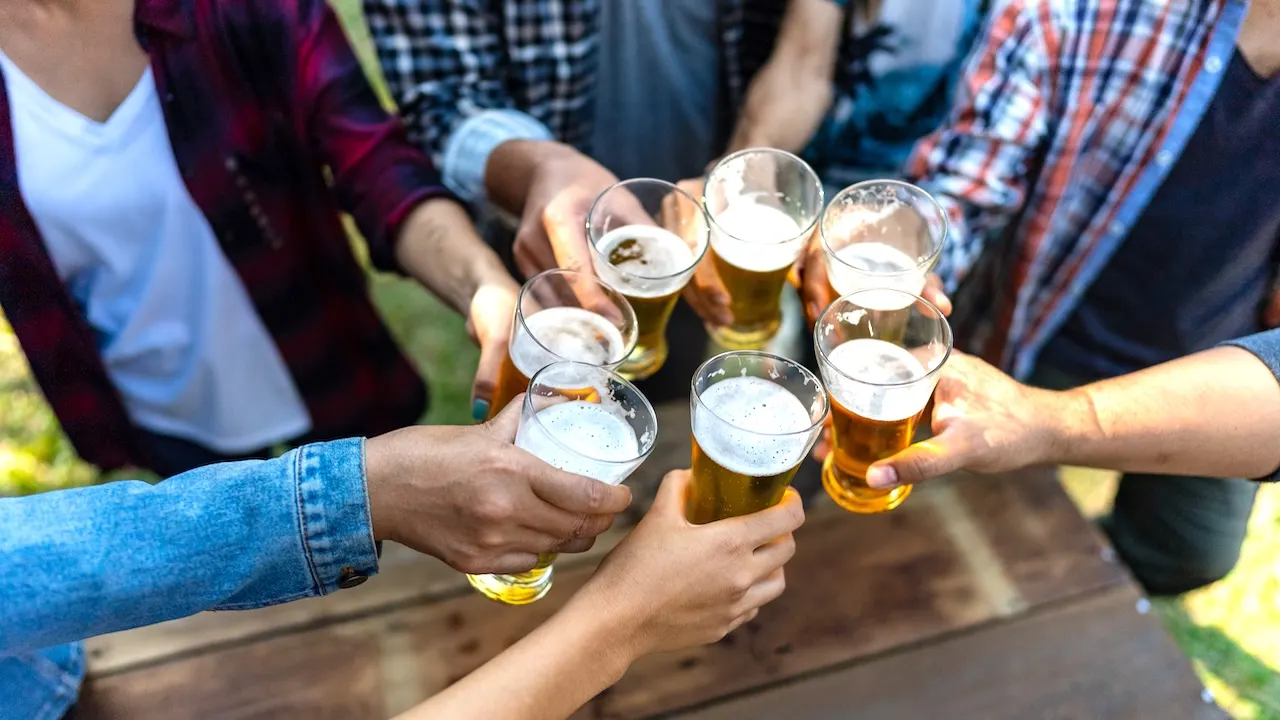
New Guidelines on Alcohol Consumption in the U.S.
Recently, new guidelines on alcohol consumption were released, as drinking rates in the U.S. have reached a new low. Dr. Nicole Saphier, a medical contributor, shared insights on this topic during an appearance on a popular weekend show.
A recent clip from Ed Sheeran’s interview on “The Louis Theroux Podcast” has ignited discussions about how alcohol is perceived differently in the U.S. and the U.K. In the 2025 podcast, Sheeran pointed out that while Americans label heavy drinking as “alcoholism,” many Brits view it as part of their culture. He mentioned that having a couple of pints after work or a few drinks on a Friday night is often seen as normal in British society.
Both American and British adults consume roughly the same amount of alcohol each year, averaging about 9.7 liters of pure alcohol. However, how people drink and the social norms around alcohol vary greatly between the two countries.
In the U.K., pubs serve as community hubs and drinking is integrated into everyday life. In contrast, American drinking habits often differ based on factors like region, religion, and personal beliefs.
Jessica Steinman, the chief clinical officer at No Matter What Recovery, explained that cultural attitudes toward drinking can shape how people view their habits. For instance, in the U.S., the legal drinking age is 21, and drinking prior to that age is generally frowned upon. This has created a different relationship with alcohol compared to the U.K., where drinking restrictions are more relaxed.
Recognizing Alcohol Use Disorder
Steinman emphasized that regardless of cultural contexts, drinking becomes problematic when it impacts one’s life negatively. She stated that if alcohol starts interfering with responsibilities, relationships, or mental health, it may be time to seek help.
Experts suggest looking for warning signs of alcohol use disorder (AUD), such as:
- Difficulty controlling drinking
- Drinking more than intended
- Spending more time recovering from drinking
- Continuing to drink despite relationship issues or health concerns
- Drinking in potentially dangerous situations
Ultimately, understanding one’s relationship with alcohol goes beyond just how much one drinks; it’s about the impact it has on daily life and well-being.
Dr. Chris Tuell from the Lindner Center of HOPE stresses that cultural norms should not define whether someone’s drinking is healthy or harmful. Just because drinking is common in one’s environment does not mean it is beneficial.
In conclusion, anyone feeling concerned about their drinking habits should consider reaching out to a healthcare professional for guidance. Awareness and honest self-reflection can lead to healthier choices regarding alcohol consumption.
