
Senator Roger Marshall Advocates for Green Card Reform
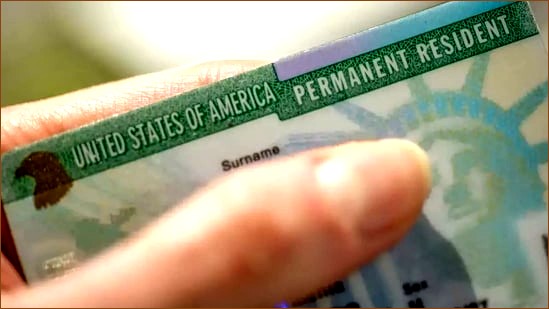
Kansas Republican Senator Roger Marshall has announced his commitment to eliminating country-based limits on U.S. green cards. Speaking to a large audience of Indian Americans, he expressed that the current immigration system is fundamentally unfair.
“We are informing the world’s hardest-working immigrants that the wait time is 70 years. This isn’t due to their actions, but simply because so many are coming from the same place,” Marshall said.
On May 26, 2026, the U.S. Department of State confirmed that all available Employment-Based Second Preference (EB-2) immigrant visas for Indian nationals for the fiscal year 2026 have been filled. This means that no new EB-2 green cards can be issued to Indian applicants until October 1, 2026.
System Set Up Decades Ago
Under the Immigration and Nationality Act, the U.S. issues around 140,000 employment-based green cards each year. This limit was established in 1990 and has not changed since. The law restricts any single country to receiving no more than 7% of these green cards annually—approximately 9,800 for India—regardless of the demand.
While this rule applies to all countries, its impact is felt most acutely by Indian applicants. According to a report from WorkVisa Guide, India accounts for more than half of the demand for employment-based visas in the U.S., yet it receives the same number of green cards as Liechtenstein, which has a population of just 39,000.
As of June 2026, the EB-2 India Final Action Date was set at September 1, 2013. The Department of Homeland Security has stated that due to the exhausting of the annual allotment, no EB-2 visas will be issued to Indian applicants for the remainder of the fiscal year.
A Growing Call for Change
Marshall’s recent comments highlight a long-overdue legislative effort. His public stance reflects increasing bipartisan concern over the existing system.
Currently, the green card backlog is the largest nationality-based queue in U.S. immigration, with approximately 700,000 Indians caught in it, as noted in a 2021 study. The high demand is evident as the EB-2 visas were exhausted in May this year, well before the fiscal year ends on September 30.
Though there is hope that the situation may improve after the new fiscal year starts in October, there is no guarantee of progress for those waiting in line.
