
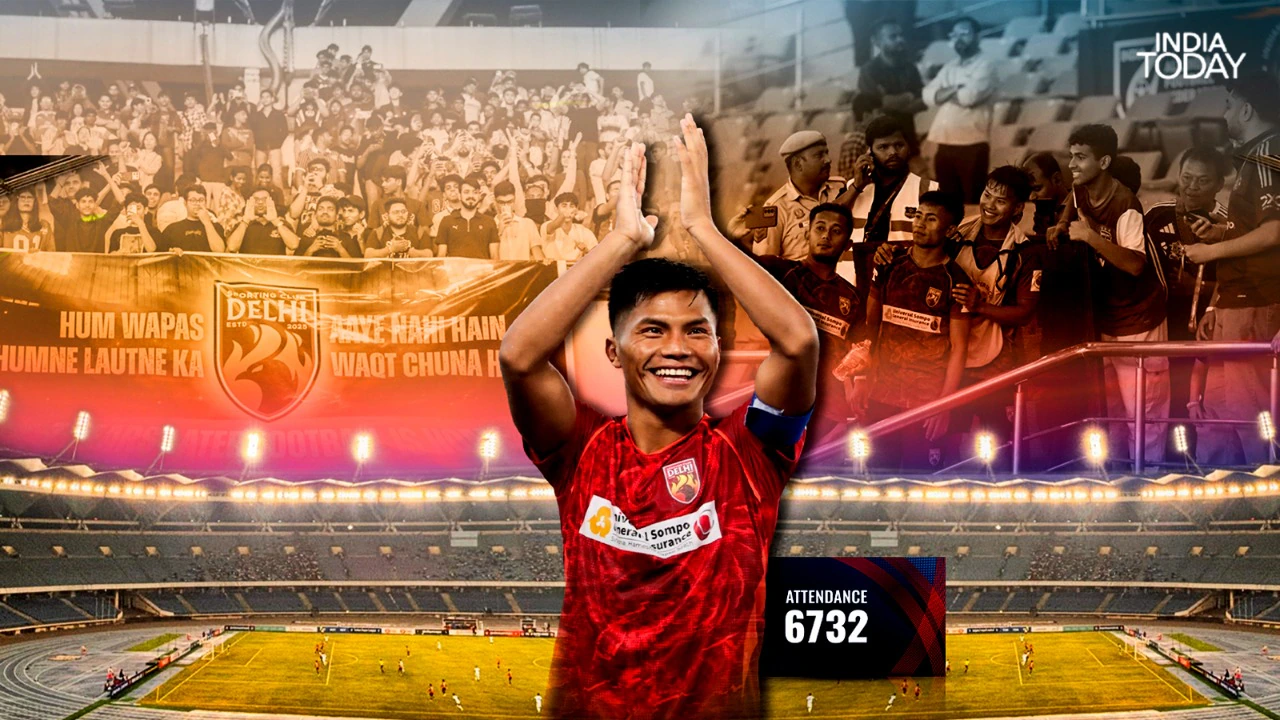
Football Returns to Delhi: A Quiet Revival Amidst Rain
It started with rain, the kind that often keeps people in Delhi at home, opting for food delivery and a cozy night in front of the TV. But this Thursday night was different—Delhi was welcoming back its football team after a seven-year hiatus from the top-tier Indian football scene.
Sporting Club Delhi made a subdued entrance at the Jawaharlal Nehru Stadium. The atmosphere wasn’t brimming with excitement or hype like it used to be when star players like Alessandro Del Piero graced the field. Back then, football matches felt like major events, capturing the curiosity of both devoted fans and casual spectators.
Fast forward to 2026, and the energy around Delhi football seemed to have lessened. Yet, on this rainy evening, despite the delays caused by traffic and the usual weekday exhaustion, fans showed up.
With just 6,732 people in a 60,000-seat stadium, it might appear disappointing at first glance. When compared to other Indian matches, like Mohun Bagan’s draw with Kerala Blasters that attracted over 29,000 fans, it felt small. But for a newly rebranded team in a city craving its football culture back, this turnout could signify hope, a starting point rather than a setback.
Outside the stadium, the event didn’t feel grand. There weren’t long queues, but small groups of kids kicked footballs around while their older siblings captured moments in jerseys. People were slowly reconnecting with the sport.
Inside, the crowd might have seemed sparse, but the energy was palpable. As the rhythm of dhol drums filled the air, chants began to rise. It felt unstructured yet authentic, creating a soundscape that reflected the spirit of the city.
As the match began, fans made their presence known. Joseph Sunny scored the first goal for Sporting Club Delhi, but a late equalizer from Jamshedpur FC meant the match ended 1-1. However, the match result took a backseat to what was happening in the stands.
Delhi fans have a history of showing up, and when they do, they bring life to the atmosphere. Despite empty seats around them, the fans responded enthusiastically to every play. The rhythm of the drums kept the energy alive as chants like “Dilli, Dilli” echoed around the stadium.
For fans, like ten-year-old Riyansh, this was a different experience. Watching his first live football match, the excitement wasn’t from a screen but from being part of something happening right in front of him. His father, Anil, had seen quieter days for football in the city but felt a sense of connection watching the crowd gather, saying it was “a nice experience” to see a team representing Delhi once again.
The passion for football hasn’t faded, even if it has struggled to thrive alongside cricket. Fourteen-year-old Vidhi, a young player, felt inspired by seeing professional talent up close. She noticed the crowd could have been bigger but appreciated the atmosphere nonetheless.
Meanwhile, Tenzin, a wheelchair user from Dharamsala, noted the difference between Delhi football now and the more vibrant scenes he’d witnessed elsewhere. He remarked on the need for more fans to enhance the atmosphere, acknowledging the potential of Indian football.
While the crowd may have been smaller, the dedication and enthusiasm were clear. With moments like Joseph’s goal, it felt like an exciting new chapter was just beginning for Delhi football.
Football in Delhi hasn’t vanished; it’s been awaiting its time to rise again. For those who showed up, despite the rain and empty seats, it was a reminder that the passion for football still exists. It’s a journey, and if the connection with local fans grows, the numbers will undoubtedly increase in the future. Football in Delhi isn’t gone; it’s just getting started.
