
Title: Sudanese Christians Struggle Amid Ongoing Violence and Displacement
Christians in Sudan are enduring extreme hardship, facing daily challenges such as hunger and violence. The Open Doors World Watch List for 2026 ranked Sudan as the fourth-worst country for the persecution of Christians, moving up one spot from last year.
In Sudan, there are about 2 million Christians who have been affected by a civil war that has now lasted over 1,000 days. The conflict has led to approximately 150,000 deaths and displaced more than 13 million people. Christians have been part of Sudan since the late first century.
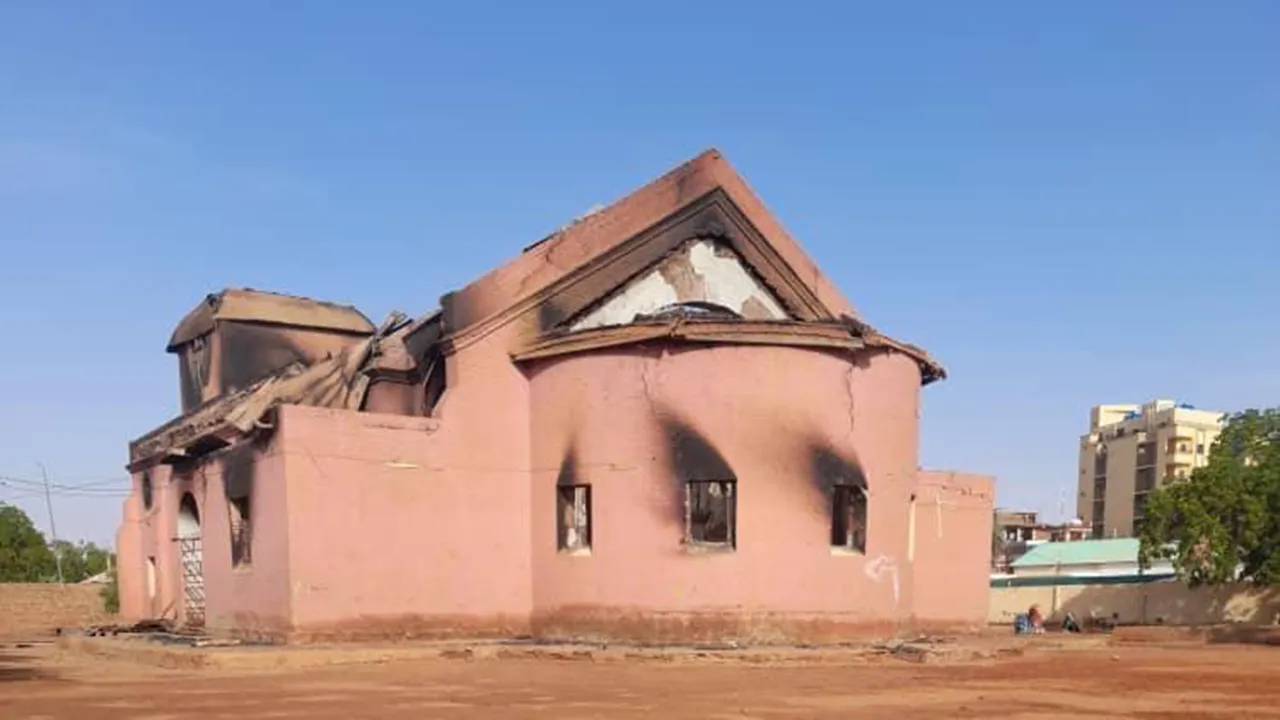
Many of these Christians reside in the Nuba Mountains, situated in the Kordofan region. Rafat Samir, the general secretary of the Sudan Evangelical Alliance, reported that areas where many Christians live have been under attack. “For the past six to seven months, our churches, hospitals, and schools have frequently been bombed,” he said.
Recently, a tragic incident occurred where 11 Christians were killed, and 18 others were injured as they were heading to a church for a Christmas celebration. This attack was carried out by drones belonging to the Sudanese Armed Forces, which reportedly have ties to the Muslim Brotherhood.
A spokesperson from the U.S. State Department remarked on the decline in respect for religious freedoms in Sudan, noting that the ongoing conflict has severely affected oppressed ethnic and religious groups, particularly Christians.
Last year, reports indicated that Christians were resorting to eating grass to survive. Samir highlighted the worsening situation, stating that “even the grass is gone now.”
Mariam Wahba, a research analyst, emphasized that the ongoing conflict threatens to erase ancient Christian communities and their cultural heritage, making recovery much harder than rebuilding infrastructure once the fighting ends.
Samir expressed concerns about the future of Christians in Sudan, stating that both opposing sides of the conflict follow an Islamist ideology that lacks tolerance for others. He added, “Whoever harms Christians is viewed favorably, reinforcing a dark cycle of violence.”
Efforts to establish a ceasefire between the Sudanese Armed Forces and the rival Rapid Support Forces have repeatedly failed, with both groups continuing to engage in violent actions, particularly in Kordofan, a region populated by many Christians.
The U.S. has expressed a commitment to ending the conflict, with ongoing discussions focused on creating humanitarian truce and reducing military support that fuels the violence.
The situation has reached a catastrophic point, with millions lacking access to food, water, and medical care. The U.N. has raised concerns about escalating violence in Kordofan, where ongoing military actions could lead to severe humanitarian crises.
While the U.S. aims to facilitate discussions and aid delivery, direct intervention in the Sudanese conflict seems unlikely at this time. Wahba pointed out that, with little reliable support from Congress or the White House, U.S. policy appears more reactive than strategic.
Despite the overwhelming challenges, Samir remains hopeful, saying, “The Holy Spirit is working in our country. Though darkness prevails, God’s love is shining in many hearts. We pray to endure for another day to share Jesus’s message.”
